
Workshop Unconscious Bias
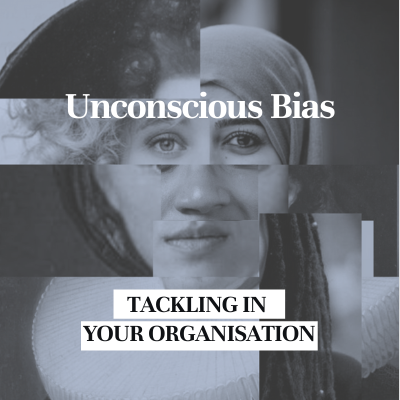
In-company workshop on Unconscious Bias
What does an in-company workshop on Unconscious Bias or unconscious prejudices yield?
- Understanding: The participant is aware of how the paradox of diversity and inclusion works and how it greatly affects how we act and decide every day.
- Experiencing: the participant experiences, based on short exercises, how your brain chooses and acts, different from what you might think in advance.
- Review: after the workshop, the participant can more easily recognise situations in which unconscious prejudices can play a role in themselves and others and can name them.
- Apply: the participant can take measures to reduce bias and increase inclusion. Depending on the purpose of the workshop, the training sessions last between 3-8 hours.
Program
A possible setup of the in-company program about unconscious bias:
- How do unconscious biases affect the decisions we make? How big is that influence in your life and work? In this joyful part, participants undergo small experiments to experience bias in their brain. We use film and exercises.
Background for this part: by experiencing unconscious bias yourself, you learn to accept. By keeping it light, your brain is more open to new insights. - What is the result of bias in our work and life? What are the effects of bias in our organisation and activities? Why is bias such a big problem in the Netherlands – greater than in many other countries? Based on examples, we see that bias unconsciously gives some people a better chance and others less.
Background for this part: understanding and stimulating (self) research into how bias works and how many small, often insignificant activities attract or exclude some people more than others. - How to achieve more diversity together? What you can do to prevent bias, and how you can judge and decide more objectively.
- What is inclusion, and why is inclusion preconditional for more diversity? We discuss the unwritten rules of collaboration, labeling and how inner groups form. How does inclusion affect people’s well-being? Together with the people sitting next to you, you will investigate whether the organisation is inclusive enough to embrace more diversity.
Background of this section: realising how inclusion and exclusion work and how a sense of belonging affects your commitment to your work and the way you can excel in your work. - We give you nine easy ways to work on more inclusion. We ask the individual participants what they will to tackle as of today.
Background to this part: get started! We go from talking to doing. We make the changes in your behaviour so small that you can work with them. - What can and will you contribute? We discuss the Become More Inclusive in 30 Seconds A Day Challenge. Will you join? What do you intend to do?
Reference
“We have had a very good session!” Positive feedback from all participants. A very big compliment for the energy and passion which she brings, even by using Teams. “It was as if she was standing right in front of me” is what a participant mentioned to me.”
Marco Fritz, General Manager Europe, Chamberlain Group
Target audience
Each training is adapted to the level of the participants. We ensure that the examples we use fit the target group.
Direction Mindbugs Test
We recommend combining this workshop with the Direction Mindbugstest. This charts the bias of the participants. There are three different tests to choose from. It is a good way to get close to the subject and increases the self-knowledge of the participants. The test serves as an example to show how bias works in the individual participants. We ask the participants to complete a Direction Mindbug test online in advance. This test takes 2×8 minutes to complete.