Receiving Feedback: From Challenge to Growth

Receiving Feedback: From Challenge to Growth

Photo: Trunk Archive

Photo: Trunk Archive

Imagine this: you are an athlete. Every day is about becoming a little bit better. You train, eat healthy, and optimize your routines, while you and your team closely track your progress. It makes sense—because their insights and tips help you reach your full potential. As an athlete, you don’t just learn to excel in your sport; you also become skilled at receiving and using feedback.

Now think of yourself the same way: someone who also wants to reach their full potential. If the athlete metaphor doesn’t quite fit you, think of an emerging artist or performer striving to become the best version of themselves. This perspective helps you understand that you can still grow tremendously by embracing insights from others. But it does require something from you: you must start viewing feedback as a tool for growth rather than a threat.

Why feedback sometimes throws us off

Receiving feedback isn’t always easy. Our brain links our self-worth to our performance, which means feedback can often feel like a personal attack—sometimes even before we consciously register it. On top of that, your brain constantly checks your position within a group. Feedback given in a group setting or by someone higher up in the hierarchy can hit hard because it feels like a threat to your sense of safety and belonging.

As a result, you might not be fully open to feedback, or your brain might shut it out altogether: downplaying, ignoring, or twisting the feedback to protect yourself. Sound familiar? Like not really remembering what was said after a performance review? It’s a natural coping mechanism, but one that can seriously block your growth. If we want to truly learn and address our blind spots, we need to find ways to bypass this reflex.

What feedback has to do with inclusion

If you want to become a true expert in receiving feedback—just like an athlete—you need to learn to embrace different perspectives. Feedback is not just a chance for personal growth, but also an opportunity to build a stronger, more inclusive team. By consciously seeking feedback from people with diverse backgrounds and areas of expertise, you strengthen not only yourself but also trust and collaboration within your team. Feedback then becomes a powerful tool to move forward together.

Asking for feedback remains crucial at every stage of your career—especially as a leader. By inviting your team’s input, you send an important signal to their brains: they belong, and you value their contribution. Even when you’re at the top of the ladder, you still have blind spots—in your knowledge and in how you see yourself.

Photo: Geoff Lowe

Photo: Geoff Lowe

The Importance of Psychological Safety in Your Team

Do you feel resistance when it comes to involving colleagues in your learning process? If so, it might be a sign that the psychological safety in your team could use some improvement. In a truly safe environment, everyone works to bring out the best in each other, and receiving feedback should feel like a valuable gift. Do you avoid asking for feedback because you believe your colleagues can’t provide constructive input? That’s a shame—you deserve better! Bring this up during team evaluations and set a good example yourself by openly sharing both tips for improvement and positive feedback with your team.

Start Your Growth Project Today

Turn asking for feedback into a habit by seizing every opportunity to do so. It might take some effort at first, but over time it will become a natural part of your routine. Start today by asking yourself: What do I want to improve this month or this quarter?

Even if you make it to the Olympic Games, there is always room for growth. Research from Harvard Business Review shows that top performers—especially female top performers—often receive less valuable feedback because managers tend to focus more on underperforming colleagues. That’s why it’s important to actively seek out targeted and useful feedback.

Once you’ve got that covered, make sure to involve the right people from the start of your project. They don’t always have to be managers; colleagues, team members, or others whose work you admire can also offer valuable insights. One important tip: if they are too similar to you, they might not help you spot your blind spots. So choose people with a fresh perspective or a different approach.

Who actually needs to be motivated – the younger generation or the managers themselves?

Who actually needs to be motivated – the younger generation or the managers themselves?

Generaties Esther Emmalotte

Esther and her daughter Emmalotte

I often hear it from many of my clients: managers complaining about the younger generation in the workplace. Just recently, a manager told me: ‘You should be glad if those Gen Z employees even show up for work!’ The frustration is palpable. Gen Z is often labeled as unmotivated, unwilling to work, and overly demanding. But is that really true? Or does the problem perhaps lie closer to home – with the managers themselves?

The Leadership Mirror
What many of these complaining managers overlook is that research into good leadership and organizational management has long revealed what motivates employees, both young and old. What Gen Z wants isn’t unique or unreasonable. In fact, they are the very elements that inspire and engage every employee:

Opportunities for Growth
Young employees want to develop their skills and challenge themselves. They seek a place where they don’t just complete tasks but can truly grow. This, by the way, isn’t exclusive to Gen Z – who would want a career without development?

Clarity and Efficiency
They want clear expectations, effective coordination, and a well-functioning organization. And let’s be honest, who wants to waste time on redundant work or dull, unnecessary tasks? This isn’t a ‘young people thing’; it’s a human need for meaningful work.

Personal Attention and Feedback
Gen Z asks for personal attention from their leaders and actionable feedback that helps them improve. This may sometimes look like ‘demanding behavior,’ but it’s actually a basic principle of good leadership. Employees thrive when they feel heard and know how to get better.

Are Young Employees Truly Unmotivated?
Still, many managers see the departure of young employees as confirmation of their judgment: ‘See? They’re just not motivated.’ But perhaps those same managers should ask themselves if they’re providing the kind of leadership that younger generations – and, in fact, all employees – need. After all, an employee leaving often says more about the manager than about the person who’s walking out the door.


Heart hands Emmalotte Esther

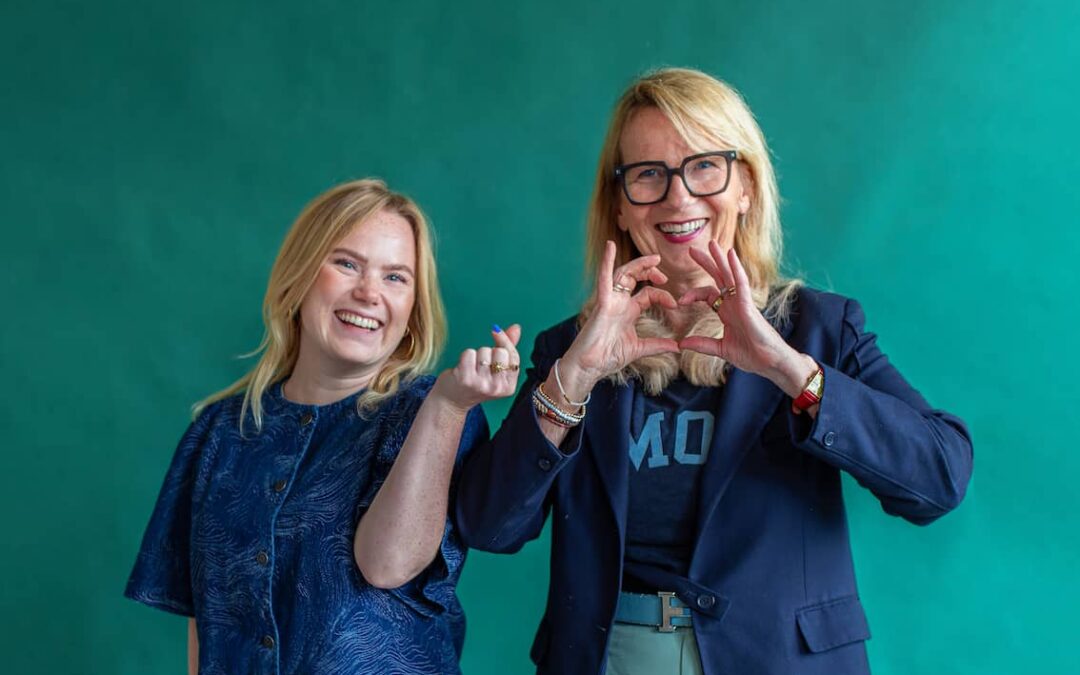
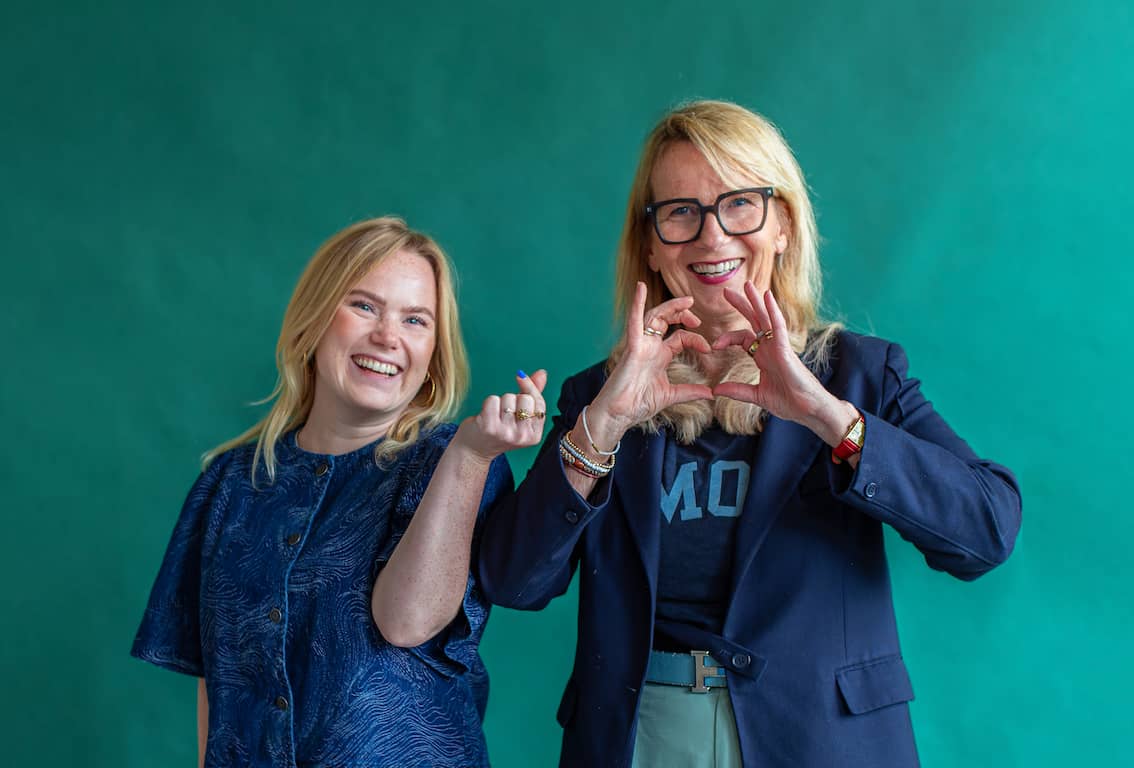
Take another look at the hands of Esther and Emmalotte: Esther portrays ‘love’ in the way her generation does, and Emmalotte in the way hers does. Both express love in the way they know best.


Good leadership is timeless.

Let’s be honest: it’s easy to point fingers at a new generation. But leadership sometimes requires a look in the mirror. Ask yourself: am I giving my team what they need to grow and stay engaged? Am I creating a workplace where talent is seen, heard, and nurtured? Or am I stuck in outdated ways of working that no longer fit today’s world?

The demands of Gen Z aren’t a passing trend. They are universal needs that, when addressed, make every organization stronger. So maybe it’s not the younger generation that needs to change, but the managers themselves.

De power of eye contact

De power of eye contact

Look Beyond Borders - Arthur Aaron EM

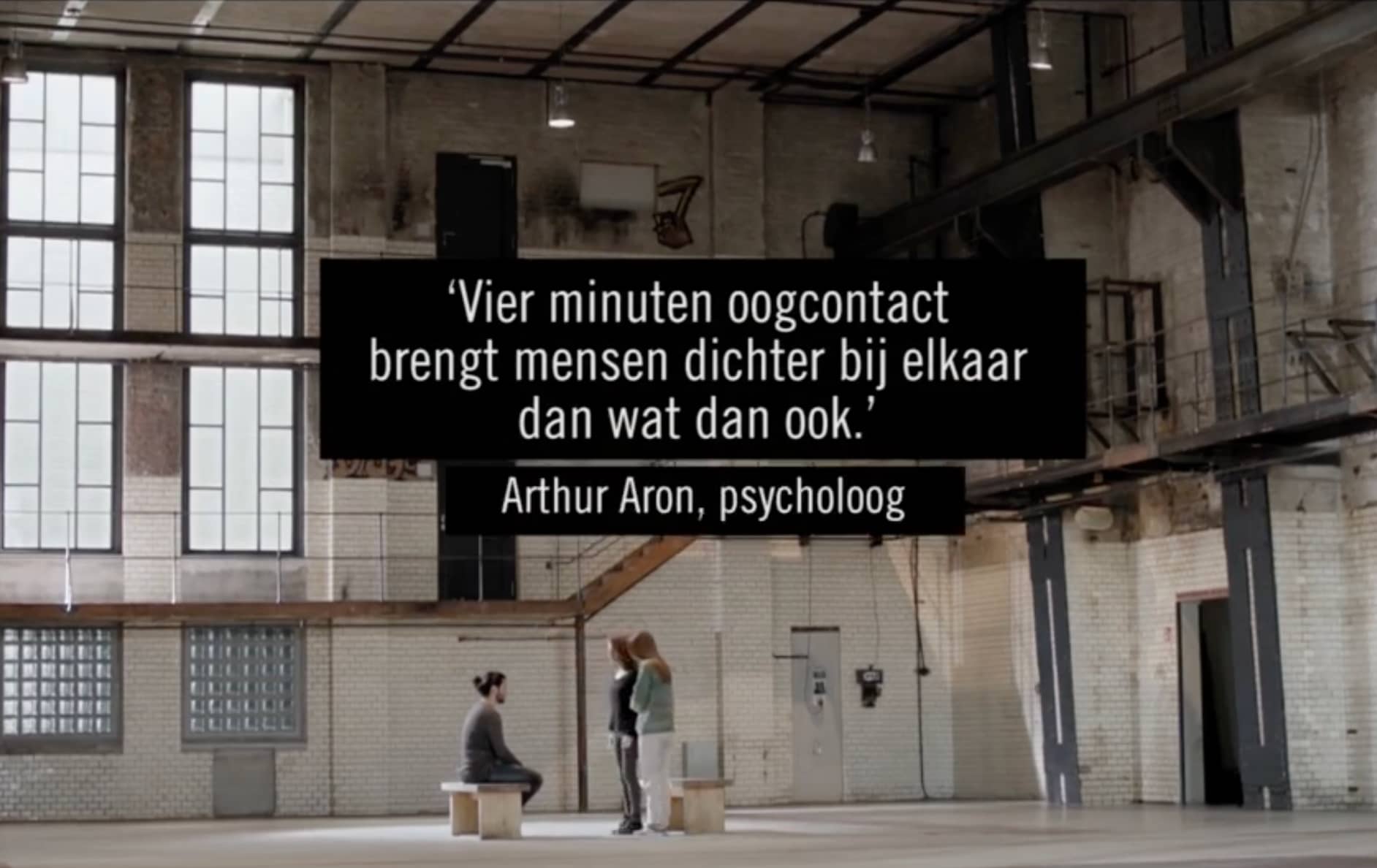
Click on the image to watch the video.

A beautiful example of how eye contact creates connection and vulnerability can be seen in this video from Amnesty International. It demonstrates the power of truly seeing and being seen, and how this forms the foundation of connection.

A conversation is a wonderful way to meet each other’s thoughts. You share information, come up with ideas together, and forge social bonds. But do you know what truly enhances a good conversation? Eye contact.

Eye contact is the most basic way to make someone feel seen. It fosters a sense of inclusion and strengthens relationships. With your gaze, you communicate interest in what the other person is saying, showing respect for the person behind the words. Eye contact also improves communication. Your facial expressions—like surprise or shock—are often the first reaction to what someone says. Eye contact also helps to determine when it’s your turn to speak.

Your brain is highly attuned to whether someone looks at you and draws conclusions from it. While eye contact seems natural, it’s not always easy to give everyone equal attention. Our brains have unconscious preferences for who we do or don’t look at, often depending on whether someone is part of our “in-group” or not.

Unintentionally looking at certain people less often can have significant consequences. It makes them feel unseen, which can severely impact their sense of recognition within the group. Everyone needs a certain level of acknowledgment to feel comfortable enough to contribute to a team. Vulnerable brains are often those of people who are new to a group or slightly different from the norm. Want to avoid this? Then consciously work on making it a habit to look at everyone properly.

Interestingly, unconscious biases also play a role from another perspective. People who feel secure in their position within a group, such as leaders or those who belong to the norm, pay close attention to eye contact. If you don’t look at them, it may be interpreted as a sign of insecurity or weakness. The habit of intentionally looking at someone helps not only the other person but also yourself: it shows you take the other person seriously and that you have confidence in yourself.

Another major source of disruption is the dopamine bomb in your pocket: your phone. Our concentration during conversations and meetings is constantly tested by apps and notifications designed to be almost irresistible, even when you’re sitting across from someone.

In addition to entertainment, your phone now also brings responsibilities. Platforms like Slack and WhatsApp groups create a constant expectation of availability. This perpetual accessibility hinders genuine connection with the person in front of you. Yet research shows that being fully present and making eye contact leads to stronger relationships.

So, make it a habit to be truly present during conversations. Put your phone away and turn off unimportant notifications. Make sure to look at your boss, but don’t forget those who could use a little encouragement. By looking at them, you say: “I see you (too).”

Here’s an interesting tip about connection: eye contact is the first way we, as babies, bond with our parents. Since we can’t communicate in other ways yet, their gaze tells us: “I’m here for you.” Here’s the fun part: because most people are right-handed, they carry their baby in their left arm. This causes their right eye to naturally align with the baby’s left eye. This specific connection stimulates the release of oxytocin, a hormone that builds trust and connection. Try it yourself while you work on this new habit!

Remember, making eye contact a habit is a work in progress. I personally find eye contact quite intense at times, so I’ve taught myself to look at someone’s eye color instead of directly “into their eyes.” Research also shows that while eye contact is important to make someone feel seen, averting your gaze can actually help you form new, independent thoughts. In a good conversation, eye contact, much like the act of talking itself, naturally flows back and forth between the participants.

So: put your phone away, look the other person in the eye, and be fully present. This way, you not only build stronger relationships but also ensure that everyone feels seen. That’s the power of a simple gesture like eye contact.

Giving compliments: a small act with a big impact!

Giving compliments: a small act with a big impact!

EM

This is the second column in the #InclusieDoen series. We want to move away from merely talking about inclusion in organizations and instead focus on practical actions. Today’s column explores how giving compliments more often can help you, others, and your team! Interested in doing more #InclusieDoen? We’re here to help. Over the coming weeks, we’ll actively support you in developing more inclusive habits. With short videos and reminders via WhatsApp, you’ll receive tips and guidance. And during this initial phase, it’s completely free! You can find all columns here.

This week, I received a very kind and detailed email following a training session with a new client. The client specifically pointed out what they appreciated about the workshop from the day before. Honestly, I already knew the training had gone exceptionally well, but I was still surprised at how happy the email made me. Of course, I know from research that giving compliments works, but experiencing it firsthand remains something special.

Compliments aren’t just friendly words; they truly have an impact. Did you know that in organizations where employees and managers value one another, people are 35% more energized to achieve results? Moreover, employees in such environments are 15 times more likely to become high performers.

Neuroscientific research even shows that compliments are processed in the brain in the same way as financial rewards. They activate the reward system, evoke positive emotions, boost self-confidence, and foster stronger connections between people.

Yet many people feel insecure about giving compliments. They worry about whether they’re expressing them correctly. Research also shows they often underestimate how much a compliment will positively affect the recipient.

The key to giving a good compliment is sincerity and warmth. Choose something specific, no matter how small, that you genuinely appreciate. Don’t overthink it, as the moment to truly make someone feel good can pass quickly.

Make the compliment as personal as possible (“Your creativity makes this presentation truly unique” instead of “Good presentation”). Support your words with non-verbal cues like a smile and eye contact. Also, try to learn how the recipient prefers to receive compliments. Some appreciate public recognition, while others prefer compliments in private.

Just like nourishment, people have a constant need to feel seen and appreciated. Train yourself to give compliments more frequently and make it a habit.

Want to practice this? Join our 30 Seconds to Inclusivity Program. Find more information here.

#Compliments #WorkplaceJoy #InclusiveLeadership #TinyHabits #OrganizationalCulture #Impact

Sources:

  • “A Simple Compliment Can Make a Big Difference,” Erica Boothby, Xuan Zhao, and Vanessa Bohns, HBR, 2021
  • Gartner 2023 Building an Organization of Great Managers Survey
When women are in majority, men still lead.

When women are in majority, men still lead.

It seems so logical that when many female talents are employed within an organization, more women will naturally move up to top positions. But is that really the case? We conducted research to find out.

HBR Staff/EschCollection/Getty Images

Image by HBR/ EschCollection/Getty Images

Our initial exploration led us to a publication from Harvard Business Review (HBR) in April 2024. It reported that in the non-profit sector in the United States, where the majority of employees are women, female representation at the top is often lacking. The publication also revealed that the higher the revenue, the more often men are in charge. We were curious to see how this plays out in the Netherlands, so we conducted research on fifty ANBIs (Public Benefit Organizations) with the highest revenue within the non-profit sector, specifically in education and healthcare. These are sectors in our country where it has been proven that more women work than men.

And to go straight to the conclusions: we see the same pattern in the Netherlands. Despite the fact that the majority of employees in these sectors at all levels are women, the percentage of women in the leadership of these organizations is also lower in the Netherlands. As in the American HBR study, we observed a decline in the percentage of women in the upper layers of the organization. We also found that in the Netherlands, the choice for the highest leadership position is less often made in favor of female talent as the organization grows larger and generates more revenue.

You could say that although more women than men work in these organizations and they are eligible for leadership roles, they are more often stuck below the top. This phenomenon is also known as the Glass Escalator Effect: men seem to stand on a symbolic escalator to the top, while that escalator is missing for women, hindering their career progression. As a result, men have easier access to top positions, even when they work in industries where they are underrepresented. Why is this the case?

The HBR study suggests that this symbolic escalator for men is due to unconscious biases: the unconscious belief that men are better leaders and the assumption that as an organization grows larger, men are best suited to manage it. The association of male traits with leadership qualities remains strong (albeit unconsciously), and we see this reflected in the results of our mindbug tests in the Netherlands. These tests show that 81% of participants (n=19,004, both men and women) have an unconscious preference for a man as a leader, even though 96% of them indicated beforehand that they do not make distinctions in gender for leadership positions. Additionally, men who take on traditionally female roles (such as becoming a nurse) are often excessively praised for doing so. Click here for more details.

The Glass Escalator Effect in the Netherlands: Our Research

Our research within the same sectors in the Netherlands confirmed the American results, as shown in the figures below. First, we see that the overrepresentation of women in these sectors is not reflected in the boards of these organizations: the percentage of women in the top remains below or around 50%. We also observe that the percentage of women in leadership positions within the sector decreases as revenue increases. This is evident in the comparison between the top 10 organizations with the highest revenue and the ten organizations with the lowest revenue.

Category General Average % Women Average % Women in Board of Directors % Women in Top 10 Organizations by Revenue % Women in Bottom 10 Organizations by Revenue Average % Women as Chair of the Board % Women as Chair in Top 10 Organizations by Revenue % Women as Chair in Bottom 10 Organizations by Revenue
Higher Education 76.8%* 51.3% 46.6% 55.0% 52.0% 40% 50%
Healthcare Institutions 53.3%** 47.6% 42.5% 48.3% 42.0% 40% 55%

* Reported by 16 out of 25 organizations ** Reported by 9 out of 25 organizations

Lastly, our research shows that the overrepresentation of women in these sectors does not result in a higher number of female chairs of the board of directors. In fact, the likelihood of this decreases as revenue grows. This percentage also remains below or around 50%.

These are striking results given the consistent overrepresentation of women in the non-profit sector [1]. In summary, we conclude that the highest positions, even within ANBI organizations, are disproportionately awarded to men, despite the presence of many female employees and talents in these sectors. The ‘glass escalator’ phenomenon also exists in the Netherlands.

Finally, this: In our research and this article, we focused on the ‘glass escalator’ effect, highlighting the difference in opportunities for men and women in the non-profit sector in the Netherlands. The HBR article also explored this effect in the context of ethnicity. You can find that HBR study and the recommendations they provided here.


[1] Explanation of the general male-female distribution

Although every ANBI organization reports on the composition of its board and chairs in their annual report or on their website, not every organization reports on the general male-female ratio. The organizations that do report on this show a clear picture: the majority of employees are women. To validate these figures, we compared our data with publicly available statistics for the sectors we studied.