
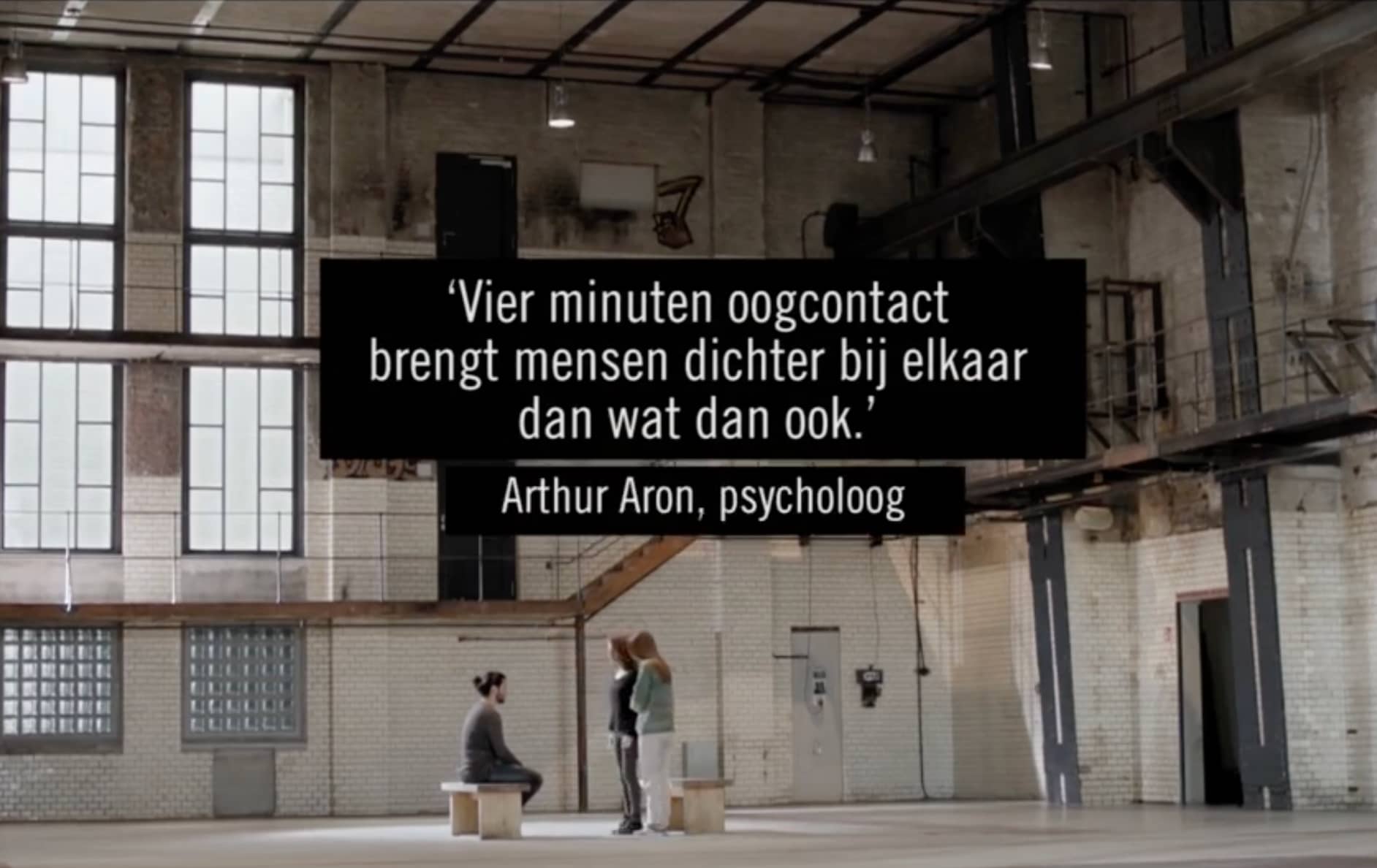
Click on the image to watch the video.
A beautiful example of how eye contact creates connection and vulnerability can be seen in this video from Amnesty International. It demonstrates the power of truly seeing and being seen, and how this forms the foundation of connection.
A conversation is a wonderful way to meet each other’s thoughts. You share information, come up with ideas together, and forge social bonds. But do you know what truly enhances a good conversation? Eye contact.
Eye contact is the most basic way to make someone feel seen. It fosters a sense of inclusion and strengthens relationships. With your gaze, you communicate interest in what the other person is saying, showing respect for the person behind the words. Eye contact also improves communication. Your facial expressions—like surprise or shock—are often the first reaction to what someone says. Eye contact also helps to determine when it’s your turn to speak.
Your brain is highly attuned to whether someone looks at you and draws conclusions from it. While eye contact seems natural, it’s not always easy to give everyone equal attention. Our brains have unconscious preferences for who we do or don’t look at, often depending on whether someone is part of our “in-group” or not.
Unintentionally looking at certain people less often can have significant consequences. It makes them feel unseen, which can severely impact their sense of recognition within the group. Everyone needs a certain level of acknowledgment to feel comfortable enough to contribute to a team. Vulnerable brains are often those of people who are new to a group or slightly different from the norm. Want to avoid this? Then consciously work on making it a habit to look at everyone properly.
Interestingly, unconscious biases also play a role from another perspective. People who feel secure in their position within a group, such as leaders or those who belong to the norm, pay close attention to eye contact. If you don’t look at them, it may be interpreted as a sign of insecurity or weakness. The habit of intentionally looking at someone helps not only the other person but also yourself: it shows you take the other person seriously and that you have confidence in yourself.
Another major source of disruption is the dopamine bomb in your pocket: your phone. Our concentration during conversations and meetings is constantly tested by apps and notifications designed to be almost irresistible, even when you’re sitting across from someone.
In addition to entertainment, your phone now also brings responsibilities. Platforms like Slack and WhatsApp groups create a constant expectation of availability. This perpetual accessibility hinders genuine connection with the person in front of you. Yet research shows that being fully present and making eye contact leads to stronger relationships.
So, make it a habit to be truly present during conversations. Put your phone away and turn off unimportant notifications. Make sure to look at your boss, but don’t forget those who could use a little encouragement. By looking at them, you say: “I see you (too).”
Here’s an interesting tip about connection: eye contact is the first way we, as babies, bond with our parents. Since we can’t communicate in other ways yet, their gaze tells us: “I’m here for you.” Here’s the fun part: because most people are right-handed, they carry their baby in their left arm. This causes their right eye to naturally align with the baby’s left eye. This specific connection stimulates the release of oxytocin, a hormone that builds trust and connection. Try it yourself while you work on this new habit!
Remember, making eye contact a habit is a work in progress. I personally find eye contact quite intense at times, so I’ve taught myself to look at someone’s eye color instead of directly “into their eyes.” Research also shows that while eye contact is important to make someone feel seen, averting your gaze can actually help you form new, independent thoughts. In a good conversation, eye contact, much like the act of talking itself, naturally flows back and forth between the participants.
So: put your phone away, look the other person in the eye, and be fully present. This way, you not only build stronger relationships but also ensure that everyone feels seen. That’s the power of a simple gesture like eye contact.