
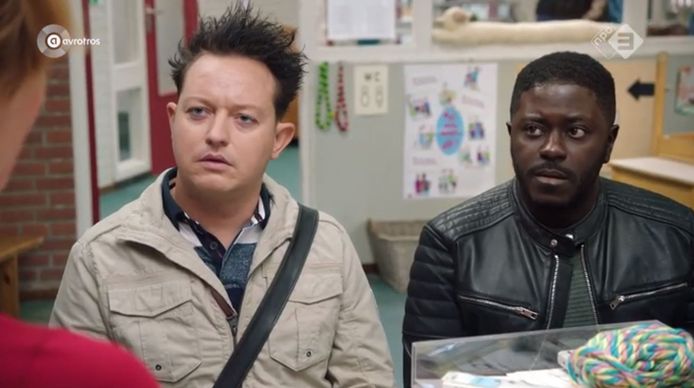
Image: De Gelderlander/ De Luizenmoeder Avrotros
Humor is important and useful, especially in the workplace. It is a universal phenomenon that can encourage, entertain, and connect people. But things can go wrong if not everyone finds a joke funny; if it comes at someone else’s expense, attacks them, or causes harm. This can cause polarization in your company, requiring awareness from both the comedians and the audience.
An apparently innocent, but actually racist or discriminatory joke, can have significant consequences. According to Dutch humor researcher Zijp, people with an “it’s just a joke” mentality often miss something essential: the realization that humor can indeed have an impact. Why?
Often, laughter comes from jokes that test the moral and social boundaries of people, sometimes crossing them. If jokes in your team are on the edge (or even cross it), Zijp identifies two risks: first, the content of the joke can become normalized, and second, the standard for what’s acceptable can shift. This is not conducive to a healthy work environment.
Here’s how it works: regardless of your political beliefs, discriminatory or racist jokes have a normalizing effect on your brain. Just by hearing Theo Maassen make an edgy joke, you might find a similar comment from a colleague less strange. It seems logical, right, since Maassen got a thunderous applause for it? And Johan Derksen remains on television despite the monthly controversies surrounding his remarks, which shifts the standard for what’s acceptable. In your own organization, jokers unconsciously influence what’s considered okay to say. The more authority they have, the more likely we are to accept what they say. And the more laughter they receive, the quicker this new standard becomes part of the corporate culture.
Yes, even those who laugh along have an impact. Many colleagues will laugh at jokes that are near the edge out of discomfort or relief that they are above such comments. But it’s striking that those same colleagues still laugh heartily at racist jokes. Take, for example, Luizenmoeder, a confrontational series that received a lot of praise, in which discriminatory jokes fly at you. If ‘De Klimop’ were a miniature version of your organization, wouldn’t you find it concerning if jokes about a Black father “probably being the cleaner” and his adopted daughter not being able to speak Dutch at four were accepted as harmless comedy?
Before you go on the defensive: I know that Luizenmoeder was created to hold a mirror to us and that the reflection it provides has a purpose. But even if you don’t mean it that way as a joker, you should realize the possible side effects of your frequent jokes at others’ expense. There’s a risk in how people interpret humor. This is called the Archie Bunker Effect, named after a fictional white racist bully in the 1970s TV series “All in the Family.” The creators portrayed Bunker as a caricature, but the show’s success had an unexpected side effect: conservative viewers began to identify with Bunker as their hero, causing this unintended ideology to gain traction.
Perhaps there’s a Theo Maassen, a Juf Ank, or an Archie Bunker at your workplace? Who sometimes makes terrible, cringe-worthy remarks under the guise of a joke, which might lead colleagues to make similar racist or discriminatory comments? If so, understand that this changes the norm.
What can you do about it?
As an organization, you need to take responsibility for defining and maintaining the company’s norms and culture. Involve all employees actively, making DEI an integral part of onboarding and annual training. Consider making inclusion and exclusion training, and the role of humor within them, mandatory for promotions, or linking personal goals to inclusion. This way, the company sends a clear message: jokes and behavior that don’t align with our norms don’t belong here and have consequences.
To effectively address the problem, a daily approach is also required, to which every employee can contribute. Encourage a culture where employees dare to call out discriminatory jokes so they don’t find a foothold. Make it clear that those who laugh along are also partially responsible for the exclusion the joke causes. If you’re not actively working on inclusion, you’re unconsciously working on exclusion. A joke that doesn’t come at someone else’s expense is delightful, especially in the workplace. Make sure humor brings people together instead of dividing them.