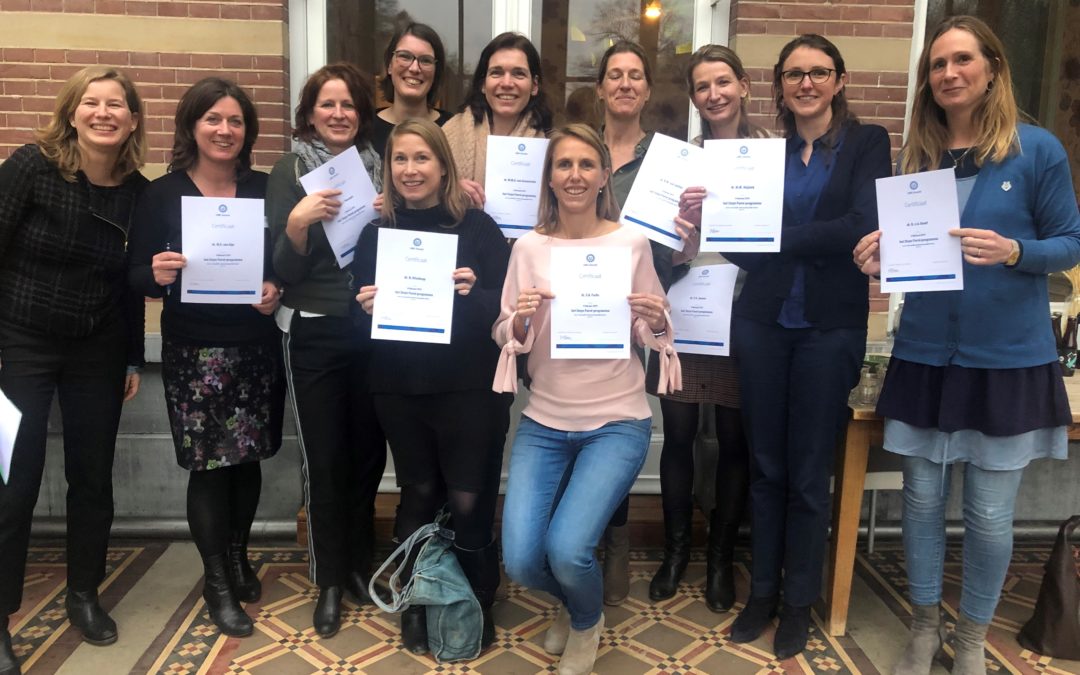
Stimulating talented female researchers in an academic career

Stimulating talented female researchers in an academic career

UMC Utrecht & Elisabeth Steyn Parvé programma 2018

UMC Utrecht invests in the development of talent, in the timely scouting of talent and the retention of talent. The Elisabeth Steyn Parvé program is one of the measures in the Talent to the Top Charter signed by UMC Utrecht. The Elisabeth Steyn Parvé program aims to stimulate talented female researchers in building an academic career. In this development program they are given the opportunity to reflect on their scientific career, understanding the rules of success of the academic world and shaping their ambitions.

The program includes intervision, utilizing qualities based on feed forward and recognizing and acknowledging Mindbugs.

An interesting article about this in the magazine UMC & ZO:

Diversiteit is “All ways that we differ from each other”

“Your brain is not as rational as you might think”

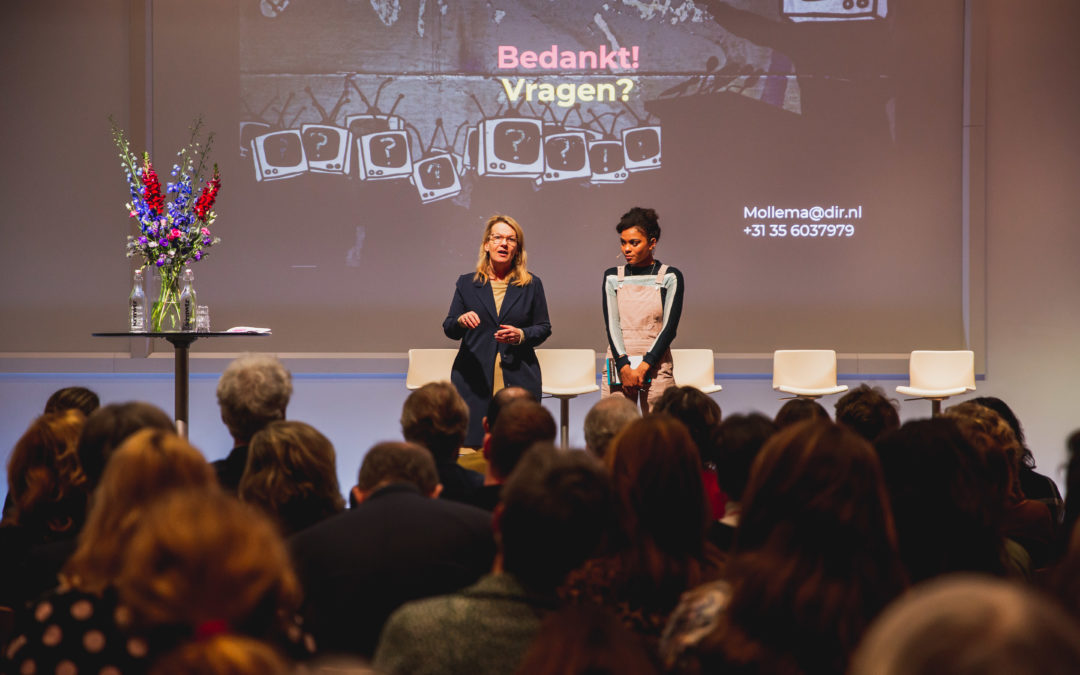
Nearly 95 percent of Dutch managers think men and women are equally suitable as leaders. At least they find that with the conscious part of their brains. When they do a test in which the subconscious mind takes over, 83 percent of respondents have a preference for a man. This became clear during an inspiration session about mindbugs, part of the Elisabeth Steyn Parvé program, to which the participants also invited guests. This program helps female research talent on their way to the top.

diversiteit

Everyone has those prejudices of which we are not even aware of. And those prejudices ensure that there is less diversity in teams. Not only diversity in gender, but also in age, race, introvert-extrovert or other character traits. Diversity is necessary to offer equal opportunities to everyone, but it offers much more. “Heterogeneous teams, with more diversity, do better than homogeneous”, says Esther Mollema, who gives the inspiration session. “You do your best work when you are slightly uncomfortable. If you are on a team that always challenges you a little, your brain is on top of its capabilities.

Predictability is nice, it gives you more confidence, but it does not lead to better results. Then you will know at meetings at some point that Piet will come up with an idea, which Anneke will say something about. And you know what position you will take yourself. Nice and easy, but not surprising. If the diversity is greater, this leads to more brainpower, less laziness and a better result. ”

In order to achieve diversity, we must be aware of our prejudices. “You can really find one, but act according to the other because your subconscious mind thinks otherwise,” says Esther. The participants also test the male and female managers. This is a group that you can expect to fully support female leadership. Yet their score deviates only a few points from that of the Dutch: 80 percent unconsciously think men are better leaders.

“Your brain is not as rational as you think, our brains are difficult to control,” says Esther. “You can be completely convinced that diversity is better. In the next application procedure, chances are that your preference – with equal suitability – will still go to someone who looks like you. And that’s how you probably strengthen the already homogeneous team. ”

Big and strong

That also makes sense. We make about a hundred thousand decisions in one day. Only 5 percent are conscious, the rest are unconscious. “In the days when there was still slapping, it was a great advantage to be big and strong. This is based on the fact that we people who are big and strong still unconsciously see a better leader. Now that is no longer necessary, but our brain is not yet that far. The fact that we now find it important that leaders communicate and cooperate well has not yet penetrated to the subconscious. ”

We cannot change the fact that this subconscious plays a major role. We can, however, adjust the process by which we select people for a position. “By accepting that we have those prejudices and anticipating them. How? By establishing together that you want diversity. By setting up a good structure for the job interviews. Think in advance what is important within the team, score individually and in writing. This makes you less impressionable. This helps to turn off your gut feeling. And, of course, ensure that the application committee is as diverse as possible. ”

UMC UTRECHT Elisabeth Steyn Parvé program 2018: Male-female ratio in the UMC UTRECHT

The share of men and women is the same for all managers in the (sub) top of UMC Utrecht. This is a great milestone in the pursuit of an organization in which there are equal opportunities and possibilities for everyone. A large increase in female executives in the past year has created this balance.

Gender is not the only theme on which UMC Utrecht strives for equality. From diversity and inclusion, we want to create a culture in which people work together who reflect society. UMC Utrecht tries to be a house where patients, staff and students feel (h) recognized and where there is room for people with talents who add value to good care, education and research. Factors such as gender, origin, orientation, religion, disability or age must not play a role in growth and career opportunities at UMC Utrecht.
‘Women also want male leaders’

‘Women also want male leaders’

Esther Mollema about unconscious mechanisms in organisations

Women outperform men and are equally ambitious. Yet they are outnumbered in top positions. Trainer Esther Mollema blames that on mindbugs: unconscious prejudices that have been fed with men and women. In organizations she brings those mindbugs to light.

The Dutch think they don’t make a difference between men and women, but they do in practice, ”says Esther Mollema (52). “In organizations, they are convinced that they choose the best leaders, but in reality unconscious prejudices play an important role.”

Unconscious bias

For eighteen years now, Mollema has been working to make organizations and their leaders more aware of these mindbugs. That is quite a job. Esther Mollema about unconscious prejudices in organizations:

“The Dutch have no more unconscious prejudices than people in other countries, but we do think much rosier about ourselves. That makes it extra difficult to face our mindbugs. We make a lot of decisions every day, so we can’t all think about that consciously. As a result, we make the majority of our decisions unconsciously. In doing so, we fall back on what we have learned about this – often stereotype – ideas in our upbringing.

”For example, 95 percent of Dutch managers initially indicate that they find women and men to be equally competent. But a mindbug test among over 11,000 of them shows that 83 percent have an unconscious preference for a man as a leader: 87 percent of men and 80 percent of women. No wonder so few women reach the top of Dutch business: only 6 percent of the directors and a quarter of the supervisory directors of listed companies are women, according to the latest Female Board Index.

“With characteristics such as taking initiative or a focus on results, men and women still think more of a man than of a woman,” Mollema explains. “But that is completely unjustified. A large international survey shows that employees rate their female executives even better than men for these traits. The explanation is that women often feel that they are the underdog and therefore do their utmost to be accepted. That currently makes women better managers than men, although they are not genetically different.”

Less intelligent

About five years ago, Mollema was invited by a Protestant organization (she can no longer figure out which, FP) that wanted to examine their unconscious prejudices. “I asked them to talk about their mindbugs in small groups, but no one dared to speak up. I then spontaneously suggested that they all write their views anonymously on a note. I then read it to the entire group. This resulted in extreme statements, such as: “Women are less intelligent,” “Because of their periods, women cannot hold leadership positions,” and “It is not God’s intention for women to lead.” The women and some of the men in the party were shocked. A conversation about that was hardly possible.”

Ambitious women also encounter other obstacles in organizations, Mollema says. “They often do not know about the unwritten rules, because they do not belong to the inner group with whom these rules are shared. This group usually consists of people who look like the managers; in an organization with male leaders, these are usually men. They tell each other who you should be with to get something done and who you should definitely not kick. Because women often do not belong to the inner group, they also earn less than men with the same work, because they do not know what to negotiate – for example about allowances. And they think that their manager wants the best for them, but often he wants the best for himself.

A good manager helps you take the next step in your career, so I advise women: choose a good boss and not a job. Women have learned in their education to do an excellent job. Then they think they will get the promotion they deserve, but that doesn’t work in masculine organizations. There you have to ask for the next step in your career. ”

Divers

Mollema strongly supports more diversity in (the top) organizations. “Research shows that various teams are more successful and achieve better results than homogeneous groups. That’s because there are more different opinions in mixed teams. That makes decisions richer and better. Provided that the manager can properly manage it.”

But how do you get those diverse teams off the ground? “You can’t prevent mind bugs,” Mollema says matter-of-factly. “They arise between what we see around us between our zero and third year. But you can remove prejudices from the process of the organization by observing exactly where things go wrong. Then it turns out, for example, that during job interviews on the spot questions are made up.

This encourages the confirmation of prejudices. It is better to complete an agreed questionnaire. Each member of the application committee gives a score after each question, which is later compared to that of the other members. It is best for them to speak individually with the candidates for a position, as they are least affected by the other committee members. It is also important that vacancy texts are free of language that particularly appeals to men and deter women. “You are decisive,” for example, boils down to “You help your team and monitor progress.” The first formulation is more popular with men, with the second you reach both men and women. Explain to candidates how the application process works, because women often drop out when they have to do an assessment unexpectedly, for example. Explain new employees to negotiate. And justify why you give an employee a certain assessment after communicating with your colleague managers before communicating that with the employee. Others can then give you feedback on your mindbugs. You judge people who look like you statistically too high, people who are different from you too low. ” Mollema also has a tip for ambitious women themselves. “Work abroad for a number of years early in your career. I notice that women with experience in another country reach the top faster, because they have been given opportunities that are still lacking in the Netherlands. ”

Discipline

According to Mollema, the introduction of measures for greater diversity requires a discipline that we often do not have in the Netherlands. “When organizations promise to improve their lives, they forget it two weeks later. That makes it extra difficult to change the balance of power in the Netherlands. You are not there yet with awareness of your prejudices. The relationships will only change if companies link agreements to them, which they also adhere to. There are organizations where, with my help, it works, such as ABN Amro. There, the percentage of women in top positions rose from 23 to 40 percent in two years. ”

According to Mollema, it is no more difficult to get top men in motion for this than top women. “Only very masculine men still refuse to commit themselves to more women in top positions because they are afraid of their own career. I see the group of men who support diversity in their company grow larger – but that can also be wishful thinking.

Hard work

There are many conscious and unconscious prejudices about differences between men and women in the workplace. Mollema puts some of these ideas into perspective. Women have less ambition than men.

“That statement is not correct. The Dutch are less ambitious than workers in other countries, but there is no difference between men and women. Often “saying you’re ambitious” is confused with “being ambitious”. Women demonstrate their ambition by working hard and trying to make their dreams come true. ”

Women profile themselves less than men.

“It is true that women find it difficult because they have not learned it. On the other hand: in high-performing organizations you do not have to profile yourself as that is where your actions count more than your drive to profile. I like that better. In any case, it is important to take your chance if you are asked to speak to the management or give your opinion on TV. Women are quick to take refuge because they are expired by such a question, but they are short changing themselves.”

“Women are more critical of themselves than men. “When a woman is turned down for a job, she thinks I’m not good enough. A man blames the application committee. But let’s say that being critical is a very good quality. I wish leaders were a bit more critical. ”

Women are less able to negotiate than men.

“Not true. They are less able to negotiate for themselves, but they are good at doing so for the organization. When it comes to themselves, they feel they should get what belongs to them, without having to ask. But that’s not how it works in most organizations right now. Negotiating is not necessary in a transparent and fair system. Women and organizations must grow together in this. ”

Women are less able to network than men. Esther Mollema about unconscious prejudices in organizations.

“That is right. Men see that more as a necessary evil to progress. Women do not always understand its usefulness; through their upbringing they trust that their qualities will bring them further by themselves. But you really need to know the right people if you want to achieve your goals. If you keep an eye on why you have chosen a certain position, networking becomes less difficult, because then you know what you are doing it for. When I think: this person can help me further on my career ladder, I dare not speak to him, but when I think: he can help me with my goal to make mindbugs visible in the Netherlands, I just do it.”

Women give more priority to their private lives than men.

“The Dutch spend more time on their private lives than people in other countries; we ourselves make a distinction between men and women. When a man says he works 60 hours a week, I ask: Every week? And until what time do you work on Friday? Then the 60 hours often turns out to be a bit exaggerated. Women with full-time jobs only work a few minutes less than men who work full-time. For women it is difficult that they have to show their most ambitious side during the period that they have children. I advise women not to make any big decisions in the field of work. In those years they think that their ambition is diminishing, but it usually comes back quickly. ”

Women consider supplying good products more important than bringing in as much money as possible.

“That’s right. Women are more driven by ideals. Men sometimes see earning a lot of money as a means to make something happen in their private lives: buy a boat, get more freedom. Incidentally, I meet more and more male leaders who also base the way they work on their ideals.”

Source: Volzin, November 2017
Text: Frieda Pruim

International Women’s Day revisted: Get to know your own mindbugs

International Women’s Day revisted: Get to know your own mindbugs

“Get to know your own mindbugs” lecture by Esther Mollema on International Women’s Day

“Why do hurricanes with a woman’s name lead to significantly more deaths than hurricanes with a man’s name?” asks lecturer Esther Mollema.

Workshop-Mindbugs

The answer: because we consider Bonnie, Emily and Fiona to be less threatening than Alex or Karl and therefore take fewer precautions. The above is not a joke, but a scientifically proven example of a mindbug: a wrong assumption that both men and women have when it comes to competencies and attributes that we attribute to each other.

Mollema is one of the speakers at the celebration of International Women’s Day with about forty school leaders and school administrators. She lightly confronts her audience with a number of painful mind bugs: prejudices, stereotypes, behavior that does not fit our beliefs. These mind bugs contribute to the fact that the number of women in leadership positions does not reflect the workplace at all. That is certainly a problem in primary education, because with this we teach children in a crucial development phase exactly the same mind bugs. And we are barely aware of it.

‘That uncertainty is not necessary for anything’

The fact that the Netherlands is one of the most emancipated countries on paper does not mean that women actually get the same opportunities, says Minister Jet Bussemaker, who took the trouble to come to Utrecht in between radio, television and political performances. ,, Women actually judge a CV better when it is from a man, than when it is exactly the same CV from a woman. We have every reason to worry about that. “”

Read the whole article on the website of the ‘PO Raad using this link ( in Dutch )!