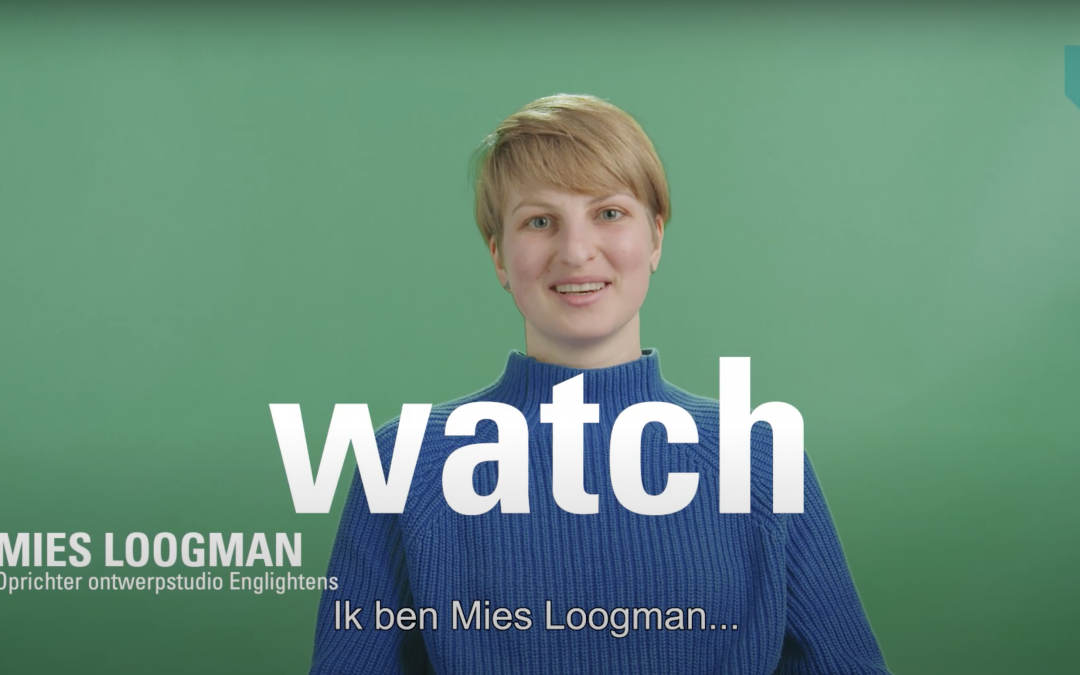
At one of our clients… ABN Amro: I was very honoured to be a member of the jury of the Dutch Design Week after being nominated by ABN Amro. In recent months, we have looked at designs that allow people to experience what exclusion is and what it feels like. Dutch Designer Mies Loogman won the competition and designed a game #EenWereldTeWinnen – Congratulations to Mies and ABN Amro.
How to guide a team towards job satisfaction, first-class cooperation and excellent results if you manage teams working more virtually?
Before the pandemic, the conventional wisdom was that offices and on-site managers were crucial to culture, productivity and results. Covid-19 was a game-changer. Teams went online and were surprisingly quick and effective in applying technologies for conferencing and digital collaboration. Many teams performed better than expected, and according to research by McKinsey, 80% of employees have plans to start working in a hybrid way post-Covid-19. Organisations will have to reinvent themselves to meet that demand. This super-fast turnaround has resulted in a major change for managers and team leaders. In many cases, it went well. Now that (partially) online working seems to remain, many managers and team leaders are looking for guidance. Some of their questions are: How do you give personal attention virtually? How to collaborate online? What signals from your team need immediate reaction? How to guide low achievers or less motivated employees in a virtual team? By now, many organisations request training courses and webinars on Inclusion in hybrid teams, so Esther decided to develop this training. This online training in two parts helps managers and team leaders shape their virtual teams competently and effectively. The training offers the opportunity to reflect on your effectiveness as a virtual manager. Do your employees enjoy working in the new reality? Do they effectively work together with their colleagues towards achieving the goals of the team?Two online training sessions of 1.5 hours each ( or 3-hour workshop ) have the following topics:
Giving direction in a virtual team: how do you bring focus and clarity and organise agility in your team? Practical tools to set up the basis for your virtual team.
Virtual collaboration: how do you pay attention, organise job satisfaction and do you coach online? How to deal with differences?
Esther has translated insights from High Performance Organisation and Inclusion insights into the new, virtual situation. The result is a training that offers very concrete and transparent insights for managers and team leaders. You learn to recognise the needs of each team member to perform optimally. With special attention for young talent, newcomers and high and low achievers in your team. Becoming a virtual HPO team starts with firm leadership. From there, you can guide your team with attention and speed towards better results.ProgramYou will learn, practice and experience during two fun and challenging online training courses of 1.5 hours each or face-to-face in a workshop of 3 hours. Gaining a suitcase full of new insights and short exercises to work decisively with your team towards a better result. Some examples of what we will discuss and practice:
Why you should pay even more attention to focus and vision for your team and how to do that;
What safety in a team looks like and how to stimulate that in an online context;
How to best respond as a manager to uncertainty among team members;
How to ensure connection in the team;
How to respond to the different needs of team members with special attention to young talents, newcomers, high and low achievers;
How often is contact necessary with team members, and what to discuss?
How to make the team more inclusive and stronger every day while collaborating online.
In between the training sessions, participants will be asked to reflect on themselves and practice their new virtual team skills. After this training, the training group can continue as a virtual peer group that continues to help and stimulate each other.Target audience: Organisations can offer this online training in-house to groups of 8 to 11 team leaders and/or managers. Discussing this topic with a larger group of managers and team leaders is also possible. In that case, it will be more of a webinar than a training. This training is great for managers and team leaders who want to motivate their virtual team and work together nicely and effectively towards the best results with an eye for individual needs. Please contact Robert Smit for more information. Made to measure: Together with our customers, we create custom training courses that improve the learning objectives of teams and/or organisation. We design and organise tailor-made programs that are 100% in line with our customers’ wishes, objectives, and situation. We help you and your team or organisation to gain insight and translate that into better results. We like to think along, design interventions and help you achieve the desired result. People about Esther’s online training courses: “Wow, so much energy, even online. I am so inspired by the insights and the way it is presented.” “I love the actionable advice Esther gave in her presentation. Let’s get to work!”
As many as 637 people participated in the BLM Challenge to examine their Unconscious Bias with regard to Skin Color and Trust using our Mindbugstest. What all these people and you might also want to know: what conclusions can we draw from the results? The results show the following: The respondents gave the following answers to the statements in the test: 99% of all respondents indicated that they viewed other people in a neutral or positive manner, regardless of their skin color. 99% of all respondents also indicated that skin color has no impact on their idea of whether someone would be a good leader for an organization. Then the people were tested for their possible bias on skin color. This part of your test is no longer about your opinion but measures your unconscious bias against people with a light or dark skin tone. The scores for this item showed that most respondents do allow themselves to be influenced by someone’s skin color: 24% of the respondents have a preference for people with a dark skin color, of which 7% strongly. 76% of the respondents have a preference for people with a light skin color, of which 52% are strong. For many of the respondents, the test shows a large discrepancy between how the respondents think they act and how they actually act on the basis of a person’s skin color. It is possible that people with large differences between their opinions and their unconscious bias may inadvertently exclude and discriminate against people based on their skin color. The bigger the discrepancy, the harder you have to work to give everyone a fair chance. Those who indicated that they interacted a lot with people with different skin colors or who grew up in a diverse environment showed less high unconscious biases on skin color. This is in accordance with research. Working on “friendship” with people who are different from yourself is a reliable way towards less unconscious prejudices. It’s called contact theory. It is also striking that the positive contact with people who are classified in one group can also make someone more positive towards people who belong to another group (secondary transfer effect). One of the first steps you can take to reduce biases to seek out and deal with more diversity of people. For background on the test, see our other site https://mindbugstest.nl. All people who have taken the test will receive their personal, confidential reports by email.
“If you get to know each other and you find out that people do not fit their label, than it becomes interesting”.
A wonderful interview from Norwegian talk show host Fredrik Skavlan with comedian Hannah Gadsby, about neuro-diversity and her autism, about the labels we automatically attribute to others and the importance of looking at the individual behind the labels.
For many leading organisations, Esther provides an internal Female Leadership course for their talented women. Each course is tailor-made and has slightly different points of attention.
What do you learn?
The first goal of all courses is to empower talented women even more. The courses help them to take full ownership in shaping their business and personal ambitions. The participants get the tools to start steering their careers, but they are also offered insights on how “the world of organisations” works and how they can contribute to it successfully. The second goal of this curriculum is to fill the pipeline of those organisations with more female talent.
Course with customised modules
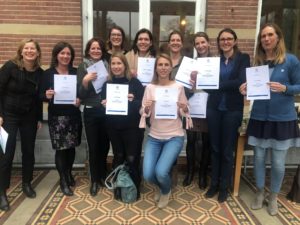
A course consists of several modules. One customer chooses to distribute the modules over the course of a year with various additional activities such as mentoring, peer reviews and an assessment to map the perceptions and strengths of the participating women. The other client opts for the intensive two-day training. The success of the courses is supported by the evaluations we receive from the participants. But what makes us even happier is that participants grow in their organisation to their full potential and thus make that organisation even stronger. Unbelievable: we have been working with some organisations for these training courses for 15 years. We are really proud of that. Some clients of the internal Female Leadership Curriculum: ING, VU, EY, Sogeti, LUMC, ABN Amro, Abbott, MN, and UMC Utrecht. For these courses, Esther happily collaborates with other experts. Two of them needs mentioning here: Erna Versteegden and Muriel Schrikkema, who take on the peer groups and personal coaching. Erna Versteegden also participates as an expert in some areas. Please contact Robert Smit for more information.
Made to measure
Together with our customers, we create customised training courses that improve the learning objectives of your team and/or organisation. Customisation is our daily work. We design and organise tailor-made programs that are 100% in line with the wishes and objectives of our customers. We help your team or organisation to translate gained insights into results. We like to think along with you, design interventions and help you achieve the desired result.
This website uses cookies to improve your experience. We'll assume you're ok with this, but you can opt-out if you wish. Cookie settingsACCEPT
Privacy & Cookies Policy
Privacy Overview
This website uses cookies to improve your experience while you navigate through the website. Out of these cookies, the cookies that are categorized as necessary are stored on your browser as they are essential for the working of basic functionalities of the website. We also use third-party cookies that help us analyze and understand how you use this website. These cookies will be stored in your browser only with your consent. You also have the option to opt-out of these cookies. But opting out of some of these cookies may have an effect on your browsing experience.
Necessary cookies are absolutely essential for the website to function properly. This category only includes cookies that ensures basic functionalities and security features of the website. These cookies do not store any personal information.
Any cookies that may not be particularly necessary for the website to function and is used specifically to collect user personal data via analytics, ads, other embedded contents are termed as non-necessary cookies. It is mandatory to procure user consent prior to running these cookies on your website.