by Esther Mollema
During my undergraduate studies, I was lucky enough to have an internship in Japan. It was an unforgettable time with many moving and special experiences. I went alone, didn’t speak a word of Japanese, lived with two Japanese students in a tiny house, got pushed into the subway every day with thousands of others, and worked at Japan’s largest company, NTT. Unfortunately, hardly anyone spoke any English at work that I understood anything about. Simple things turned into an adventure. I left Japan with a backpack full of admiration, respect and funny stories that I like to tell.
The Tall One and the Panda

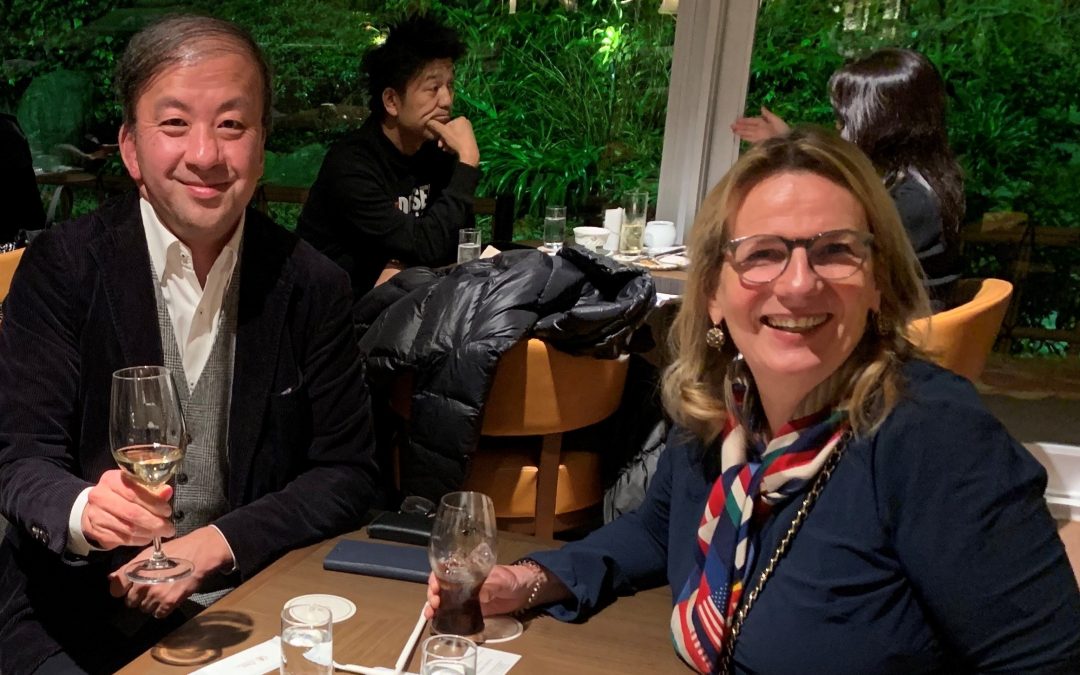
Farewell Party, NTT Japan (1986)
One thing I haven’t talked about before is that I had a lot of trouble distinguishing all the people and colleagues I dealt with every day. I still feel very uncomfortable about that. It was just as if they were just sitting at their desks. But when I met them in the hallway or at lunch, it was impossible for me to recognize who was who. I confused the top boss with the male secretary and it was an embarrassing situation. I was really ashamed. Every day the inconvenience started that I couldn’t tell my 15 closest colleagues apart. From misery I taught myself a kind of survival technique and came up with a defining characteristic for everyone in the department that I could use to tell them apart: my boss was Babyface, my supervisor De Lange, the department secretary the Panda, the man from the other department who always The Professor was so kind. I also remember the Comb, the Laugh, the Little and the Divorce.
Princess Diana
In the early days I could just hold my own with this method. If I look at the photo from a long time ago, I can no longer imagine that I could not distinguish them. How could I not have seen the differences then? They are really all very different. Their face shapes, their height, their hair. What was wrong with me? And yet I think my Japanese colleague had the same problem. They all said that I was a lot like Princess Diana, the then crown princess of the UK. One evening when a Canadian lady I met told me that everyone in her organization thought she looked so much like Princess Diana too, something dawned on me. What was going on?
Same-race effect in the brain
Later when I started to deal with unconscious prejudices, I learned that what I had experienced in Japan is not very special. It can be explained from how our brain works and how it makes unconscious choices. It works like this: our brain looks for ways to make quick decisions. What we see in particular is very decisive for making decisions quickly. The eye scans the environment and looks at other people to gauge it quickly. Reading faces in particular is a mechanism for quickly identifying danger from friendship. That was already the case when our distant ancestors lived in itinerant tribes on the savanna and that is no different now. Our brain focuses on being able to accurately read and distinguish faces at a very young age. Which emotion do I see? What does this person want? Can this person be trusted? We learn to read faces and especially the faces we often see. Your brain develops an increasingly refined ability to see nuances and emotions in those faces. We immediately see fear, joy or annoyance in the faces of the people we interact with a lot. And that specialization comes at the expense of faces we don’t often see, for example someone with a different skin color. Actually, our brain does not know how to read those other faces and it is difficult to distinguish. All those faces look the same to your brain. And that was what I experienced in Japan. That’s why I struggled so much. In science, this phenomenon has been described as the same-race effect.
Large consequences
Stanford professor Jennifer Eberhardt also writes about this in a very educational book called Bias, the new Science of Race and Inequality (2019). She expertly shows how this same-race effect in your brain has major consequences in our actions today in organizations and in our society. This effect and not being able to distinguish well with people with other facial features, such as skin color, often leads to generalization of the group that you do not know well. You find them all similar and you give them all the same characteristics. Often negative features. Because you cannot properly estimate this group, you approach this group with a bit more distrust. This is also an unconscious automaticity of your brain. As a result, you can easily see the entire group as a category to which you assign many of the same properties. This is how unconscious prejudices form in your actions. And with unpleasant unconscious consequences. Also just in the Netherlands. Did you know that in the Netherlands today a white person with a criminal record is more likely to be invited for an interview than a black person who has never been in contact with the police (UvA, 2017)? Many people with a migration background still indicate that when they sit next to a woman in the tram, she often holds her bag a bit tighter. Unknown makes unloved in the brain. With major consequences.
Hold the thief!
It happens to everyone. Also Neil deGrasse Tyson, the world famous American astrophysicist and author. He noted that in stores, the security gates at the exit often went off suspiciously as he walked through them. Security guards immediately came to him and everything was checked. After several times, of course, nothing was found with him, he asked the guard if they could take a look at the surveillance images together. And what turned out? In the video you could see that while Neil deGrasse Tyson was going through the gates, a white-skinned thief was fleeing through the other gate next to him. Security guards immediately walked over to the black Neil deGrasse Tyson after the alarm signal and looked at all his bags and searched him. The white thief took advantage of the fact that not he but black Neil deGrasse Tyson was mistaken for the potential thief.
Painful for all of us
In the Netherlands, many people with a migration background experience daily disadvantage from the same-race effect. They are not seen by employers, are excessively stopped by the police and punished more harshly by judges for wrongdoing. That is extremely painful for the people involved and it is also painful for all of us. We do not treat people equally, often unconsciously. We may think we are not doing that, but the facts really show otherwise. Can we and do we just want to do better?
Recognition
Fortunately, we know better and better how to deal with this and how to counteract the unconscious categorizations in your brain. First of all, it requires recognition and acknowledgment that you may also be guilty of this and that you want to solve it. That is a big step. In a previous blog (“Pleasant self-image”) I explain in detail why this is a very big step for Dutch people, more so than for neighboring countries. If there is a willingness to actually do something about it, all that follows is the blood, sweat and tears😊 of every day trying to get better at this. We teach leaders – which is basically everyone – to act on a few principles.
1.Slow Down
Teach yourself to delay your decision on important decisions. Take another look at the facts, take another look at the process and wonder if you haven’t overlooked anything. Let others challenge you again. In Jennifer Eberhardt’s book, there is an example that police forces in the US are increasingly moving to apply this slow-down process to combat ethnic profiling. When an agent sees a suspicious person she / he wants to arrest, the procedure is increasingly focused on first describing the action that makes this person suspicious. Police officers are asked to consider that, for example, just being black is not a reason for arrest. This slow down procedure has proven to lead to fewer arrests of black people who have done nothing wrong, less frustration with these people, fewer incidents, but not fewer arrests of people who have really done something wrong.
2. Redesign your decision-making processes
Another way to manage your unconscious actions is to review your decision-making process. What you want is to make your most important decisions follow a fixed procedure that prevents your brain from walking the same hare paths too quickly. Use data and facts to see where unconscious biases have an impact on your decision making and fix it with a clear process measure. I would like to mention a few that we currently propose to many organizations:
- Standard check on choice of words, design and style of vacancy texts to be attractive to all talents in the target group. Many advertisements are often written for white men without people noticing.
- Structured interview questions to prevent bias from taking over in your questions.
- Proportional promotion per function layer.
- Equal pay for employees doing the same job.
3. Inclusion
Above all, make sure that people feel at home in a team and that they feel connected and free with the others in the team. Make sure people can and want to say what they want to say without feeling embarrassed or insecure. This requires attention from the team and especially from the leader. Research shows increasingly convincingly that all the activities and attention to really turn a group of people into a team pays for itself in the result of the team.
4. Growth mindset
You will make mistakes in your path to more diversity and inclusion. Things will go wrong unintentionally. Every mistake is an opportunity to learn from it and do better next time. That is the fastest way to learn. However, the more an organization expects you to do things flawlessly and predictably, the more perfectionistic you become, the more you color only within the lines and the more you detest your mistakes. Professor Carol Dweck calls this a fixed mindset as a counterpart to the growth mindset that learns from mistakes. The fixed mindset mechanism works against you on the challenging path for more diversity and inclusion. It really takes courage from you and your team to get out of such a vicious circle of fixed mindset and fear of mistakes.
The best team ever
In Japan I learned some important lessons. I subconsciously and incompetently applied all four methods that I describe above. But it was The Tall One and The Panda who made the breakthrough. They took me for lunch every day even though The Panda didn’t speak a word of English and I didn’t speak a word of Japanese. I learned from them, they enjoyed the things that had gone wrong again and that is how I learned to see the humor of it all. They improved their English and I learned some Japanese so that we could understand each other better and better. It was an unforgettable time. The Tall One, a very successful executive in Japan today, sometimes sends greetings from him and The Panda. We were the best team ever, the Tall One wrote recently. And that’s how I experienced it after the difficult start.
P.S.I met the Tall One, Manabu Moriya again in January 2020, when I did an assignment at Philips Japan. It was great meeting him again!
by FD
Many people in the workplace feel ‘different’ from colleagues, although no one sees that directly from them. ADHD, autism, dyslexia, or an introverted personality, companies are more aware of the invisible differences. A Diversity policy helps. And that benefits both employees and the company.
In brief
- Research shows that many people feel different from their peers and adapt to the dominant standard of not being left out.
- A Diversity policy is more effective when it also focuses on invisible differences.
- Abroad, various companies give specific attention to ‘neurodiversity’, in the Netherlands the concept is also gaining ground.
A woman does not necessarily bring diversity. Esther Mollema often starts training with this statement. “Then everyone is immediately awake.” Mollema gives diversity training to teams from, among others, ABN Amro and the Ministry of Foreign Affairs. Like most large organizations, they have a diversity policy that focuses on attracting women and people with different cultural backgrounds. But, says Mollema, that’s just a tip of the iceberg called diversity. Gender and skin color are characteristics that make people visibly different. But there are also differences between people you don’t see but that have a major impact on how they feel and how they function in the workplace.
Read the whole article about diversity policy on FD.nl
Source: FD Author: Maartje Laterveer
by Esther Mollema
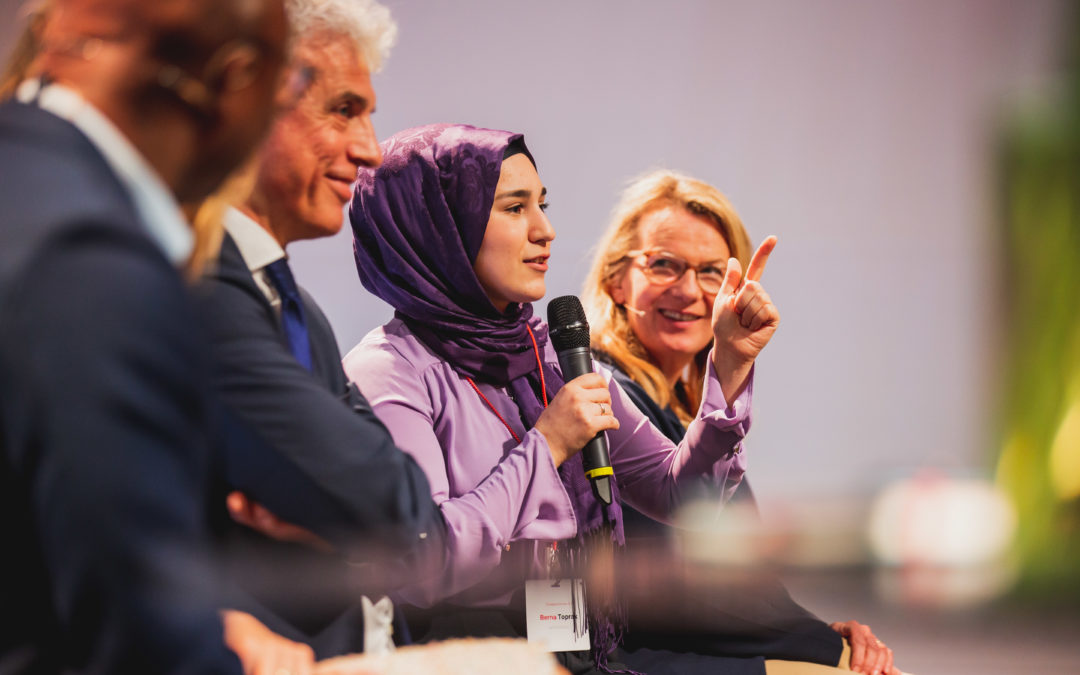
Hans de Jong, president of the Philips Netherlands, recently hosted the Top Women event. We support Philips worldwide in their ambitious diversity and inclusion goals.
“You can only successfully improve the lives of people worldwide if you reflect those different target groups yourself. Diversity is a business imperative, ”says De Jong. “When it comes to influx, the male / female relationships at Philips are in balance. We currently have 23 percent women in senior leadership positions. No, we are not satisfied with that yet, that should be 25 percent in 2020 and then gradually increase to 30 percent. We are concerned with better balance across the board, not just at the top, not just gender diversity. The point is to harness the power of the difference, and those differences are much more diverse than what we can see from each other’s looks. We also pay a lot of attention to inclusivity. After all, inclusivity is a precondition for taking advantage of the diversity that our colleagues bring. ” “Part of that is to tackle bias, or the unconscious prejudices that we all have as humans. We are often insufficiently aware of the influence of our own bias. It is much larger than we think or even want to recognize.
Within Philips, Astrid Balsink, our Global Head of Diversity & Inclusion, helps to promote this topic in all parts of the world. Worldwide she collects what is going on and what needs to change. This is not an easy task, since bias manifests itself differently in India than in the Netherlands, for example. So it is first of all about raising awareness. Programs follow to discuss and improve it at team level. In short, this is a long-term effort, which revolves around openness, dialogue, and learning from and with each other. ”
Read the entire article on Topvrouwen.nl.
Source: Topvrouwen.nl Author: Nicole Gommers

by NRC
A diverse workplace has several advantages. But also pitfalls. Notice the invisible differences.
Haven’t been on diversity training with the office yet? Your own unconscious prejudices not yet tested? Then you miss the boat. There is an endless choice of courses. Diversity is hot.
That has changed quite a bit since the 1950s and 1960s, when working was primarily a matter for white men. In 2019, the Dutch workforce is considerably more varied. “Although you still see few really diverse organizations,” says Karima Belhaj, change manager and long responsible for diversity and inclusion at a large bank. “Especially if you look at top management.”
But why should we want that diverse workplace? Research shows that people in homogeneous teams feel more confident and have the idea of being more efficient than people in various teams. Those who are not contradicted come to conclusions faster. However, you do the best work if you are slightly uncomfortable, because the views are chafing, says Esther Mollema regularly in the lectures and diversity training she gives. According to Mollema, who is hired by organizations such as ABN Amro, the Ministry of Foreign Affairs and also NRC, people in various teams are smarter, more creative, more involved and show a lower turnover.
Read the whole article on NRC.nl
Source: NRC Author: Ykje Vriesinga

by Esther Mollema
During a visit to New York, Esther Mollema interviews Anna Fels, author of the book Women and Ambition.
Let’s talk.. about ambition
Many women seem to have a difficult relationship with ambition. They are ambitious, but they often don’t say it (enough). Esther talked about this with Anne Fels ( American ) who did research on this topic.  At the end of your performance interview, your boss asks about your ambitions for the following years. What are you doing? Do you immediately come to the point with a concrete proposal, such as: “I would like to grow into a senior position in two years’ time and lead my own team”? Or do you say, “I don’t really know. I want to grow in content and develop myself personally, but I don’t know how exactly. ” Are you asking for a deserved promotion? Or are you waiting for your boss to offer it?
In my experience (Esther ed.) many women still find it difficult to indicate clearly what they want. And that’s why I got on a plane to New York to speak to Anna Fels, who gave so many insights about this in her book “Women and Ambition“. She conducted a major research into dreams and ambitions, and what they mean to us.
The many women she interviewed for her book all spoke fluently and candidly on everything from money to sex. But when it came to their ambitions, it suddenly became difficult! And yet ambitions fulfill a deep human need. Whether teaching, healing patients or a career in business: being good at something and getting recognition for it is essential to our well-being and happiness. For women of today, the road to something good is wide open. We have access to all courses and professions. However, the pitfall is still in recognition, says Anna Fels: “that is still more difficult for women than for men.”
Anna Fels,if ambition is so good for us, why is it often such a difficult subject for women?
“Women’s roles are changing at an unprecedented rate, probably more than ever in history. Cultural values that were valid for centuries are broken. But those values still have an impact. In the past, women often had to subordinate themselves to others. There was little room for themselves. That is still the case with many women.
Many women feel guilty if they want to do something for themselves, for example promote while they already have a nice job, or if they want to work more hours. Wanting to make a career, being ambitious, is then considered to be very selfish. Women often hide their ambitions. I even see here in New York, the epicenter of ambition, few women who are truly openly ambitious.
Women who are successful often say that it just happened that way and that they were very lucky. ” Despite all the changes in recent decades, it has proved difficult for women to maintain their ambitions, says Anna Fels. Because we still expect women, whatever their dreams, to be primarily caring and supportive to others. So a tricky pitfall…
Following your dreams and ambitions makes you happier, but “real women” and “good mothers” should (we still think) not choose for themselves. Of course that is changing, but in almost all women today you can still see some of this internal struggle.
Anna Fels, what can women do themselves to stick to their ambitions?
“Everyone needs encouragement and attention for his or her ambitions to be motivated and productive. I often see women who do not receive this encouragement in my practice. I show them that they are in an environment where they receive very little support. That they must stop trying to change themselves and that breaking them is not personal failure, but simply the best, inevitable choice.
The solution is not to stay where you are, but to find a new job, a new environment, a new mentor. Cut your losses and get out! My second most important advice is that in such a situation you should not so much look for a new job, but especially for a new boss. Someone who does give you support and recognition. Also look at the people who already work for this person. Is that the environment in which you fit and will flourish?
I hope that women will support each other much more in the coming years by letting each other know for whom you should and should not work in an organization. I hope there will be more networks in which women discuss this with each other.
Anna Fels: “For men a lot is changing too”
”
In my work I see that more and more men are starting to make new and different choices. How do you also recognize that?
“For men, this major cultural change is also getting more exciting. Until now they have had much clarity. Men did not receive negative feedback in their choices, for example to make their careers more important than their families. But a lot is changing for them too: 35 percent of women in the US are already earning more than their husbands. And in the last recession, especially men have lost their jobs. Those families already live in a new truth. ”
In the Netherlands, I (Esther ed.) advise many companies that want to prepare their women and men for a more diverse composition of their organization. How well does that work in the US?
“We have known for some time that organizations with a good male / female ratio perform better, but it develops still slowly. A bright spot is that it is a real culture revolution and if you look at it that way, it all goes quite fast. But if you experience it yourself, you can be annoyed by that slowness, yes.”
As a mother, what can you do to prepare your daughters for these new choices and lives?
“Parents who want to help their daughters to choose new, less traditional roles should especially teach children how to become good at something. Children like to feel special and special, to be proud of themselves. It doesn’t really matter what, but they have to feel that they excel at something. And for recognition, the compliments of just your parents are not good enough.
Children quickly realize that parents are not really objective. They must get the signal from the outside world that they are good. Parents can of course organize this carefully. By looking for their talent with their children and then ensuring that they receive compliments from others. ”
Esther Mollema’s books can be ordered via bol.com
by Esther Mollema
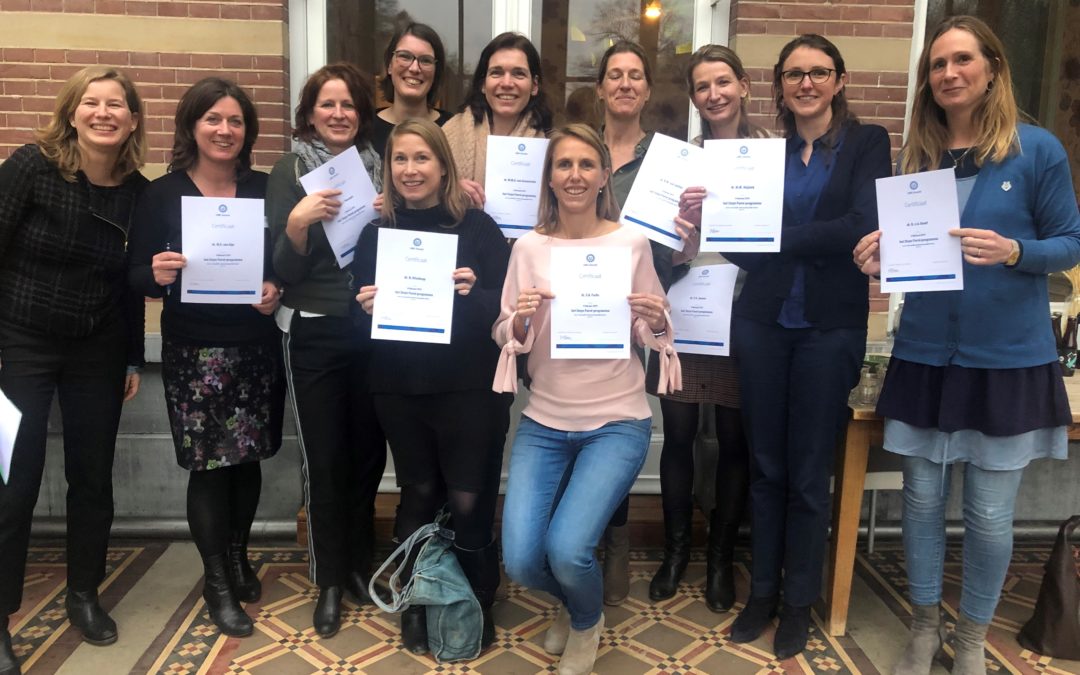
UMC Utrecht & Elisabeth Steyn Parvé programma 2018
UMC Utrecht invests in the development of talent, in the timely scouting of talent and the retention of talent. The Elisabeth Steyn Parvé program is one of the measures in the Talent to the Top Charter signed by UMC Utrecht. The Elisabeth Steyn Parvé program aims to stimulate talented female researchers in building an academic career. In this development program they are given the opportunity to reflect on their scientific career, understanding the rules of success of the academic world and shaping their ambitions.
The program includes intervision, utilizing qualities based on feed forward and recognizing and acknowledging Mindbugs.
An interesting article about this in the magazine UMC & ZO:
Diversiteit is “All ways that we differ from each other”
“Your brain is not as rational as you might think”
Nearly 95 percent of Dutch managers think men and women are equally suitable as leaders. At least they find that with the conscious part of their brains. When they do a test in which the subconscious mind takes over, 83 percent of respondents have a preference for a man. This became clear during an inspiration session about mindbugs, part of the Elisabeth Steyn Parvé program, to which the participants also invited guests. This program helps female research talent on their way to the top.

Everyone has those prejudices of which we are not even aware of. And those prejudices ensure that there is less diversity in teams. Not only diversity in gender, but also in age, race, introvert-extrovert or other character traits. Diversity is necessary to offer equal opportunities to everyone, but it offers much more. “Heterogeneous teams, with more diversity, do better than homogeneous”, says Esther Mollema, who gives the inspiration session. “You do your best work when you are slightly uncomfortable. If you are on a team that always challenges you a little, your brain is on top of its capabilities.
Predictability is nice, it gives you more confidence, but it does not lead to better results. Then you will know at meetings at some point that Piet will come up with an idea, which Anneke will say something about. And you know what position you will take yourself. Nice and easy, but not surprising. If the diversity is greater, this leads to more brainpower, less laziness and a better result. ”
In order to achieve diversity, we must be aware of our prejudices. “You can really find one, but act according to the other because your subconscious mind thinks otherwise,” says Esther. The participants also test the male and female managers. This is a group that you can expect to fully support female leadership. Yet their score deviates only a few points from that of the Dutch: 80 percent unconsciously think men are better leaders.
“Your brain is not as rational as you think, our brains are difficult to control,” says Esther. “You can be completely convinced that diversity is better. In the next application procedure, chances are that your preference – with equal suitability – will still go to someone who looks like you. And that’s how you probably strengthen the already homogeneous team. ”
Big and strong
That also makes sense. We make about a hundred thousand decisions in one day. Only 5 percent are conscious, the rest are unconscious. “In the days when there was still slapping, it was a great advantage to be big and strong. This is based on the fact that we people who are big and strong still unconsciously see a better leader. Now that is no longer necessary, but our brain is not yet that far. The fact that we now find it important that leaders communicate and cooperate well has not yet penetrated to the subconscious. ”
We cannot change the fact that this subconscious plays a major role. We can, however, adjust the process by which we select people for a position. “By accepting that we have those prejudices and anticipating them. How? By establishing together that you want diversity. By setting up a good structure for the job interviews. Think in advance what is important within the team, score individually and in writing. This makes you less impressionable. This helps to turn off your gut feeling. And, of course, ensure that the application committee is as diverse as possible. ”
UMC UTRECHT Elisabeth Steyn Parvé program 2018: Male-female ratio in the UMC UTRECHT
The share of men and women is the same for all managers in the (sub) top of UMC Utrecht. This is a great milestone in the pursuit of an organization in which there are equal opportunities and possibilities for everyone. A large increase in female executives in the past year has created this balance.
Gender is not the only theme on which UMC Utrecht strives for equality. From diversity and inclusion, we want to create a culture in which people work together who reflect society. UMC Utrecht tries to be a house where patients, staff and students feel (h) recognized and where there is room for people with talents who add value to good care, education and research. Factors such as gender, origin, orientation, religion, disability or age must not play a role in growth and career opportunities at UMC Utrecht.
