When women are in majority, men still lead.

When women are in majority, men still lead.

It seems so logical that when many female talents are employed within an organization, more women will naturally move up to top positions. But is that really the case? We conducted research to find out.

HBR Staff/EschCollection/Getty Images

Image by HBR/ EschCollection/Getty Images

Our initial exploration led us to a publication from Harvard Business Review (HBR) in April 2024. It reported that in the non-profit sector in the United States, where the majority of employees are women, female representation at the top is often lacking. The publication also revealed that the higher the revenue, the more often men are in charge. We were curious to see how this plays out in the Netherlands, so we conducted research on fifty ANBIs (Public Benefit Organizations) with the highest revenue within the non-profit sector, specifically in education and healthcare. These are sectors in our country where it has been proven that more women work than men.

And to go straight to the conclusions: we see the same pattern in the Netherlands. Despite the fact that the majority of employees in these sectors at all levels are women, the percentage of women in the leadership of these organizations is also lower in the Netherlands. As in the American HBR study, we observed a decline in the percentage of women in the upper layers of the organization. We also found that in the Netherlands, the choice for the highest leadership position is less often made in favor of female talent as the organization grows larger and generates more revenue.

You could say that although more women than men work in these organizations and they are eligible for leadership roles, they are more often stuck below the top. This phenomenon is also known as the Glass Escalator Effect: men seem to stand on a symbolic escalator to the top, while that escalator is missing for women, hindering their career progression. As a result, men have easier access to top positions, even when they work in industries where they are underrepresented. Why is this the case?

The HBR study suggests that this symbolic escalator for men is due to unconscious biases: the unconscious belief that men are better leaders and the assumption that as an organization grows larger, men are best suited to manage it. The association of male traits with leadership qualities remains strong (albeit unconsciously), and we see this reflected in the results of our mindbug tests in the Netherlands. These tests show that 81% of participants (n=19,004, both men and women) have an unconscious preference for a man as a leader, even though 96% of them indicated beforehand that they do not make distinctions in gender for leadership positions. Additionally, men who take on traditionally female roles (such as becoming a nurse) are often excessively praised for doing so. Click here for more details.

The Glass Escalator Effect in the Netherlands: Our Research

Our research within the same sectors in the Netherlands confirmed the American results, as shown in the figures below. First, we see that the overrepresentation of women in these sectors is not reflected in the boards of these organizations: the percentage of women in the top remains below or around 50%. We also observe that the percentage of women in leadership positions within the sector decreases as revenue increases. This is evident in the comparison between the top 10 organizations with the highest revenue and the ten organizations with the lowest revenue.

Category General Average % Women Average % Women in Board of Directors % Women in Top 10 Organizations by Revenue % Women in Bottom 10 Organizations by Revenue Average % Women as Chair of the Board % Women as Chair in Top 10 Organizations by Revenue % Women as Chair in Bottom 10 Organizations by Revenue
Higher Education 76.8%* 51.3% 46.6% 55.0% 52.0% 40% 50%
Healthcare Institutions 53.3%** 47.6% 42.5% 48.3% 42.0% 40% 55%

* Reported by 16 out of 25 organizations ** Reported by 9 out of 25 organizations

Lastly, our research shows that the overrepresentation of women in these sectors does not result in a higher number of female chairs of the board of directors. In fact, the likelihood of this decreases as revenue grows. This percentage also remains below or around 50%.

These are striking results given the consistent overrepresentation of women in the non-profit sector [1]. In summary, we conclude that the highest positions, even within ANBI organizations, are disproportionately awarded to men, despite the presence of many female employees and talents in these sectors. The ‘glass escalator’ phenomenon also exists in the Netherlands.

Finally, this: In our research and this article, we focused on the ‘glass escalator’ effect, highlighting the difference in opportunities for men and women in the non-profit sector in the Netherlands. The HBR article also explored this effect in the context of ethnicity. You can find that HBR study and the recommendations they provided here.


[1] Explanation of the general male-female distribution

Although every ANBI organization reports on the composition of its board and chairs in their annual report or on their website, not every organization reports on the general male-female ratio. The organizations that do report on this show a clear picture: the majority of employees are women. To validate these figures, we compared our data with publicly available statistics for the sectors we studied.


From Resistance to Gain: The Untapped Power of Diversity in Organizations

From Resistance to Gain: The Untapped Power of Diversity in Organizations

Juan Moyano/ Getty Images - through Harvard Business Review

Image Juan Moyano/ Getty Images through Harvard Business Review 

Naar aanleiding van haar observaties dat veel organisaties nog steeds worstelen met het werken aan meer diversiteit, zet Esther in dit artikel de noodzaak, kracht en uitdagingen ervan op een rij. Diversiteit: Briljant of Belemmerend? Onze geschiedenis is doordrenkt van ideeën die aanvankelijk werden weggewuifd, maar uiteindelijk cruciaal bleken voor vooruitgang. Hieronder enkele historische voorbeelden van revolutionaire denkers die eerst werden bespot voordat de waarde van hun ideeën breed werd erkend:


  • Galileo Galilei was prohibited from teaching in 1620 after claiming that the sun, not the earth, was the center of the universe.
  • Ignaz Semmelweis was dismissed in 1850 after suggesting that better hygiene in hospitals, such as handwashing, could drastically reduce the number of deaths.
  • Pregnant women who, in 1860, preferred to have their deliveries attended by a doctor rather than a priest or minister were considered ungrateful and not devout.


  • Josephine Cochrane invented the dishwasher in 1886, but her invention was ridiculed as useless because women would supposedly have nothing left to do.
  • Svante Arrhenius first calculated the potential warming effects of carbon dioxide in 1896, but his findings were hardly taken seriously at the time.
  • In the 1960s, doctors who warned about the dangers of smoking were mocked by their colleagues, who promoted smoking as healthy, stress-reducing, and even a remedy for asthma.


This list shows that brilliant discoveries, which we now utilize, were dismissed as ridiculous at the time of their inception. Their findings did not align with the prevailing views of the time, and the majority hindered progress by ridiculing innovative thinkers.

The resistance to change, a human trait as I will explain shortly, led in many cases to delaying or even blocking developments that ultimately would have benefited society as a whole. This raises the question of what progress we are currently blocking due to resistance to change—both in society at large and within organizations.

How Diversity Can Transform Your Organization – If You Allow It

In today’s complex world, the ability to integrate diverse perspectives is crucial for the success of organizations. Effectively dealing with the many challenges we face, both internally and externally, requires careful exploration and development of options to ultimately make well-considered decisions. To make these decisions in a sound way, it is essential for organizations to bring in diverse viewpoints by actively building diverse teams. This diversity ensures that all options are thoroughly weighed and that decisions are more widely supported.

Countless studies have increasingly demonstrated the value of diversity in teams. Research from reputable institutions such as McKinsey, Glassdoor, Deloitte, and others [1] shows that organizations open to diverse perspectives perform significantly better. Not only do they excel in innovation and decision-making, but they also expand their market share and increase customer satisfaction. Furthermore, such organizations are more successful at attracting and retaining talent, as they create an environment where different ideas are valued and employees feel challenged and supported.

Despite the compelling evidence of the benefits, diversity remains a sensitive and often difficult theme to implement in many organizations. This sometimes seems due to a lack of understanding of the advantages, but more often to the challenge of truly embracing and integrating diverse perspectives into the organizational culture. Finally, it also requires courage and perseverance from leaders to implement this change, leading to a worthwhile reward: a more resilient, innovative, and successful organization.


HBR Staff/ Westend61/ simonkr/ Getty Images

Image by HBR Staff – through Harvard Business Review

The Diversity Paradox: Understanding that What is Good Does Not Come Easily

If the benefits of diversity are so clear, why does it remain a difficult topic in many organizations? This phenomenon is known as the “diversity paradox.” Despite overwhelming evidence from numerous studies showing that diversity leads to better innovation, decision-making, and competitive advantage, many organizations and individuals remain hesitant to fully embrace it. This reluctance stems from a deeply ingrained tendency to choose the familiar: ease and stability, even if it means ignoring and not reaping the proven benefits of diversity.

There are two key reasons that explain this paradox:

Power and Preservation of the Status Quo
One major factor explaining the diversity paradox is the fear of change within the established order and the potential loss of power and status that comes with it. This resistance, driven by self-interest, hinders progress and blocks new ideas and developments that could actually lead to more growth and success for the organization as a whole.

An example of this was the resistance within Eindhoven University of Technology (TU Eindhoven) to plans aimed at addressing the gender imbalance among academic staff. For years, various plans failed to take off, until as of July 1, 2019, professor positions were opened exclusively to women for the first six months. The majority group fiercely resisted: by late October 2019, as many as 54 men had filed complaints with the anti-discrimination bureau Radar and the Dutch Human Rights Commission (CVRM). Although the plan had to be adjusted slightly, it largely proceeded as intended. The majority group had to give up its resistance, and now TU Eindhoven fills half of its vacancies with women.

Unilever also demonstrated that if the will is truly there, it is possible to achieve 50% of top management roles being held by women in a short period of time. Similarly, the supervisory board of Wilde Ganzen recently chose three new members with culturally diverse backgrounds to better align the board with Wilde Ganzen’s vision.

Human Nature and the Desire for Comfort
A second factor explaining the diversity paradox is the natural tendency of humans to feel more comfortable in homogeneous groups, where there are fewer conflicts and challenges. This sense of comfort is historically rooted, as people traditionally survived in close-knit, like-minded communities. In a prehistoric context, belonging to a homogeneous group with common norms and values was essential for your survival, safety, and cooperation. This evolutionary preference for homogeneity has persisted through the centuries, causing the unconscious brain to still feel more at ease in groups where it sees itself reflected in others.

Although people often say they seek more diversity, research shows that their brain feels more at peace in environments with like-minded individuals, even if such an environment leads to less effective decision-making. This is why the unconscious brain, which governs most of your daily decisions, prefers people who are similar to you. It’s also the reason why new employees in such homogeneous environments often quickly adapt to prevailing norms and behaviors. Does this sound familiar?


  • If, before 2005, you went to work as a man without a tie, you were not seen as ambitious and probably did not hold an important position. So, you kept wearing the tie.
  • If, in 1989, you drank non-alcoholic beer or a soft drink because you wanted to drive responsibly, you were labeled as a boring person and became the subject of much mockery, ridicule, and jokes by the majority. So, you joined the others in drinking.


  • If around 2010 you allowed working from home to help employees better and more efficiently combine their private lives and ambitions, thereby proving to motivate and value employees more, you were seen as a weak manager. So, you didn’t allow working from home either.
  • If all team members say ‘yes’ and ‘amen’ to the manager, you swallow your own feedback that points in a different direction.


We unconsciously want to belong. Your unconscious brain, perhaps more often than you think, prefers the comfort of a homogeneous team over pursuing better results for the organization. So, we often unconsciously choose comfort, which means the benefits of diversity are ignored.

Where Does Your Organization Stand? Will You Find Your Galileo?

Do you recognize the above reasons for the diversity paradox, either within your organization or within yourself? Do you recognize the possible resistance from the established order? Are there unwritten rules in place that benefit them but not others or the organization as a whole?

I still remember that at the beginning of my career (and with me, many women) I got entangled in the unwritten rules about motherhood and ambition. The established order expressed that it wasn’t considered normal for a mother to work full-time, and they also maintained the rule that you couldn’t become a manager if you didn’t work full-time. Nowadays, I hear from many newly promoted women that they receive comments suggesting they got the promotion only because a woman had to be appointed. Especially when that remark comes from the mouths of those in power in your organization, it is a very harmful comment and an unconscious attempt to maintain or restore old interests.

Do you also recognize the destructive unconscious preference in your organization for people who resemble those at the top? This is evident in who gets hired for teams, what evaluations they receive, and who has or gets promotion opportunities—and who doesn’t. But it also shows in who is listened to during meetings and how work is distributed within the team. Especially in the Netherlands, this remains a major challenge because most Dutch people still believe they are unaffected by unconscious biases (if you want to learn more about this, read my blog).

The future of your organization depends heavily on the ability to harness the opportunities diversity brings. How is this going in your organization? Which people and which unwritten rules are hindering progress? What difficult conversations need to be had, and what tough decisions need to be made? How can you make these topics discussable with one another? These are crucial questions, as the future of your organization is at stake.

[1] McKinsey (2015, 2018, 2020, 2023), Glassdoor (2014), Deloitte (2022), Boston Consulting Group (2018), Center for Talent Innovation (2013), EEOC (2016), Credit Suisse (2016), PwC (2019), HBR (2016)

One Inclusive Habit A Day…

One Inclusive Habit A Day…

Yesterdat You Said Tomorrow Nike 2022


Recently, Emmalotte has immersed herself in the Tiny Habits method by Stanford professor BJ Fogg. Her certification training yielded a key insight: you can integrate inclusive behavior into your routine by developing… habits. And that’s great because building a good team where everyone can thrive and contribute often comes down to how you interact with each other in the small moments.

We are also happy to share five tips with you to work on developing inclusive habits:


#1 Make what you want to change very small.

Often, when we think about wanting to be more inclusive, we see it in ‘all-or-nothing’ terms. Instead, try to find small, meaningful habits that fit you and what you want to achieve, and make sure they fit into your daily routine. For example, resolve to ask for the opinion of a colleague who has said little at the end of each meeting. Or decide that after you have given feedback, you also ask for feedback from your colleague. If you make a habit small and carry it out very consistently, it becomes a fixed part of your daily routine. This can also create motivation to work on even more or other related things. This way, it only takes a little effort and attention each day to build and maintain your good habits.

#2 Discover what motivates you.

Imposing behavior on yourself or others is not effective for achieving sustainable behavioral change. So within the theme of inclusion, explore where your personal focus and interests lie and choose habits that are feasible for you. For example, you might find it too challenging right now to stand up for someone who is regularly interrupted, but you naturally enjoy connecting with your colleagues. Consider starting with a habit that is more in line with what you already do, such as focusing on what you have in common with others during your usual lunch break, instead of highlighting the differences. Such an approach can eventually give you the confidence to take on other challenges.

#3 Not being bound by limiting identities.

People often tell themselves that they are not someone who ‘…’. For example, some do not see themselves as social or view themselves as conflict-averse. This ensures that habits that do not match this self-image, this self-imposed identity, are not fully embraced by the brain. In psychology, we call this cognitive dissonance: you unconsciously want your ideas about yourself to match how you act. Consider the effect it can have if you ignite a new inclusive identity within yourself. If you genuinely believe that you are an ‘engaged colleague’ or an ‘ally’ for minorities, then you will act accordingly. And with your new habits, you cultivate a piece of that new identity.

#4 You change best by feeling good.

Did you know that a habit especially sticks when it makes you feel good? That good feeling ensures that the behavior secures a permanent spot in your brain. Therefore, we encourage you to celebrate your successes, no matter how small. To magnify them. So, make it a habit to acknowledge and celebrate the successful execution of your inclusive habits. This way, with the help of the feeling of success—not to be confused with its size—you can increase your confidence and motivation to continue with your new habits.

#5 Bonus: Take these tips with you when you want to help others.

If you want to inspire colleagues to develop inclusive habits as well, it’s valuable to apply these tips in your approach. Take Tip 2 (Help people to do what motivates them) and Tip 4 (People change best when they feel good) as your basic principles. Encourage colleagues to come up with their own ways to work on inclusion, instead of imposing behavior. And celebrate each other’s successes together. It’s crucial to support each other and to feel good while striving for more inclusion. You can also help colleagues by employing Tip 1 (Make it small) and Tip 3 (Adopt new identities). Explain that by making habits smaller, they are executable every day. You can also contribute to forming inclusive identities with targeted compliments like: ‘It’s great how engaged you are with me!’, ‘You always know so well what’s going on with everyone’ or ‘I admire how you stand up for what is needed’.

We hope these tips will help you turn big plans for inclusion into everyday behavior.

Turbulent Times in the Netherlands: The Importance of Patient Transformations

Turbulent Times in the Netherlands: The Importance of Patient Transformations


It’s restless in Dutch society and within many organizations; both are facing significant challenges. These challenges call for leaders who are not only decisive but also capable of empathizing with the interests of citizens and employees and connecting with them.

In this article, Esther critically examines how political and organizational leaders often opt for swift decision-making. They often label this as “high-performance” leadership because it appears action-oriented and decisive, but this approach is not the magical formula that will elevate our country or organizations to a high-performance level. If residents and employees do not recognize themselves in the measures, trust and support are lacking, and goals and solutions remain out of reach. A strong plea is made for a long-term vision and an empathetic form of leadership on the road to sustainable success, with the HPO framework providing guidance.

As a strategic advisor and trainer, I’ve noticed that nearly every organization is currently facing significant challenges. These challenges are diverse: digital transformations, staff shortages, climate-related issues, energy transitions, improving efficiency, financial matters, integration of business units, increasing distrust from stakeholders, and the adoption of hybrid forms of collaboration. All these matters require a thoughtful approach.

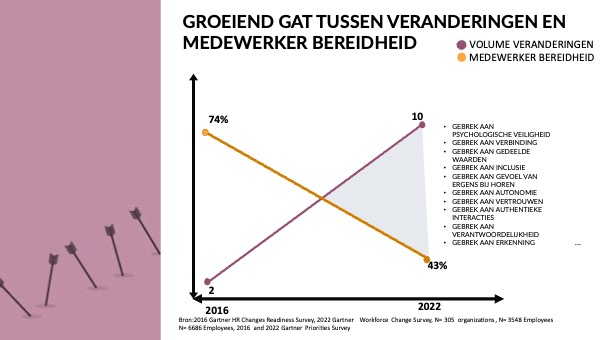
Research from Gartner shows that in 2016, organizations on average implemented two organization-wide transformations. By 2022, this number had risen to ten on average, putting considerable pressure on organizations. Leaders must react quickly and execute effectively while also keeping their organizations flexible and resilient to continuously innovate and transform as a whole.

Connect, Develop, and Engage
The pace of transformation seems to struggle to align with employees who desire more psychological safety, deeper connections, authentic interactions, and recognition. Research from The Workforce Institute indicates that nine out of ten leaders in organizations believe that their organization provides all of this, positively influencing the mental health of their employees. However, 70% of employees in those same organizations state that the organization and their immediate supervisor have a greater negative impact on their mental health than their life partner. They long for work environments where organizations and their leaders actively contribute to their personal growth and harness their full potential. It’s an important signal: employees want more recognition and to be taken seriously and are not necessarily willing to go along with all changes automatically. They want a voice in those changes and attention to their personal interests.


Image: Gartner Research on the Growing Gap Between Necessary Changes and Employee Engagement. Esther argues in the article that the same challenge applies in our society.


The Dual Challenge
The challenge is not to lose sight of humanity at the necessary speed, and even stronger: to actively involve them in shaping solutions and keeping them engaged in the process. Many changes and transformations can only succeed if all employees are fully committed; they must become active participants in the solution. Without this, they will not easily join the desired movement (or may even actively oppose it). This phenomenon manifests itself in almost every organization I encounter. Leaders fail to effectively communicate the message of necessity and miss the trust and full commitment of the employees who must implement the transformations. It can paralyze organizations, and leaders sometimes seem to be backed into a corner.


Similar Challenges in Dutch Society
This situation also appears to occur in our society as a whole. The Netherlands faces enormous challenges in climate, trust, aging, income inequality, and essential services. There is an urgent need for concrete steps to create a sustainable future together. The recent elections have made it clear that many people feel unheard and have little confidence in the current leaders and the existing (democratic) system. In their call for recognition, many voters have made more extreme choices, sometimes impulsively. They want to be taken seriously and demand solutions to problems that have remained unresolved for years, such as the childcare benefits scandal, gas extraction in Groningen, housing shortages, and the nitrogen dossier. The credibility of and trust in Dutch political leaders to solve these issues promptly has steadily declined, and it seems like a long road to restoring this trust.


The Gap Between Decision-Making and Interests

The recent elections reflect the societal unrest that I often encounter at the organizational level as well. Both citizens and employees of organizations crave more attention, recognition, and customization. They want to be taken seriously and involved in finding solutions that affect their interests, well-being, and work.

In their haste to address the many challenges, leaders often make hasty decisions that may seem beneficial in the short term but have harmful long-term consequences. In politics, a possible example is Kuiper’s decision to consolidate heart surgery. Concerned hospitals want more collaboration to prevent closure and appealed to the judge, who ruled that it is unclear whether this decision is necessary and proportionate. But also, the importance of short-term gas extraction the happiness of the people of Groningen, and the desire to combat fraud that led to the childcare benefits scandal are examples.

In organizations, I often encounter examples such as:

  • Implementing efficiency improvements without consultation, leads to sudden restructuring, resulting in disrupted work relationships and feelings of not being taken seriously by employees.
  • To address staff shortages, international recruitment was utilized. The team unexpectedly gained English-speaking colleagues, meaning they now had to communicate in English at work without prior discussion. This led to misunderstanding, and the team felt overwhelmed and not taken seriously.
  • The introduction of new production lines without prior discussion about future retraining and career development of existing employees, who feel discarded after years of loyal service.


Do you recognize similar situations in your organization?


High Performance Requires Challenge and Human-Centeredness

What then is the right approach?

To understand what often goes wrong and how leaders can bridge the gap between organizational goals and employee engagement, we can learn from highly successful organizations. The HPO Center, where I am part of the expert team, has been studying organizations that have outperformed their competitors strategically and financially for five to ten years since 2007. This research identified five pillars crucial to their success: quality of management and employees, continuous improvement and innovation, long-term vision coupled with short-term action, and focus on stakeholders such as customers, employees, financiers, and suppliers.

What often goes wrong is that leaders use the term ‘high performance’ to enforce results through short-term actions. They define high performance in terms of speed, exerting pressure, and maximizing profit. However, this is not the right approach to achieve sustainable success in the long term. In excellent organizations, leaders combine short-term actions with a long-term vision and involve their employees in it. They are responsible for both the results and the well-being of their people. The quality of their leadership is characterized by a healthy balance between ‘caring’ and ‘daring’: they set clear goals, delegate responsibilities, and focus on results, but they also inspire, involve, and coach their employees. If you want to know more, read the article on the Two Legs of Good Leadership: https://www.esthermollema.nl/twee-benen-van-goed-leiderschap).


Investing in Employees is Crucial
The conclusion is clear: implementing and succeeding in transformations requires leaders and teams who pay attention to each other and each other’s interests, inspire each other, and develop and grow together. This generates energy at the human and organizational level, and therefore, effectiveness. If you don’t do this, employees will resist or disengage, with serious long-term consequences.

Investing in employees is crucial: listening to their perspectives and interests, providing customization, and building trust before trust is lost. Although this may not result in quick transformations immediately, it will be the key to successfully implementing transformations in the long term without having to initiate new transformations constantly.

I wish our society and organizations human-centered leaders who have the courage to lead not only in the short term but also in the long term, inspiring and guiding. Major transformations need to be approached with patience and attention so that people can and want to take the next steps with confidence in a constantly changing and uncertain world.


“Reflections on 20 Years of Female Leadership Training (2003-2023): The Path to Inclusive Leadership”

“Reflections on 20 Years of Female Leadership Training (2003-2023): The Path to Inclusive Leadership”

20 Jaar Female Leadership Training Esther Mollema

After studying and working in Japan, Germany, and the US, I returned to the Netherlands in 1996 for a new job. What immediately stood out was the glaring lack of women in leadership positions. Friends who had started their careers in the Netherlands shared their disappointment about the gap between their ambitions and reality. They had experienced limited opportunities, a difficult balance between work and caregiving, and often encountered a harsh, masculine corporate culture. All of this seemed barely sustainable if you worked part-time, but part-timers were not taken seriously for leadership positions. It was a vicious circle for many women around me. My frustration grew when I saw men I had studied with, who I didn’t consider particularly capable, landing on boards of directors. And so began my search for a way, or how, we could help both women and organizations in their careers. This led to the Female Leadership training. A training that has evolved over the past twenty years with developments in our country.

The First Five Years – Struggle with Slow Emancipation in the Netherlands (2003-2008)

Actor Frank Lammers in Linda (2006) about working women: ‘I have deep respect for my parents who are from another generation and arranged things differently. Just: father works, mother stays at home. In that sense, I think: screw feminism. My mother’s self-aware sacrifice has done me a lot of good. I can’t afford it, and neither can my wife, and I don’t blame her and I don’t blame myself. But I do think it’s necessary that someone stays home for the children.’

Despite the gender equality preached in the Netherlands, the deeply ingrained influences of traditional gender roles are still noticeable during this period. Unconscious outdated gender role patterns still prevail, as mentioned above by Frank Lammers. Many women feel that they should not send their children to daycare too often. Moreover, their partners are often still reluctant to take on caregiving duties. Women who chose a career and thus deviated from traditional expectations faced significant social pressure from both their environment and their supervisors.

The Second Five Years – Insights into Unconscious Biases (2008-2013)

‘In 2010, Esther was invited by a Protestant organization that wanted to examine their unconscious biases. Esther proposed having the participants discuss their potential unconscious biases in small groups, but there was hesitation to speak openly. Esther suggested that participants could anonymously write down their thoughts on notes. These notes were then read aloud to the whole group. This led to shocking statements, such as: “Women are less intelligent,” “Because of menstruation, women cannot hold leadership positions,” and “God did not intend for women to lead.” This left both women and some men in the group astonished. Having an open discussion about this proved impossible.’

This anecdote, documented by a journalist, illustrates how deeply rooted the unconscious biases were in the Netherlands at that time. Between 2008 and 2013, organizations embraced our Female Leadership training, and diversity became a more prominent theme, but it was challenging to convince leaders that diversity requires an effort from all leaders. Many organizations focused on “fixing” women. To make gender diversity a broader dialogue, I sought help from Harvard professor Mahzarin Banaji, who introduced me to the concept of Unconscious Biases. This turned out to be the key to creating a broader and deeper conversation about leadership, inclusion, and diversity with the goal of truly giving diverse talents the same opportunities.

The Third Five Years – The Pleasant Self-Image of the Dutch (2013-2018)

In 2017, Prime Minister Mark Rutte remarked during the formation of his new cabinet, which included remarkably few women: ‘We were faced with the choice of either choosing quality or women in the new cabinet.’

Regarding women in leadership positions, the Netherlands still lags far behind many other countries during these years. Our research from that time shows that the vast majority of senior leaders unconsciously still consider men much more suitable as leaders than women. The Dutch self-image of tolerance and diversity does not seem to align with people’s actual attitudes and behavior. Although Dutch leaders perceive themselves as egalitarian, deeply ingrained biases influence reality. This makes it particularly challenging to address these unconscious biases.

Due to that unjustified pleasant self-image, corrective action is needed in the Netherlands to address unconscious biases. To achieve results in terms of inclusion and diversity. Multiple studies show that sharpening processes around recruitment & selection, evaluations, promotions, and decision-making are essential to reduce unconscious biases. This may be challenging for those who believe they can function well without strict rules. Nevertheless, a stricter approach is needed in our country to truly achieve results in terms of diversity and inclusion. Some organizations have succeeded in taking effective steps in this regard, proving that it is indeed possible. As a result, women and diverse talents advance more quickly within these organizations.

The Fourth Five Years – Focus on Inclusion (2018-2023)

In 2022, Joris Luijendijk remarked: ‘Diversity is very threatening for less talented seven-spotters.’

The societal and organizational dialogue around diversity is changing. The labor market is tightening, and new generations are making their voices heard. Organizations are becoming more flexible towards the wishes of employees, which also benefits women and other diverse talents. Men are gradually becoming more involved in caregiving tasks. The Covid pandemic reinforces these trends, and the Black Lives Matter movement brings privilege and exclusion to the forefront. And that is necessary: the Dutch often show little awareness of the inherent advantages that some people have, which others do not.

Professor Gloria Wekker has addressed this issue in her work ‘White Innocence,’ and Joris Luijendijk brought attention to this topic again with his book ‘The Seven Spots.’ This is slowly starting the dialogue in the Netherlands. The facts speak for themselves: only 3% of the Dutch population possess all seven privileges, yet the vast majority of important positions in organizations, government, and politics are occupied by this group. Is this because they are truly superior, or does having many privileges stem from a kind of courage and self-assuredness that we sometimes confuse with real qualities?

A New Era – Inclusive Leadership (2023 and beyond)

UCLA Professor Matthew Lieberman: ‘Only 1% of leaders have the right combination of leadership qualities that lead to connection and results. For the other 99% of leaders, there is work to be done.’

In 2023, organizations face numerous challenges, from climate change to technological developments and labor shortages. Leaders must confront these challenges with their people. What we already knew from much research is now also evident in organizations: the idea of what good leadership is is shifting. In addition to achieving results, leaders must also be able to connect with their people. The concept of inclusive leadership is becoming more prominent, and some leading organizations are actively engaging with it. Male and female leaders are learning together how to be both daring and caring as leaders.

Our Inclusive Leadership training, which we provide to both female and male leaders, is gaining traction in many organizations instead of the Female Leadership training. Topics include: dealing with power, unconscious biases, ingroups, privileges, exclusion, cultural differences, and psychological safety. Women in the Netherlands, who often had to work harder to be accepted as leaders, are now leading the way towards an inclusive approach to leadership. I look forward to more inclusive leadership training to do justice to all talent and for an even better result.

The future of inclusive leadership looks promising, with women and men collaborating to strike a balance between decisive and caring leadership. Recognizing the value of diversity and actively addressing biases and privileges will pave the way for more inclusion and better organizational outcomes.

The journey of the Female Leadership training illustrates that change is possible, but it requires ongoing commitment. The road to inclusion in most organizations is still long, but the success of the past two decades inspires us to continue striving for fairer and more inclusive leadership so that all talents receive the opportunities they deserve to build impactful organizations.


Diversity, inclusion, and equality: don’t change the people, improve the processes.

Diversity, inclusion, and equality: don’t change the people, improve the processes.

Years ago, the current Chairman of the Executive Board of the University of Twente, Vinod Subramaniam, introduced me to Iris Bohnet’s book, Equality by Design. Bohnet is a professor at the Harvard Kennedy School of Government and an expert in gender equality and behavioral sciences. Her book discusses how organizations and systems can be designed to address gender and diversity issues. Bohnet argues that creating awareness about diversity and inclusion is often insufficient and that concrete measures are needed to bring about change: equality by design. By implementing clear agreements and utilizing evidence-based solutions, everyone within an organization can contribute to promoting equality and diversity. Instead of focusing on changing people, the emphasis is placed on improving processes and structures by saying, “This is how we do things from now on.”

In her book, Bohnet provides examples of organizations that have successfully implemented methods such as:

  • Always using standardized questionnaires during job interviews to prevent interviewers from being unconsciously biased toward certain candidates.
  • Offering flexible working hours to all employees as a means to promote diversity. This allows for better alignment between work and personal life, which is particularly beneficial for employees with caregiving responsibilities, such as parents or caregivers. A report by Deloitte (Women@Work 2023) indicates that in the past year, more female respondents have resigned from their jobs than in 2020 and 2021 combined. Lack of flexibility in working hours is one of the most frequently mentioned reasons. If flexibility becomes an “equality by design” measure, it should be applied uniformly to all employees in the organization, and supervisors who resist this change must justify their stance to their superiors. Deloitte states that when these measures become the standard for everyone in the organization, it can expect increased loyalty and higher productivity from all employees.
  • Using inclusive language to create a work environment where everyone feels welcome and valued. This can be achieved, for example, by developing a guide on how to create inclusive job advertisements.
  • Promoting diversity through adjustments in the recruitment process, such as posting job vacancies on various platforms to reach a wider range of candidates.

In Dutch organizations, I have discovered similar best practices that may not necessarily be labeled as equality by design but do follow the mindset of “this is how we do things from now on.” Here are a few examples for inspiration:

  • An international student at a Dutch university questioned why students’ birthplaces were mentioned on official diplomas. The student, born outside of Europe, was concerned that this information could have a negative impact on job applications in the Netherlands. His concern proved valid. Research by Lancee, Thijssen & Coenders (2019) showed that applicants with a Dutch background had a 30% higher chance of receiving a positive response to their job applications compared to applicants with a foreign background. The university acknowledged that mentioning birthplaces on diplomas was an outdated tradition that had undesired effects. After consultation, it was decided to remove the mention of birthplaces from all official documents. This university is now working to address this inequality throughout the Netherlands.
  • An organization had been struggling for years to hire specialized employees. Some job vacancies remained open for up to 18 months, hindering the company’s growth. Furthermore, even when someone was finally hired, they often left quickly. They would frequently be approached with enticing job offers elsewhere and would stay with the organization for less than a year. Exit interviews revealed that the organization used a lot of jargon and abbreviations. While newcomers could be experts in their field, they often struggled to participate in meetings because they didn’t understand the jargon used by long-time employees. When this issue was recognized, efforts were made to make the language more understandable. All employees are committed to minimizing jargon and abbreviations in all aspects of their work. This required significant effort and caused some frustration, but it ultimately resulted in new employees staying much longer and making significant contributions to the company’s innovation.
  • Another organization decided to address labor shortages by recruiting internationally, resulting in colleagues from various parts of the world with different cultures and customs. Although the new employees were invited to all social activities of the organization, they often attended only once and then stopped coming. These events were primarily focused on Dutch culture and often involved alcohol. It proved challenging to organize enjoyable events that were suitable for all employees. Eventually, a committee was formed with representatives from all cultures, religions, and traditions. Together, they developed social events that were enjoyable for everyone. While it took some trial and error, this approach worked excellently.
  • The last example is intriguing, and I cannot fully explain it yet, but it worked. A company set a strict KPI for hiring new talent within a department: 50% of the new hires had to be women, even though the department primarily consisted of men. Recruiters were at a loss as to how to meet this requirement. By chance, they discovered that when a job vacancy remained open for a longer period, more women applied. Men tended to respond more quickly because women took more time to research whether the company and the job were an improvement compared to their current position. They first evaluated whether the work and expectations aligned with their work-life balance and what requirements the job did and didn’t meet. Many women I spoke with about this example could relate to it. Once recruiters realized that the number of female applicants increased when job vacancies remained open longer, the procedure was adjusted, resulting in excellent outcomes.

What process and structural changes has your organization made to support diversity and inclusion? I would be very interested to know. Please share your insights with me at mollema@dir.nl.