by Esther Mollema
As a manager you recognize that there are team members you can lead more easily. Often these are the team members in which you recognize yourself and who you can easily “read” to estimate what they need to perform in your team. It is probably also more challenging for you to lead team members in whom you are less likely to recognize yourself. Being a good leader by these team members also requires empathy and a number of good guidelines as the basis for an inclusive and effective team. Here are 7 checks that can help you with that:
- Don’t use yourself as the norm
A team has all kinds of tasks. Some tasks need explanation and guidance if a team member has not done them before. Other tasks are self-evident and team members should be able to do themselves. But is that really so? If something is clear or easy to you, it doesn’t mean it is the same for all your team members. People with different backgrounds or experiences can sometimes use your explanation or help for something that does not need an explanation for you. Check for tasks that you take for granted whether this is also the case with all your team members. Don’t see yourself as the norm and actively monitor this. By checking and responding to this, you give all your team members the same knowledge and principles to be able to do their work well.
2. Make sure that you are equally easy to approach for all your employees.
Managers who indicate that their doors are always open to all of their employees may not be doing enough for all of their team members. Pay attention to who all uses the invitation to just walk into your office, call you or schedule a Team appointment with you. Does everyone do that equally or are there people you talk to a lot and others don’t? Check every week how much and for how long you have spoken to your team members and actively contact the people you speak less often each week. Moderate your contacts with employees you talk to a lot to make time for the other employees. Let people see and feel that you want to be in contact with everyone equally.
3. Actively invite colleagues to give their opinion.
Organize your meetings in a way that ensures that all team members can contribute as much as possible. Ask your team how you will handle this together and how you will use differences in team discussion to make better decisions together. For example, make sure that introverted colleagues can also contribute. Record how you are going to do this in each discussion and monitor the agreements made.
4. Correct immediately if someone on your team asks for credit for ideas originally conceived or suggested by someone else.
Consciously or unconsciously, team members sometimes claim ideas previously suggested by other team members. Because of this, some team members don’t get the credit they deserve. Pay attention yourself and correct and ask your team members to do this for each other as well. These 7 basic rules help your team to build inclusion and trust with each other and with you. Perhaps an idea to discuss in your team which of these 7 basic rules can still be improved and whether your team has additions to these basic rules for your team?
5. Assign your employees highly valued and visible tasks equally.
Give your employees equal opportunity to perform highly valued and visible tasks in your team and for the organization. Give everyone the opportunity to present occasionally, represent the department or lead a project. By giving everyone the same opportunities, everyone can learn and grow.
6. Also divide the non-visible tasks equally among all your employees.
In addition to distributing the visible tasks fairly, you can also share the invisible tasks that your team has to perform fairly across the group. Show in a diagram how you distribute the more invisible tasks over the entire team and evaluate every 6 months whether the distribution of the visible and invisible tasks are still well organized with your entire team.
7. Respond immediately and in the team to those who exclude team members and / or make them feel uncomfortable, inferior. Promote humor that doesn’t hurt.
As a manager you want a pleasant atmosphere in your team in which everyone feels seen and heard so that all team members can contribute optimally. You naturally stimulate jokes and humor in a team, but you immediately intervene if jokes hurt or make some team members feel uncomfortable. As a manager, also pay close attention to whether all team members inform each other correctly and on time. You also want to avoid sub-groups in your teams because these people mainly interact with each other and (un) consciously exclude other people. Ask your team members to pay attention to this themselves and to correct each other quickly if things go wrong.
by Esther Mollema
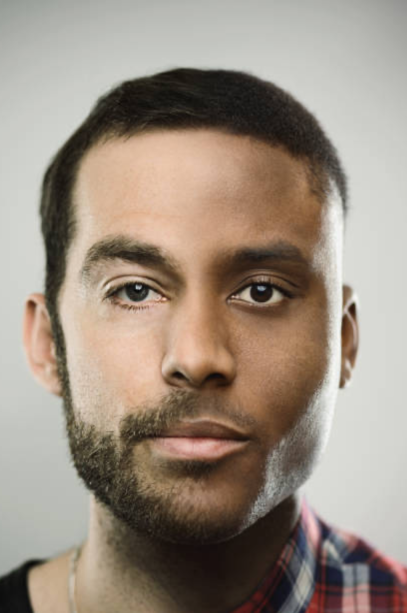
As many as 637 people participated in the BLM Challenge to examine their Unconscious Bias with regard to Skin Color and Trust using our Mindbugstest. What all these people and you might also want to know: what conclusions can we draw from the results? The results show the following: The respondents gave the following answers to the statements in the test: 99% of all respondents indicated that they viewed other people in a neutral or positive manner, regardless of their skin color. 99% of all respondents also indicated that skin color has no impact on their idea of whether someone would be a good leader for an organization. Then the people were tested for their possible bias on skin color. This part of your test is no longer about your opinion but measures your unconscious bias against people with a light or dark skin tone. The scores for this item showed that most respondents do allow themselves to be influenced by someone’s skin color: 24% of the respondents have a preference for people with a dark skin color, of which 7% strongly. 76% of the respondents have a preference for people with a light skin color, of which 52% are strong. For many of the respondents, the test shows a large discrepancy between how the respondents think they act and how they actually act on the basis of a person’s skin color. It is possible that people with large differences between their opinions and their unconscious bias may inadvertently exclude and discriminate against people based on their skin color. The bigger the discrepancy, the harder you have to work to give everyone a fair chance. Those who indicated that they interacted a lot with people with different skin colors or who grew up in a diverse environment showed less high unconscious biases on skin color. This is in accordance with research. Working on “friendship” with people who are different from yourself is a reliable way towards less unconscious prejudices. It’s called contact theory. It is also striking that the positive contact with people who are classified in one group can also make someone more positive towards people who belong to another group (secondary transfer effect). One of the first steps you can take to reduce biases to seek out and deal with more diversity of people. For background on the test, see our other site https://mindbugstest.nl. All people who have taken the test will receive their personal, confidential reports by email.

by Esther Mollema
Many organizations suffer from poor leadership. And that is a problem because leaders make or break organizations and without good leaders no motivated and driven employees. Fortunately, the solution is closer than you might think, and for many improvement comes from an unexpected source.
Did you know that in America, the majority of employees who leave their organizations do so because of dissatisfaction with their direct supervisor? The same study by research agency Gallup, the State of the American Manager, also shows that 65% of employed Americans indicate that they would rather have a new manager than a salary increase. You may think that the situation may be very different in the Netherlands. But also in our own country we regularly see organizations at the HPO Center where employees have completely lost their motivation.
The reason for this is all too often ignored by their managers and they leave the real problem unexposed. As it turns out, many leaders are executives characterized by great self-confidence. And this is an important attribute which today is abundantly used to select for leadership positions. Unfortunately, these are not the better better leaders. And they also chase a lot of good talent out of the company. Where does it go wrong?
Wrong fixation on confident leaders.
In past times, we lived in groups and knew everyone in this community from cradle to grave. A new leader was chosen after everyone had been able to observe the behavior of this group member for years. Today, we often have to assess candidates during selection processes. And things often go wrong there. Organizational psychologist Tomas Chamorro-Premuzic writes in his interesting book Why do so many incompetent men become Leaders (2019) that in selection procedures we use, often have a fixation on self-confidence in leaders. In addition to knowledge and skills, we mainly look at how confident someone appears. Where knowledge and know how are skills, self-confidence is believing in these skills. Unfortunately, there appears to be little overlap between actually being able and believing to being able.
Snakes in suits
Falling for confident people in leadership positions is not a good choice. And yet self-assurance has been a decisive factor in selections for decades. Do you recognize this: “came across as more convincing,” “I saw him do it,” “I think he can handle it well”? Then it is good to know that confidence in people easily turns into arrogance, and arrogance results in bad leaders. Once appointed, they dominate every meeting, only do work with which make them look good, profile themselves with gusto while not paying attention to their employees, not hearing and (thus) not motivating. You do not immediately see that, but after a while in the new position, arrogance no longer masks the incompetence. Leaders who display these characteristics are doing “well” in our business and the higher up the ladder, the more difficult their behavior is to recognize. An interesting fact in this context comes from the tube of Peter Wright, author of the book CEO Narcissism. Where approximately 2% of the world population can be classified as a narcissist or psychopath, leadership positions in organizations include an average of 5% narcissists and 4-20% psychopaths. There are quite a few, and they are also three times more men than women. That is partly the result of their upbringing: dominant or authoritarian behavior is completely suppressed in girls. Men are less corrected about these personality traits and arrogance is also a natural result of privilege. You have been warned.
Unconscious bias
We do know that good leadership is important for the development of the organization and all employees. And even better: we also know what “good leadership” looks like. A large Direction survey of 10,894 Dutch managers (male and female) shows that there is a great need for and appreciation for leaders who are pleasant, humble, friendly and empathetic. These inclusive leaders are currently all too often overlooked in selection procedures. They are ultimately the better leaders, also for your organization, but in practice they lose out to candidates who show great self-confidence. How is that possible? The main reason for this remarkable difference between what we need and select is our unconscious biases: mindbugs. We really have them all in large quantities, including you. These bugs ensure that you do not immediately estimate people with the same qualifications. Those are the same bugs that make us see taller people with lower voices ending up in leadership positions faster than those who are overweight, have a different ethnic background or are women, and certainly women with young children. Our brain makes connections without being asked. That is not unwillingness and poor comfort: we (really!) Do it all. But it is difficult. In this specific case, our brain unsolicited and unconsciously establishes a link between “leadership position” and “self-confidence”. And, it turns out, in 83% of cases also with “man”. Unconsciously, yet. In short: with all available recent scientific insights in 2020, leaders are still too often chosen on the basis of prejudice and gut, our ancestral and evolutionary roots. And we don’t select what we need.
Inclusive leaders for better results
So our unconscious bias predominates too often. “You won’t see it until you realize it,” Cruijff would say. But if you understand it and become aware of what is going on, it is important to exchange primal instinct for reason and knowledge. Because we know what we want. For both organization and employees we need more leaders of the type “pleasant, modest, friendly and empathetic”. Inclusive men and women who ensure satisfied employees who do not want to leave but want to contribute to the growth and prosperity of your organization. There are plenty of them; chances are they already work for you. It is important to see and appreciate them more. Normal men and women are too often overlooked. They are now almost punished for not being arrogant and not being overly self-assured. They are told to “show themselves a bit more”. And: among them there are relatively many women. One of the largest international studies conducted by Zenger & Folkman teaches that leading women around the world, from team leader to executive management, are better rated in 360 degree assessments for performing their leadership task compared to male leaders. This certainly does not mean that all female leaders are good. Just as among male leaders, there are lesser goddesses among women. It is fascinating in this context that 72% of the qualities that managers mention as the most important for their organization are precisely those qualities that female leaders apply more often. Here too, we do not choose what we need: we would like the qualities that female leaders apply more often, and yet women often are not successful in selections for leadership positions. Mindbugs.
Get to work
So science is teaching us to stop referring to self-confidence as a signal for competent leadership. And must stop systematically honoring this quality. Yes, it takes courage to say goodbye to bad leaders. On the other hand, firing one bad leader has four times more effect than hiring one good new leader. Give your employees the leader who inspires them to achieve better results. There is a lot of work to be done. It is necessary to correct the working of the brain when selecting new leaders. By good processes and by making agreements about process and criteria. By choosing that expertise and skills take the leading role. And realizing that current and historical performance is the best predictor of future performance and behavior. Guide people in selection processes to adhere to strict agreements and follow the same structure for all candidates in the process to reduce unconscious prejudices. Make it possible to discuss (again) within all selection and promotion rounds that great self-confidence often masks incompetence. In addition, use objective test methods to measure competencies where possible. Is this already a topic of discussion in your organization? It has to be different than you did and used to. And I promise you: with a different, better result. And, a nice bonus in 2020: if you choose better leaders, you automatically get more women in the top. For more background information also read: Unconscious Bias by Esther Mollema, 2020 and can be ordered via bol.com. If you want to keep following Esther Mollema’s blogs, check out www.esthermollema.nl and sign up for the newsletter.
Sources:
Bohnet, I. (2016). What works. Gender Equality by Design, Harvard University Press.
Chammorro-Premuzic, T (2019) Why do so many incompetent men become leaders? (and how to fix it), Harvard Business Review Press.
Cullen, Z. & & Perez-Truglia, R. The Old Boys’ Club Schmoozing and the Gender Gap, 2019. Harvard Business School.
Grijalva, E. (2015) Gender Differences in Narcissism: A Meta-Analytic Review, Psychological Bulletin.
Huguenin, P., & Gestel, H. W. (2010). Hidden Order. Utrecht: Bohn Stafleu of Loghum
Miller, D. & Eagly. A. & Linn, M (2015) Women’s Representation in Science Predicts National Gender-Science Stereotypes: Evidence From 66 Nations, American Psycholgy Association.
Mollema, E. (2009). 50% more talent: That’s how you score with women. Nieuwegein: Publisher Reunion.
Mollema, E. (2015). Succes in Veelvoud.
Robinson, J. (2008) Turning around Employee Turnover, Gallup Business Journal
Sherwin, B. (2012). Why Women Are More Effective Leaders Than Men. T
heeboom, T. (2014), Does coaching work? A Meta-Analysis of the Effects of Coaching on Individual Level Outcomes in an Organizational Context, Journal of Positive Psychology.
Waal, A. A., de (2008). Make your company a top organization! The five pillars for creating a high performance organization. Culemborg: Van Duuren Media.
Wright, P et al., (2004) CEO Narcissism, CEO Humility, and C-Suite Dynamics. Simon & Schuster.
Zenger, J., & Folkman J. (2014 and 2019). Are women better leaders than men? Harvard Business Review. Consulted at https://hbr.org/2019/06/ research-women-score-higher-than-men-in-most-leadership-skills