In the case of a report of crossing boundaries behavior, HR must dare to hold up a mirror.” – Interview with PW.

In the case of a report of crossing boundaries behavior, HR must dare to hold up a mirror.” – Interview with PW.

You can read the interview with PW via this link, where Esther and Femke Laagland (Commission Van Rijn) share their sharp insights following the publication of the report on crossing boundaries behavior at public broadcasters. Esther’s words resonate powerfully in the realm of HR, where she holds up a mirror to management regarding unwanted behavior. Keep reading to discover why HR is crucial in addressing crossing boundaries behavior, not only at broadcasters but also in any other organization.

Experts on unwanted behavior: ‘Management greatly needs HR’s mirror’ Interview by: Jolan Bouwes

Click here for the interview.

A snippet from the interview:
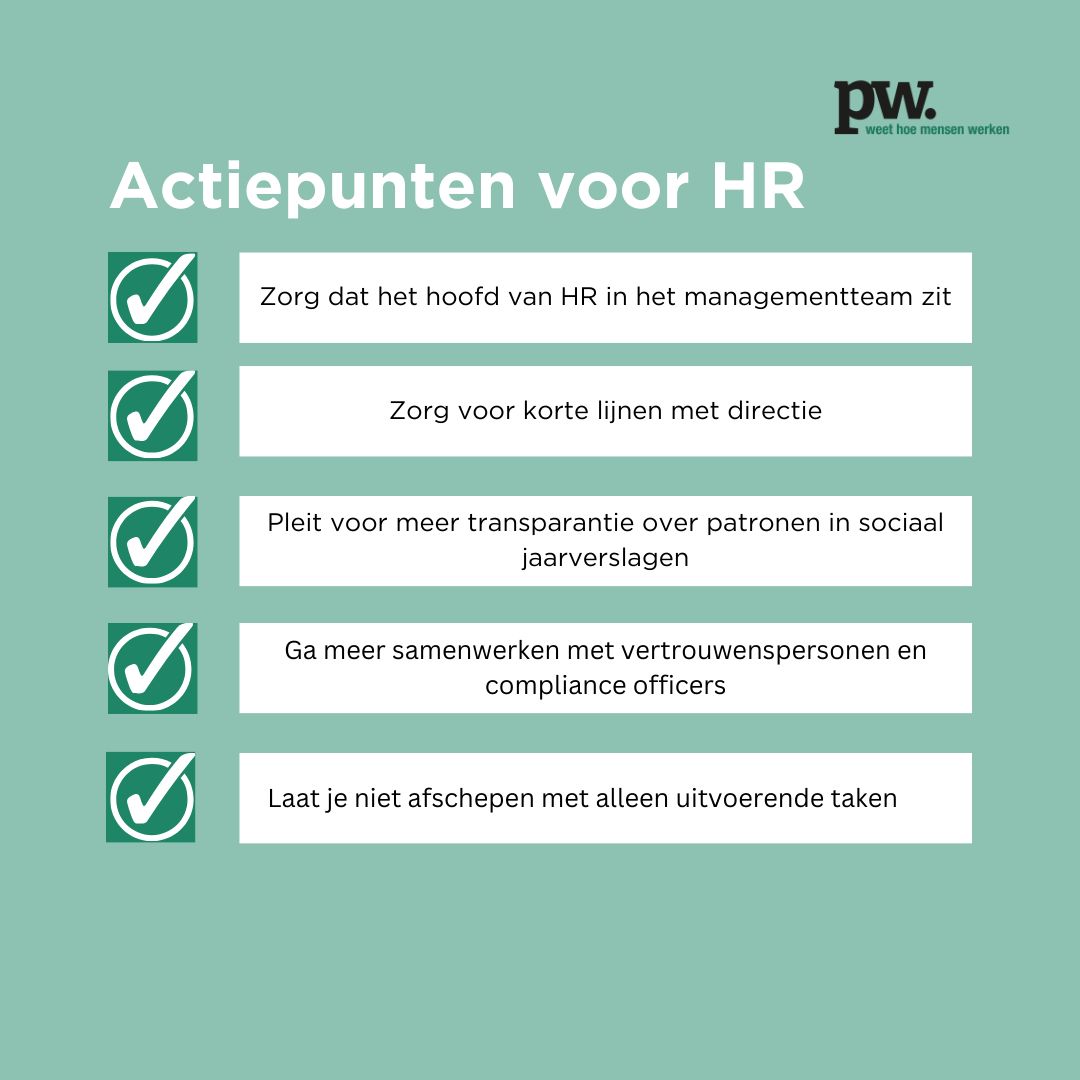
“Esther Mollema finds a seat at the management table self-evident. ‘If not, you know that the leadership doesn’t take you seriously. It shouldn’t be the case that you’re only allowed to make contracts. Management actually needs the mirror of HR urgently. It should provide counterbalance to power. Research shows that power distorts the brain in such a way that it becomes less empathetic.'”
Turbulent Times in the Netherlands: The Importance of Patient Transformations

Turbulent Times in the Netherlands: The Importance of Patient Transformations


It’s restless in Dutch society and within many organizations; both are facing significant challenges. These challenges call for leaders who are not only decisive but also capable of empathizing with the interests of citizens and employees and connecting with them.

In this article, Esther critically examines how political and organizational leaders often opt for swift decision-making. They often label this as “high-performance” leadership because it appears action-oriented and decisive, but this approach is not the magical formula that will elevate our country or organizations to a high-performance level. If residents and employees do not recognize themselves in the measures, trust and support are lacking, and goals and solutions remain out of reach. A strong plea is made for a long-term vision and an empathetic form of leadership on the road to sustainable success, with the HPO framework providing guidance.

As a strategic advisor and trainer, I’ve noticed that nearly every organization is currently facing significant challenges. These challenges are diverse: digital transformations, staff shortages, climate-related issues, energy transitions, improving efficiency, financial matters, integration of business units, increasing distrust from stakeholders, and the adoption of hybrid forms of collaboration. All these matters require a thoughtful approach.

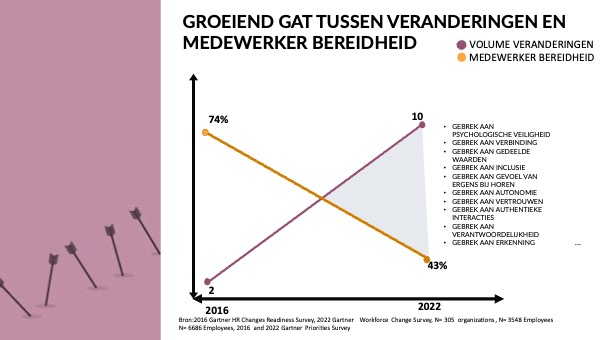
Research from Gartner shows that in 2016, organizations on average implemented two organization-wide transformations. By 2022, this number had risen to ten on average, putting considerable pressure on organizations. Leaders must react quickly and execute effectively while also keeping their organizations flexible and resilient to continuously innovate and transform as a whole.

Connect, Develop, and Engage
The pace of transformation seems to struggle to align with employees who desire more psychological safety, deeper connections, authentic interactions, and recognition. Research from The Workforce Institute indicates that nine out of ten leaders in organizations believe that their organization provides all of this, positively influencing the mental health of their employees. However, 70% of employees in those same organizations state that the organization and their immediate supervisor have a greater negative impact on their mental health than their life partner. They long for work environments where organizations and their leaders actively contribute to their personal growth and harness their full potential. It’s an important signal: employees want more recognition and to be taken seriously and are not necessarily willing to go along with all changes automatically. They want a voice in those changes and attention to their personal interests.


Image: Gartner Research on the Growing Gap Between Necessary Changes and Employee Engagement. Esther argues in the article that the same challenge applies in our society.


The Dual Challenge
The challenge is not to lose sight of humanity at the necessary speed, and even stronger: to actively involve them in shaping solutions and keeping them engaged in the process. Many changes and transformations can only succeed if all employees are fully committed; they must become active participants in the solution. Without this, they will not easily join the desired movement (or may even actively oppose it). This phenomenon manifests itself in almost every organization I encounter. Leaders fail to effectively communicate the message of necessity and miss the trust and full commitment of the employees who must implement the transformations. It can paralyze organizations, and leaders sometimes seem to be backed into a corner.


Similar Challenges in Dutch Society
This situation also appears to occur in our society as a whole. The Netherlands faces enormous challenges in climate, trust, aging, income inequality, and essential services. There is an urgent need for concrete steps to create a sustainable future together. The recent elections have made it clear that many people feel unheard and have little confidence in the current leaders and the existing (democratic) system. In their call for recognition, many voters have made more extreme choices, sometimes impulsively. They want to be taken seriously and demand solutions to problems that have remained unresolved for years, such as the childcare benefits scandal, gas extraction in Groningen, housing shortages, and the nitrogen dossier. The credibility of and trust in Dutch political leaders to solve these issues promptly has steadily declined, and it seems like a long road to restoring this trust.


The Gap Between Decision-Making and Interests

The recent elections reflect the societal unrest that I often encounter at the organizational level as well. Both citizens and employees of organizations crave more attention, recognition, and customization. They want to be taken seriously and involved in finding solutions that affect their interests, well-being, and work.

In their haste to address the many challenges, leaders often make hasty decisions that may seem beneficial in the short term but have harmful long-term consequences. In politics, a possible example is Kuiper’s decision to consolidate heart surgery. Concerned hospitals want more collaboration to prevent closure and appealed to the judge, who ruled that it is unclear whether this decision is necessary and proportionate. But also, the importance of short-term gas extraction the happiness of the people of Groningen, and the desire to combat fraud that led to the childcare benefits scandal are examples.

In organizations, I often encounter examples such as:

  • Implementing efficiency improvements without consultation, leads to sudden restructuring, resulting in disrupted work relationships and feelings of not being taken seriously by employees.
  • To address staff shortages, international recruitment was utilized. The team unexpectedly gained English-speaking colleagues, meaning they now had to communicate in English at work without prior discussion. This led to misunderstanding, and the team felt overwhelmed and not taken seriously.
  • The introduction of new production lines without prior discussion about future retraining and career development of existing employees, who feel discarded after years of loyal service.


Do you recognize similar situations in your organization?


High Performance Requires Challenge and Human-Centeredness

What then is the right approach?

To understand what often goes wrong and how leaders can bridge the gap between organizational goals and employee engagement, we can learn from highly successful organizations. The HPO Center, where I am part of the expert team, has been studying organizations that have outperformed their competitors strategically and financially for five to ten years since 2007. This research identified five pillars crucial to their success: quality of management and employees, continuous improvement and innovation, long-term vision coupled with short-term action, and focus on stakeholders such as customers, employees, financiers, and suppliers.

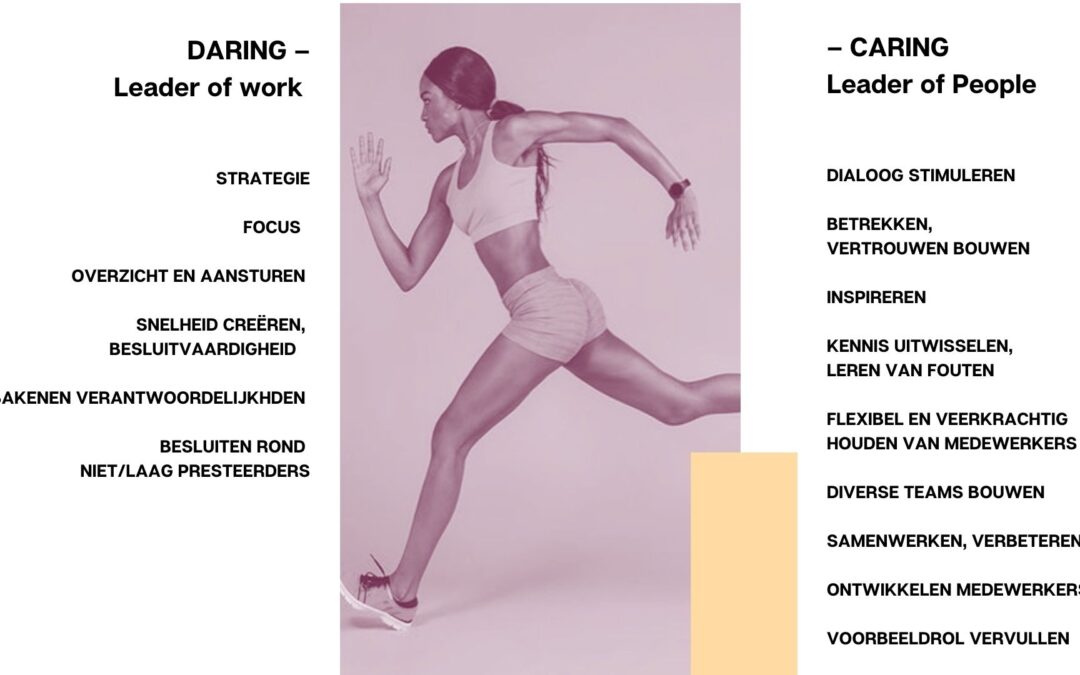
What often goes wrong is that leaders use the term ‘high performance’ to enforce results through short-term actions. They define high performance in terms of speed, exerting pressure, and maximizing profit. However, this is not the right approach to achieve sustainable success in the long term. In excellent organizations, leaders combine short-term actions with a long-term vision and involve their employees in it. They are responsible for both the results and the well-being of their people. The quality of their leadership is characterized by a healthy balance between ‘caring’ and ‘daring’: they set clear goals, delegate responsibilities, and focus on results, but they also inspire, involve, and coach their employees. If you want to know more, read the article on the Two Legs of Good Leadership: https://www.esthermollema.nl/twee-benen-van-goed-leiderschap).


Investing in Employees is Crucial
The conclusion is clear: implementing and succeeding in transformations requires leaders and teams who pay attention to each other and each other’s interests, inspire each other, and develop and grow together. This generates energy at the human and organizational level, and therefore, effectiveness. If you don’t do this, employees will resist or disengage, with serious long-term consequences.

Investing in employees is crucial: listening to their perspectives and interests, providing customization, and building trust before trust is lost. Although this may not result in quick transformations immediately, it will be the key to successfully implementing transformations in the long term without having to initiate new transformations constantly.

I wish our society and organizations human-centered leaders who have the courage to lead not only in the short term but also in the long term, inspiring and guiding. Major transformations need to be approached with patience and attention so that people can and want to take the next steps with confidence in a constantly changing and uncertain world.


Generational Differences in Organizations: How Generation Z asks for what we all truly want

Generational Differences in Organizations: How Generation Z asks for what we all truly want

My own first work experiences and what I (didn’t) do

I remember well that at the beginning of my career, I accepted a job that was quite disappointing. The work was dull, the guidance was lacking, and I found my boss a bit unpleasant. I tried for a while, but one day, during a visit to my parents, I let slip that I actually wanted to quit. My father immediately responded, “Whoever convinced you that work should be fun? You can’t just give up. You have fixed expenses, a resume with little work experience, and a gap in your CV can work against you. Working somewhere for less than two years raises questions, and you want to avoid that.”

And what did I do? I returned to that dull job and that unpleasant boss. I did what my father said I should do, but it came at the cost of my mental health, my sleep, and certainly my joy of life. Looking back now, I regret not being a little braver and doing something else a bit earlier.

The challenging relationship between Generation Z employees and their leaders

The Generation Z employee is a topic of discussion for many of my clients. Many managers find this new group of colleagues difficult to motivate. This generation values their personal lives, seeks a sense of belonging in the workplace, and wants to be able to be themselves. They ask questions and demand honest, meaningful conversations, more learning experiences, faster career progression, and action-oriented feedback.

How different the reality is in the job market for a starting Generation Z employee compared to their leaders when they started working. The latter could rent a house with their first salary at the time, whereas Generation Z considers owning a home as utopian and often continues to rent a room, with or without friends. Owning a car has become less common, there is doubt whether this is still a world in which you want to raise children, and whether there will even be a pension by the time they reach their seventieth year. Uncertainty reigns.

Motivation experts emphasize that motivation stems from pursuing achievable goals that genuinely interest and satisfy you. The absence of these small motivational boosts results in many in the new generation being less inclined to fully dedicate themselves to their work and to easily forgive the mistakes of leaders in exchange for career opportunities.

What Generation Z wants

Generation Z strives for engaging work and inspiring leaders. They are young people who ask critical questions, long for meaningful conversations, mental well-being, career advancement, and constructive feedback. In other words, they seek purpose, growth, and a sense of connection.

Research from the Workforce Institute shows that the percentage of employees willing to give up a well-paid position for a job with better mental health is increasing. This poses significant challenges for current leaders.

For organizations that want to remain attractive to employees of all generations, there are some valuable considerations:

1 Trust your employees before they trust you Give employees the flexibility and autonomy they need to do their work well and have a good life. People looking for other jobs closely scrutinize vacancies for flexible work arrangements. This is decisive for whether or not they respond to vacancies. If it’s unclear how flexible the work environment is, they won’t respond. Of course, this comes with trust and requires responsibility from both sides. You can, of course, hold your employees accountable if the given trust is breached, but above all, give it first.

2 Engage in more authentic interactions Make time to really get to know each other in your team and make people feel truly at home. Honest, vulnerable conversations, especially with leaders, bring the psychological safety that employees and teams need; it makes teams stronger and helps them perform even better together. I meet many leaders who think that taking time for vulnerable conversations isn’t worth it or that such conversations don’t belong in the workplace. A lot of research (and especially the response from Generation Z) shows that these leaders are really mistaken.

3 Invest in career development with frequent, concrete feedback Get rid of vague, unusable feedback; employees want clear, practical suggestions for improvement. In many organizations, there are still too many ritualistic, obligatory, annual battles over evaluations, salaries, and promotion opportunities. But employees just want much more frequent, shorter conversations about their careers, their milestones, and next challenges. They want feedback, to hear what’s good and what can be improved. And then, please, make it concrete enough for them to act on immediately. Stop with feedback like “I’m not exactly sure why, but if your leader says my feeling is that you’re not ready yet.” (This is really a real-life example!) Make sure there’s weekly contact with new employees about their progress and how they’re feeling in the team, and after a while, decide together how often those short conversations are needed. Never delay giving compliments; all people are sensitive to them.

4 Give teams space to adjust unworkable rules Give your team autonomy to adjust rules that don’t work. In their quest for overview, predictability, and control, organizations have often devised various rules that work for the majority of teams but not for some teams at all. Or rules that once worked but now mostly work against. Give teams the space to adjust such rules. Of course, this is done in consultation with leadership because giving space also comes with responsibility for the team wanting to abolish the rule. The ultimate goal must, of course, still be achieved.

5 Introduce diversity into the team to promote productive conflict and growth Productive conflict, yes: different perspectives enrich the team and stimulate innovation and improvement. Teams become more attractive when people can challenge each other through productive conflict. This means that team members can contribute from their expertise, life experiences, education, and thinking styles to the plans and to a better team result. Team members benefit from each other and each other’s different knowledge and insight, regularly seek each other out, and make each other better. Teams that want this don’t look for new team members who fit perfectly into the team but for people who can bring something different and therefore extra. These teams also make more effort to integrate the new team member into the team as quickly as possible and make them feel at home instead of asking the newcomer to adapt as quickly as possible.

Generation Z asks for what we all actually want

Many leaders say they find Generation Z difficult. It confronts them with the fact that things can also be different with better results. Generation Z is the generation that takes the lead in making organizations the place where we are all inspired and challenged. Where we can all contribute to something greater than ourselves. Let’s face it: that’s what we all actually want, isn’t it? Leaders who realize this and work on it are the leaders of the future.

How can you become a better leader step by step?

How can you become a better leader step by step?

As a leader within your organization, you bear the responsibility for achieving goals and results. In recent years, we have gained a better understanding of what it takes to demonstrate effective leadership and how you can work on your leadership skills as a leader. In this article, I will provide you with practical insights on how to gradually become an even better leader by finding the right balance between different activities and by working on your leadership habits daily.

The Core of Effective Leadership

Insights from various studies, including those conducted by our own HPO Center and various (neuroscientific) researchers, can help you improve your leadership skills. These studies emphasize that effective leadership consists of a harmonious blend of two essential aspects: daring and caring.

The Two Pillars of Good Leadership: Daring and Caring. For detailed information, also see this article: https://www.esthermollema.nl/twee-benen-van-goed-leiderschap

On the one hand, there’s the “daring” aspect of leadership, where you’re responsible for organizing tasks and fostering collaboration to achieve shared goals. Here, you need to be focused and monitor team objectives. It’s crucial to use your position as a leader to create clarity and speed. Decision-making, promoting and supporting collaboration, and providing clarity all play crucial roles.

On the other hand, there’s the “caring” aspect of leadership, which focuses on developing the team and individual team members. It involves inspiring, coaching, and supporting personal growth. Creating an environment where people can thrive, promoting teamwork, learning, and inspiration are all essential. To achieve this, it’s essential to listen to different perspectives within the team to make better decisions.

Striving for Balance

A balanced blend of these two aspects of leadership is crucial. In 2013, neuroscientist Matt Lieberman demonstrated that a one-sided focus on either aspect rarely leads to effective leadership. Leaders who emphasize “daring” have only a 14% chance of becoming outstanding leaders. For leaders who primarily focus on “caring,” this chance is even lower at 12%. The optimal balance between “caring” and “daring” leadership increases the likelihood of becoming an excellent leader to as much as 72%. Only 1% of leaders are highly rated for possessing both qualities, highlighting the rarity of this balance. So, there’s work to be done for many leaders.

The Reality of Leadership

The majority of leaders, therefore, do not meet the expectations of their team members. Worse, a significant portion of employees perceive their managers as the primary source of stress in the workplace. Additionally, 70% of employees indicate that their manager’s influence on their mental health is greater than that of their partner, according to a 2022 study by the Workforce Institute. Despite nine out of ten leaders believing they have a positive impact on their team members’ workplace satisfaction, only five out of ten employees agree. This underscores the discrepancy between perception and reality, unfortunately not in favor of the leader or the employee.

Examples of leadership behaviors that negatively impact workplace satisfaction:

  • Not giving enough attention, not listening, and checking their mobile phone during meetings.
  • Being consistently late without offering an apology.
  • Forgetting agreements or commitments.
  • Lack of transparency on certain matters.
  • Remaining silent during crucial moments when their leadership is required.
  • Sending irritated messages or communications.
  • Making derogatory comments or jokes.
  • Abruptly ending conversations.

Steps to Improved Leadership

Do you want to enhance your leadership skills? The following six steps are effective:

  1. Recognize and Acknowledge: The first and most crucial question is whether you, as a leader, are willing to further improve yourself. This is where, I believe, about 50% of all leaders falter. Some resist change because it requires a lot of time and effort. They might half-heartedly entertain improvement suggestions from their team but quickly revert to old habits. Understand that working on your leadership primarily means working on your habits, and that requires time and commitment from you. So, ask yourself first if you genuinely want to become a better leader.
  2. Collect and Accept Information: Seek feedback about your leadership skills. This can be done through anonymous surveys or in conversations if possible. Ensure that you truly understand what is working well and what needs improvement. Ask about the behaviors that may push your team members away. You’ll often find that when you inquire, your team faces different issues than you might have thought. Don’t dismiss the feedback, don’t downplay what’s said, and don’t treat it as an isolated incident. Instead, carefully document your findings.
  3. Show Vulnerability: Share the received negative feedback and be open about your weaknesses and insecurities with your team. Share what you already knew and also highlight things that surprised you. By sharing, you create an environment open to feedback and discussion. It also encourages others to be vulnerable and seek feedback.
  4. Create an Improvement Plan with Your Team: Ask your team for input on which changes in your behavior as a leader would benefit them the most.
  5. Work on Daily Leadership Habits: Change your behavior by translating the feedback into new daily habits. Don’t take on too much at once but make changes gradually, in small steps that you can sustain. On average, it takes about 66 days to develop a new habit.
  6. Regularly Seek Feedback: Routinely ask your team for feedback on your performance and improvements. This fosters a shared responsibility for growth and development.

These six steps, while seemingly simple, can be challenging in practice. Persistence pays off and brings rewards in the end!

The Impact of Improved Leadership

Investing in improving your leadership skills is highly worthwhile. As a leader, you have a significant impact on the workplace satisfaction of your team members. This isn’t just a nice-to-have; research has shown that even a slight increase in workplace satisfaction can result in a significant boost in productivity. A joint study by Harvard University and Oxford University demonstrated that a 1-point increase in workplace happiness on a scale of 0 to 10 led to an impressive 12% increase in productivity.

In summary, pursuing balanced leadership, showing vulnerability, engaging your team, and continuously improving your daily habits can all contribute to your development as an even better leader—with impact.

“Reflections on 20 Years of Female Leadership Training (2003-2023): The Path to Inclusive Leadership”

“Reflections on 20 Years of Female Leadership Training (2003-2023): The Path to Inclusive Leadership”

20 Jaar Female Leadership Training Esther Mollema

After studying and working in Japan, Germany, and the US, I returned to the Netherlands in 1996 for a new job. What immediately stood out was the glaring lack of women in leadership positions. Friends who had started their careers in the Netherlands shared their disappointment about the gap between their ambitions and reality. They had experienced limited opportunities, a difficult balance between work and caregiving, and often encountered a harsh, masculine corporate culture. All of this seemed barely sustainable if you worked part-time, but part-timers were not taken seriously for leadership positions. It was a vicious circle for many women around me. My frustration grew when I saw men I had studied with, who I didn’t consider particularly capable, landing on boards of directors. And so began my search for a way, or how, we could help both women and organizations in their careers. This led to the Female Leadership training. A training that has evolved over the past twenty years with developments in our country.

The First Five Years – Struggle with Slow Emancipation in the Netherlands (2003-2008)

Actor Frank Lammers in Linda (2006) about working women: ‘I have deep respect for my parents who are from another generation and arranged things differently. Just: father works, mother stays at home. In that sense, I think: screw feminism. My mother’s self-aware sacrifice has done me a lot of good. I can’t afford it, and neither can my wife, and I don’t blame her and I don’t blame myself. But I do think it’s necessary that someone stays home for the children.’

Despite the gender equality preached in the Netherlands, the deeply ingrained influences of traditional gender roles are still noticeable during this period. Unconscious outdated gender role patterns still prevail, as mentioned above by Frank Lammers. Many women feel that they should not send their children to daycare too often. Moreover, their partners are often still reluctant to take on caregiving duties. Women who chose a career and thus deviated from traditional expectations faced significant social pressure from both their environment and their supervisors.

The Second Five Years – Insights into Unconscious Biases (2008-2013)

‘In 2010, Esther was invited by a Protestant organization that wanted to examine their unconscious biases. Esther proposed having the participants discuss their potential unconscious biases in small groups, but there was hesitation to speak openly. Esther suggested that participants could anonymously write down their thoughts on notes. These notes were then read aloud to the whole group. This led to shocking statements, such as: “Women are less intelligent,” “Because of menstruation, women cannot hold leadership positions,” and “God did not intend for women to lead.” This left both women and some men in the group astonished. Having an open discussion about this proved impossible.’

This anecdote, documented by a journalist, illustrates how deeply rooted the unconscious biases were in the Netherlands at that time. Between 2008 and 2013, organizations embraced our Female Leadership training, and diversity became a more prominent theme, but it was challenging to convince leaders that diversity requires an effort from all leaders. Many organizations focused on “fixing” women. To make gender diversity a broader dialogue, I sought help from Harvard professor Mahzarin Banaji, who introduced me to the concept of Unconscious Biases. This turned out to be the key to creating a broader and deeper conversation about leadership, inclusion, and diversity with the goal of truly giving diverse talents the same opportunities.

The Third Five Years – The Pleasant Self-Image of the Dutch (2013-2018)

In 2017, Prime Minister Mark Rutte remarked during the formation of his new cabinet, which included remarkably few women: ‘We were faced with the choice of either choosing quality or women in the new cabinet.’

Regarding women in leadership positions, the Netherlands still lags far behind many other countries during these years. Our research from that time shows that the vast majority of senior leaders unconsciously still consider men much more suitable as leaders than women. The Dutch self-image of tolerance and diversity does not seem to align with people’s actual attitudes and behavior. Although Dutch leaders perceive themselves as egalitarian, deeply ingrained biases influence reality. This makes it particularly challenging to address these unconscious biases.

Due to that unjustified pleasant self-image, corrective action is needed in the Netherlands to address unconscious biases. To achieve results in terms of inclusion and diversity. Multiple studies show that sharpening processes around recruitment & selection, evaluations, promotions, and decision-making are essential to reduce unconscious biases. This may be challenging for those who believe they can function well without strict rules. Nevertheless, a stricter approach is needed in our country to truly achieve results in terms of diversity and inclusion. Some organizations have succeeded in taking effective steps in this regard, proving that it is indeed possible. As a result, women and diverse talents advance more quickly within these organizations.

The Fourth Five Years – Focus on Inclusion (2018-2023)

In 2022, Joris Luijendijk remarked: ‘Diversity is very threatening for less talented seven-spotters.’

The societal and organizational dialogue around diversity is changing. The labor market is tightening, and new generations are making their voices heard. Organizations are becoming more flexible towards the wishes of employees, which also benefits women and other diverse talents. Men are gradually becoming more involved in caregiving tasks. The Covid pandemic reinforces these trends, and the Black Lives Matter movement brings privilege and exclusion to the forefront. And that is necessary: the Dutch often show little awareness of the inherent advantages that some people have, which others do not.

Professor Gloria Wekker has addressed this issue in her work ‘White Innocence,’ and Joris Luijendijk brought attention to this topic again with his book ‘The Seven Spots.’ This is slowly starting the dialogue in the Netherlands. The facts speak for themselves: only 3% of the Dutch population possess all seven privileges, yet the vast majority of important positions in organizations, government, and politics are occupied by this group. Is this because they are truly superior, or does having many privileges stem from a kind of courage and self-assuredness that we sometimes confuse with real qualities?

A New Era – Inclusive Leadership (2023 and beyond)

UCLA Professor Matthew Lieberman: ‘Only 1% of leaders have the right combination of leadership qualities that lead to connection and results. For the other 99% of leaders, there is work to be done.’

In 2023, organizations face numerous challenges, from climate change to technological developments and labor shortages. Leaders must confront these challenges with their people. What we already knew from much research is now also evident in organizations: the idea of what good leadership is is shifting. In addition to achieving results, leaders must also be able to connect with their people. The concept of inclusive leadership is becoming more prominent, and some leading organizations are actively engaging with it. Male and female leaders are learning together how to be both daring and caring as leaders.

Our Inclusive Leadership training, which we provide to both female and male leaders, is gaining traction in many organizations instead of the Female Leadership training. Topics include: dealing with power, unconscious biases, ingroups, privileges, exclusion, cultural differences, and psychological safety. Women in the Netherlands, who often had to work harder to be accepted as leaders, are now leading the way towards an inclusive approach to leadership. I look forward to more inclusive leadership training to do justice to all talent and for an even better result.

The future of inclusive leadership looks promising, with women and men collaborating to strike a balance between decisive and caring leadership. Recognizing the value of diversity and actively addressing biases and privileges will pave the way for more inclusion and better organizational outcomes.

The journey of the Female Leadership training illustrates that change is possible, but it requires ongoing commitment. The road to inclusion in most organizations is still long, but the success of the past two decades inspires us to continue striving for fairer and more inclusive leadership so that all talents receive the opportunities they deserve to build impactful organizations.




How a pleasant self-image and empty tolerance stand in the way of progress in the Netherlands

How a pleasant self-image and empty tolerance stand in the way of progress in the Netherlands

Two examples from the speaking book 365 days Dutch by Neaada Aurangzeb from 2021:

Example 1: Birthday party

Tineke: “Racism is such a difficult topic to discuss. It quickly makes me emotional.”
Me: “What makes it difficult for you?”
Tineke: “It feels like I am being accused of something and that is a very unpleasant feeling.”
Me: “Very good books have been written about this process. Perhaps it will be enlightening if you read them.”
Tineke: “I think this is very bad if you act so pedantic. As if you know it all so well.”

Example 2: Drugstore Amsterdam-South

Seller to Bart: “I’ll help you in a minute, just keep an eye on that dark lady with the make-up.”
Bart: “Keep an eye on her?”
Salesperson: “Yes, they steal.”
Bart: “That’s my wife.”

The pleasant positive self-image of the Netherlands is wrong. The Dutch rate equality in the Netherlands as particularly high. The self-image that the Dutch have and propagate about themselves and the Netherlands to the outside world does not correspond to the actual attitude and behavior of the Dutch. There is a discrepancy between the image of tolerance, equality, diversity and reality is one of the conclusions of the research by Miller et al (2014). Compared to 65 countries surveyed, the Netherlands scores implicitly and explicitly very high on stereotype preferences, in this case for men in certain social roles. This difference is also clearly visible when the participants of Esther Mollema’s workshops are tested on their assumptions and unconscious prejudices about diversity. 18,000 managers tested in those workshops in the Netherlands show that there is a large gap between what managers think and do when it comes to the progression of employees to leadership positions. Managers think they give dark-skinned women and employees the same chance, but in reality we do not in more than 75% of the cases. The Dutch tend to consider themselves very egalitarian and tolerant when it comes to diversity, while the reality is different. Why is this happening in the Netherlands in particular?

Empty Tolerance

According to Wijnand Mijnhardt, professor of cultural history at the University of Utrecht, the current form of tolerance in the Netherlands is related to a number of historical factors. In the 17th century, many immigrants came to the Dutch trading towns to find work. At the time, they were accepted into Dutch society without many problems for two reasons. Firstly, there was simply a lot of demand for cheap labor and, especially in Holland, many immigrants were needed to keep the economy going. Secondly, in the 17th century, the Netherlands was a densely populated country, where population layers lived closely together, with the result that the poorer immigrants in cities such as Amsterdam and Leiden came to live right next to the wealthy patricians in the alleys between the canal houses and mansions. This to the great surprise and dismay of foreign scholars and merchants who visited the Netherlands at the time. Numerous writings have been preserved in which it was mentioned that a stately merchant, even then, was simply booed in Amsterdam when he ran into a poor day laborer. In other major European cities, the street scene at the time was much more homogeneous – each group lived in its own part of the city. Mijnhardt calls it a “special kind of tolerance” built on social pressure, a high population density, combined with freedom of religion and freedom of the press. “However, it was not a principled tolerance, but rather a kind of necessary form of self-preservation,” said Mijnhardt. This self-preservation, or sobriety as a traditional Dutch form of tolerance, can be seen later during the Pillarization, when each societal pillar lives completely separate from each other; the Catholics had their own butcher, the Protestants their own milkman and the Socialists their own football club. But they did need each other and they tolerated each other in the least extreme sense of the word. Just like in the Golden Age, people tolerated each other’s way of life, origin and culture for practical reasons, but in reality they didn’t have to know anything about each other. Marli Huijer, former thinker of the nation and professor of philosophy at Erasmus University, calls this attitude ’empty tolerance’; people tolerate each other, but there is no form of respect for each other. Citizens who are part of the same society but who in fact live completely apart from each other. According to Huijer, this can still be seen in metropolises in particular. “There is a diversity of lifestyles, but people are in their own bubble, they have little to do with each other. This too is a form of empty tolerance because you are completely indifferent to others.”

One of us

How cooperation takes shape in the Netherlands and who exactly gets a place at the table is more complicated. According to Ruben Gowricharn, professor of diaspora studies at the Free University of Amsterdam, the Netherlands, like other societies, still has many tribal features. ,,We are a ‘large tribe of the Dutch’ and someone of color has to ‘marry’ before he becomes one of us. In the Netherlands, everyone has to integrate.” As group animals, according to Gowricharn, the Dutch have a kind of natural dislike for others with whom they cannot identify. Language appears to be essential for ‘belonging’ in the Netherlands, according to research by PewResearchCentre in fourteen countries into the factors that matter for national identity (What it truly takes to be ‘one of us’). not particularly important where a person was born or what religion a person adheres to. But compared to other countries, the Dutch attach the most importance to the importance of the language as part of the Dutch identity. Of all respondents in the Netherlands, 84 percent indicate that a good command of Dutch is very important for Dutch citizenship. That strong preference is nowhere so strong. In Hungary and the United Kingdom, 81 percent of those surveyed say that language is very important for citizenship, but in Canada or Italy, for example, it is ‘only’ 59 percent of those surveyed. This means that it is a lot more difficult for people with a language deficiency to climb the social ladder in the Netherlands. In combination with the tribality of ‘integration’ in the Netherlands, this leads, among other things, to the fact that the Netherlands is so incredibly homogeneous, say Gowricharn and Mijnhardt. Only 20 percent have a foreign cultural background or describe themselves as cosmopolitan. “The Limburger is of course different from the Groninger, but they all have the idea that they are Dutch and that they have a common culture to which newcomers have to adapt,” says Mijnhardt.

In other words, everyone should be approximately the same and not deviate too much from the prevailing standard. And that means that many people never get a fair chance to prove themselves in a top position, but also that many organizations will simply not fill their leadership positions with the most talented and suitable people. It is therefore not surprising that the Dutch administrative layers are also very homogeneous. Data on diversity show that this – certainly in the long term – can become a major problem for the business community. For some time now, women have formed the majority of the group of graduates in the Netherlands. And projections show that in 2060 more than a third of the Dutch (34 percent) will have a migration background, compared to 23 percent in 2019 (CBS).

Breaking through

But how can the discrepancy between the positive self-image of the Dutch about tolerance, equality and diversity, the implicit and explicit preference for uniformity and the reality, especially in the workplace, be overcome? By pointing out to managers that they have “a moral duty” that companies are a reflection of society, Gowricharn believes. “Society is diverse, so companies should be too.” Many companies use “quality” as a legitimacy to keep people out, Gowricharn notes. But “quality is colorless. To suggest that quality is a uniform thing, the same for all groups of people, for age categories, for cultures, is completely wrong.” And so managers must be made aware of those “holy houses and knock them over”. Understanding how unconscious biases affect perception and decisions is also an important step. “Realize how great the temptation is to choose someone who looks like you,” says Huijer. This willingness for self-reflection, dialogue and understanding are the key words to move forward. Esther Mollema can only endorse this. “Work on more dialogue and improve together. In particular, invite the group you are talking about to the table. In the Netherlands, the diversity debate often takes place without the group in question.” Moreover, making mistakes is human. “Forgive yourself and others if you sometimes make mistakes in trying to be more inclusive. Think of it as a process in which you learn a little bit every day how inclusiveness works and how you can contribute to it. An open attitude is important to break through the difference between self-image and empty tolerance,” says Mollema. “You also have to organize honesty better. Guarantee equality by organizing unconscious biases from your processes. Tighter management of recruitment & selection, assessments, promotions and decision-making. Give less chance to unconscious biases here. And yes, that is difficult to accept for the Netherlands, who often think that they will do well without strict rules. But it is precisely the Dutch who need strict agreements to achieve results in the field of diversity and inclusion.”