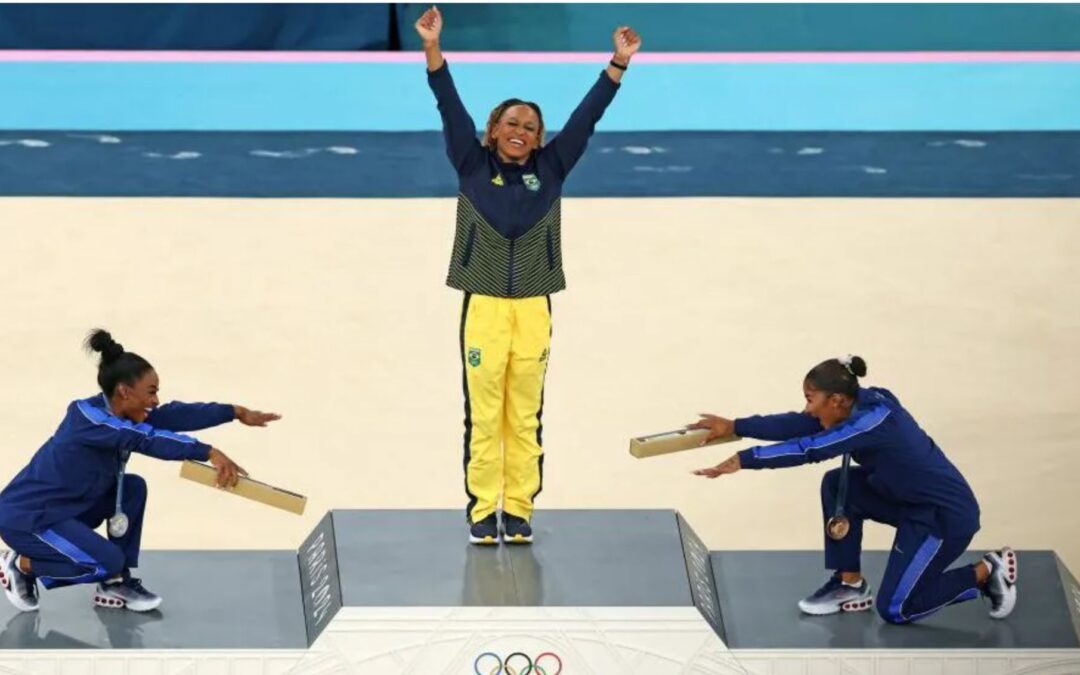
A Display of Allyship by Simone Biles

A Display of Allyship by Simone Biles

Allyship Simone Biles Esther Mollema


The most decorated gymnast of all time, Simone Biles, uses her fame to put others in the spotlight. On the floor, normally her strongest event, she was surpassed at these Olympic Games by Brazilian Rebeca Andrade.

Biles received a silver medal, and her teammate Jordan Chiles won bronze. During the medal ceremony, they made it a celebration together by bowing together for the gold medalist Andrade.

Why did Biles do this, journalists wondered? Biles showed herself to be a true ally. She used her fame and privileges to honor and put someone else in the spotlight. She wanted to celebrate an all-Black podium but, above all, to recognize Andrade’s athletic achievements because she is an outstanding athlete.

Thanks to Biles’ fame, now even those unfamiliar with the sport know more about the exceptional performances of Chiles and Andrade.

What more can I/you do as an ally? Also at work?

This article previously appeared on Esther’s LinkedIn page. Do you want to follow Esther’s thoughts on current events there too? Click here: https://www.linkedin.com/in/esther-mollema-183227/ Esther is a Certified Top Voice on LinkedIn.

Interview for cepezeds

Interview for cepezeds

cepezed interview Esther Mollema and Ronald Schleurholts

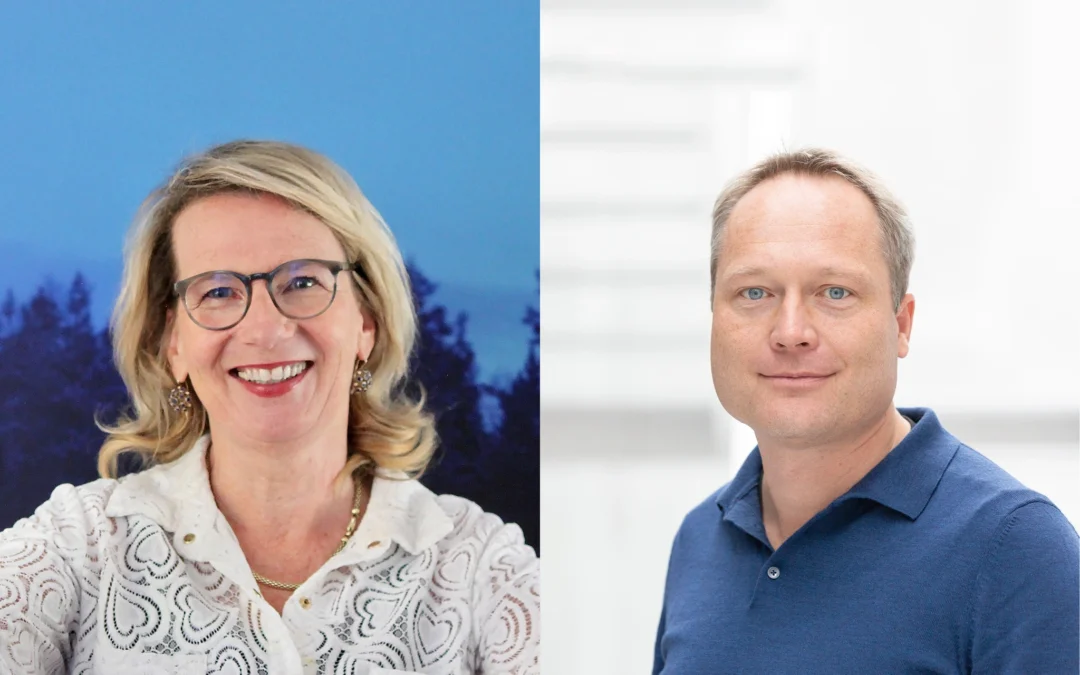
Ronald Schleurholts asked Esther for an interview to reflect on the 50th anniversary of cepezed and to discuss the future of both their ‘kit of parts’ architecture and the company culture, specifically considering whether they are resilient enough in light of diversity and inclusion. Thank you, Ronald and cepezed, for the insightful conversation.

Cepezed’s “kit of parts” architecture appears to be quite future-proof, but does the same hold true for our company culture? Ronald Schleurholts (cepezed partner) spoke with researcher and advisor Esther Mollema about the ideal team composition and managing differences.

Esther: “Who are you celebrating this 50th anniversary with?”

Ronald: “Primarily with each other, although there will also be a party with invited guests, and we will share our ‘anniversary findings’ on a public website. As part of the anniversary, we are exploring the future—of architecture, but also of the company culture. For instance, is our team diverse enough to face the future?”

Esther: “Future-proofing starts with the willingness to continuously improve your organization. This concerns the quality of leadership and employees, but also an open atmosphere where the status quo can be questioned. Is there psychological safety and readiness to take action? A good leader has a coaching attitude and can make decisions quickly. Good employees are flexible and willing to collaborate.”

Ronald: “Does the size of the firm have any impact on this?”

Esther: “Not really. Regardless of how large an organization is, the culture is determined by the leaders. Your behavior is contagious. If the organization grows to the point where distance develops, think about your behavior.”

Ronald: “We recently started organizing roundtable discussions where the partners don’t speak, just listen. The idea is to bridge the gap, but perhaps it’s too artificial?”

Esther: “No, it’s actually a very good approach! It’s important, however, to show that you’ve heard people. You can follow up with more questions and explain what you will do with the feedback; not everyone automatically understands this. But it’s not a free-for-all! The focus is on reflection—everyone can have their say, but you, the partners, make the decisions.”

Ronald: “Sometimes I feel that employees’ expectations and the best way to manage them vary by generation.”

Esther: “I often get questions about Generation Z. These individuals have been raised with a lot of praise. They have a strong need to talk with you and expect that if they’re new, you will check in after just a week to see how things are going. Whereas when we were young, that might have happened after six months.”

Ronald: “Is this really a cultural shift? You have more and less driven people in every generation, right? And each generation thinks the next one is completely different.”

Esther: “It is definitely a cultural shift. Parents now spend more time with their children, and schools have moved away from punishments. Generation Z has faced fewer setbacks. Their focus is more on fulfilling small dreams and less on long-term commitment. Their ambition lies in things that are close to them. Nowadays, companies offer various small promotions just to keep people. This generation will leave if they don’t get what they want. Very different from my father, who said, ‘Who ever told you to work is supposed to be fun?’ when my first job disappointed me, and I stayed there for another two years. The funny thing is that the interaction moments Generation Z demands are actually desirable for everyone.”

Ronald: “At least within our team, there’s a nice balance of ages. But the gender ratio is another matter; we have significantly more men than women.”

Esther: “While the proportion of women studying architecture is quite large.”

Ronald: “That’s the strange thing. It used to be fifty-fifty at university, and now women are even in the majority. Maybe our designs are too technical?”

Esther: “It’s important to find out where things go wrong in the pipeline. Are there unconscious biases? Is it the firm’s image? Are fewer women applying, or do you think you are rejecting them? What’s in the job ad? Which channels do you use to reach out—are you fishing in your own pond? Who conducts the interviews—are they both men? If women leave over time, it could be related to who is mentoring them or the lack of women in senior roles. These women are role models, and the possibility of that position needs to be visible to younger women.”

Ronald: “We haven’t considered it this way before. It would be good to thoroughly examine these questions.”

Esther: “It can be quite challenging to pinpoint the problem. If you really want to make changes in this area, you could choose to offer internships specifically to women, or only hire women for the next two years. The men will come back eventually. Just take that hit—the faster you do, the sooner you’ll become the organization of the future. All research shows that a diverse organization is more creative. And diversity starts with inclusion. This is about collaboration, understanding each other, and not remaining stuck in your own perspective. This greatly impacts collective performance—more creativity means more productivity. It’s a matter of policy and future vision. This also includes the question of whether you want to be an international company and what that means for the company’s language. And it’s about cultural diversity, which also enhances creativity. Additionally, diversity is good for client relations. A diverse team hears more and different things, making the client feel more seen.”

Ronald: “We like to believe that we don’t make distinctions in who we hire. Doesn’t the process become very complicated if everything—gender, age, cultural background—has to be balanced?”

Esther: “A purely numerical approach is indeed a dead end. Before a hiring round, identify the essential qualities needed—no more than five. Then see if a candidate brings diversity to the team or a different perspective. Remember, it’s not pleasant to work in an organization where you’re always in the minority. Research shows that when you’re below 30 percent, you can’t help but adapt to the organization’s norms.”

Ronald: “So, you adapt to the company culture, and if it’s far from your own, you lose a part of yourself?”

Esther: “If you don’t want to lose your identity, you have to actively work on it. That takes energy, just like constantly adapting does. It makes it very difficult to be brilliant.”

Ronald Schleurholts is an architect and partner at cepezed
Esther Mollema is an expert in high-performance leadership (HPO), diversity & inclusion, and unconscious bias.

“You Only See It When You Get It” – On the Wisdom of Cruijff & Winsemius That Has Easily Withstood the Test of Time

“You Only See It When You Get It” – On the Wisdom of Cruijff & Winsemius That Has Easily Withstood the Test of Time

Timeless Wisdom: The Unchanging Insights of Cruijff & Winsemius

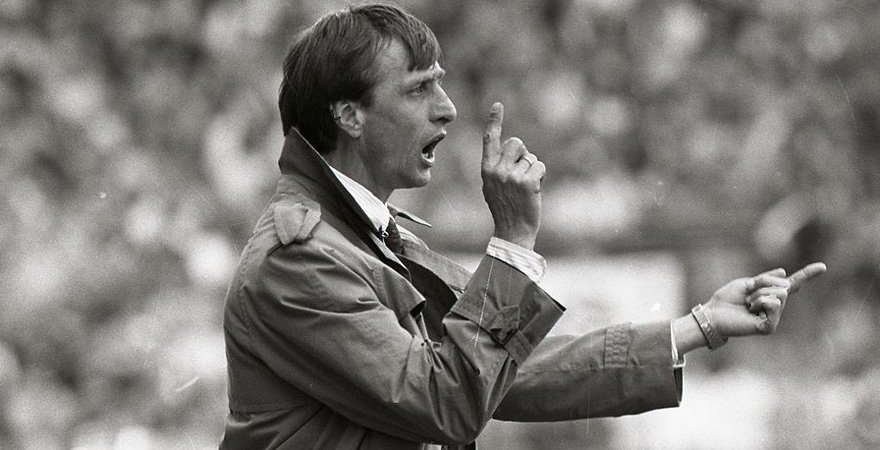
Over twenty years ago, in 2004, a book was published by Pieter Winsemius, who is best known as a former Minister of Housing, Spatial Planning and the Environment (VROM). He made the ‘transfer’ from being a partner at McKinsey & Company to becoming a member of the Scientific Council for Government Policy (WRR) and was a professor at Tilburg University. He adored Johan Cruijff: “There are two types of people: real people and fake people. Cruijff is real. You just know it. Cruijff stayed at the top as a footballer and as a coach for 35 years, and almost all his comments are remarkable. Often people think it’s nonsense, but Cruijff doesn’t spout nonsense.” In the book “You Only See It When You Get It,” Winsemius revealed his perspectives on Johan Cruijff as a leadership icon, both in the sports world and beyond.

From Field to Form: Winsemius’ Vision on Cruijff’s Leadership

But Cruijff, in turn, was also inspired by Winsemius. “That you are an example for others, outside the sport itself, I only experienced when that Winsemius at some point wrote his first book about Cruijff (in 1988: Never Play Away). In it, he said that for him, sport was a guideline as a minister and in his company. I thought: sport as a guideline… athletes were always lunatics, you shouldn’t let them talk, they had no education, they couldn’t do anything. When Winsemius started translating sport into leadership, into qualities you needed to reach the top in organizations, then I thought: we are not that dumb after all. We just didn’t go to school.” Winsemius was the inspiration for Cruijff to start the Johan Cruijff University.


Cruijff leiderschap Esther Mollema


Cruijff’s Leadership Lessons: Proven Wisdom Through the Years

What I found interesting as a reader of those books then, and still do now, is that many of Johan Cruijff’s leadership principles that Winsemius wrote about have stood the test of time and were later often scientifically proven as the most effective leadership methods, such as in our HPO research that we first published in 2008. The examples and names in the book are outdated now; but many of Cruijff’s visionary ideas are now commonplace both on the football field and in organizations. It seemed fun to take another good look at the old article. These Cruijff principles have remained rock-solid:

  • Team Over Individual: Cruijff’s Vision on Servant Leadership

Cruijff only fielded people who put all their talent into making the team they work in better. In Cruijff’s vision, everyone uses their talents to perform their core tasks as well as possible. This builds mutual trust. A team with a lot of mutual trust dares more and achieves ultimately greater performances. A field full of superior individuals can never compete with that.

  • Back to Basics: Cruijff’s Recipe for Success

Cruijff always sought the simplest methods to achieve his goals and ensure that everyone knew his expectations. After making a simple plan, the focus then shifts to perfecting the execution: increasing the speed of action, preventing mistakes, and knowing when team members needed support from each other: “I have a terrible dislike for someone who moves, but does not know where he is going.”


Pieter Winsemius Boek Esther Mollema
  • The Unsung Heroes: Cruijff’s Appreciation for ‘Water Carriers’

Cruijff acknowledged the crucial role of what he called ‘water carriers,’ the players or team members who support the stars. His approach emphasized respect and recognition for these essential roles. The stars must understand that they are dependent on the ‘water carriers.’ Cruijff corrected stars who became too arrogant. For example, Cruijff replaced Romario as coach of Barcelona because he did not want to help defend. Quote from the book about water carriers: Van de Kerkhof was included in the Dutch national team around 1975 on the recommendation of Johan Cruijff.


He says: “I knew at a fairly young age what my qualities as a footballer were. As a forward, I simply didn’t have enough technique. I had to rely more on my hard work and determination, running my guts out to win a ball back. Well, if I succeed, I feel like a king. I am happy to pass the ball to someone who can do something good with it. And if it leads to a goal, then I beam with joy. Because that is my achievement: I took the ball away. I am proud of the title ‘vacuum cleaner.’ Inferior? No way, quite the opposite. A cleaner is not inferior either, right?”

  • Always Sharp: Cruijff’s Strategy of Constructive Dissatisfaction

Both a team and a management team go wrong if everyone is satisfied. Cruijff constantly irritated his forward Stoichkov at Barcelona, so he was always on edge. According to Cruijff, stars also need to be challenged, through an unexpected substitution or criticism from colleagues. You must be willing to reward good people well, says Cruijff: “Cheap coaches are the first to be fired. If you are not expensive, people also do not trust you. Good people need to be challenged and well paid. The biggest problem is the salaries of the mediocre people.”

  • Cruijff’s View on Leadership: Direct and Effective

Cruijff emphasized the importance of clear and direct leadership at the top. He believed that quick decision-making is essential and that leaders must remain credible and respectful. His approach to executives was just as direct; he kept them away from day-to-day operations so that the focus could remain on sporting and operational success: “Executives don’t become executives because they love football, they become executives because they love themselves. These people are also not there when your company is losing” and “A coach always maintains his independence. Your vision must be sacred, you must not be influenced by incidents or external opinions.”

A Timeless Vision on Leadership

In a rapidly changing world, Cruijff’s approach proves to be surprisingly visionary and timeless. Leaders and managers can learn a lot from the sports legend, whose principles continue to inspire.


How safe is your organization?

How safe is your organization?

In many organizations, discussing unsafe behavior remains a challenge. Often, we prefer to talk about insecurity in other organizations (such as the NPO) rather than initiating a conversation about the safety of our own organization and how to improve it. Why do we find it so difficult to address unsafe situations within our own work environment?

An effective way to approach this question is through the pyramid of unwanted behavior and insecurity outlined below. This pyramid illustrates that an unsafe work environment not only revolves around the widely discussed incidents at the top of the pyramid but begins with small and seemingly ‘innocent’ actions. Unwanted behavior starts with things we tolerate, ignore, and thereby perpetuate during our daily work. If flawed everyday behavior is not promptly and clearly corrected, it can repeat itself and ultimately create an unsafe corporate culture where larger incidents occur more frequently. This has significant negative consequences for the (mental) health, job satisfaction, and outcomes of many people in that organization.

An unsafe work environment arises not only from colleagues’ unwanted behavior but also from an environment that tolerates such conduct. This can involve a manager who permits it, an employee who turns a blind eye, or oversight that fails. Jokes can evolve into bullying, compliments about appearance can turn into harassment, casual remarks can lead to discrimination, toxic language can foster an unsafe atmosphere, frequent loudness can result in a culture of fear, and an employee raising concerns may be excluded. 


From a distance, it seems incomprehensible that people continue to go to work in a toxic culture (because that’s what it becomes). Yet they do, as we can also read in the Van Rijn report about the NPO. Unfortunately, the NPO is far from the only unsafe organization. At least twice a month, I encounter an organization where people don’t speak freely, where some dominate meetings, steamrolling others’ opinions, or where jokes are made that exclude certain individuals.

The NPO is one of the organizations where the risk factors for leaving safety unaddressed are higher. In my experience, these are the characteristics of organizations where people are quicker to turn a blind eye to unsafe behavior:

  • Organizations structured around professions that are typically exclusive to that organization, such as police, firefighting, diplomacy, or defense, often lead individuals to accept more unsafe behavior due to the strong attachment to their profession.
  • Organizations where individuals feel part of an elite group playing in the ‘Champions League’ may be prone to accepting more unsafe behavior, seen in broadcasting companies, top sports teams, businesses in Amsterdam’s Zuidas, universities, and the cultural sector.
  • Organizations relying heavily on temporary contracts, weakening employees’ legal standing, may foster a culture of silence as criticism could jeopardize contract renewals.
  • Organizations situated in regions with limited employment opportunities may compel local employees to endure a toxic culture due to the lack of viable alternatives without relocation.
  • Even organizations offering above-average pay may inadvertently accelerate a culture of insecurity, as individuals may tolerate more unsafe conditions if comparable employment opportunities are scarce elsewhere.

If you’re wondering whether your team or organization exhibits signs of insecurity, ask yourself:

  • Are there aspects of interaction within your team or organization that you find difficult to discuss with your colleagues, or only with certain colleagues?
  • Are there aspects of interaction within your team that you find challenging to discuss with your manager?
  • Are there aspects of interaction within your team or organization that you keep to yourself, even if you consider them undesirable?

If you’ve answered positively to one or more of the above questions, realize that you’re often not alone. What do you need to make these issues discussable? Here are a few tips:

Often, there are more people experiencing the same problems, which can significantly affect their job satisfaction and health. Consider initiating a conversation with others or, if necessary, collectively filing a complaint. This way, you won’t be alone in addressing these issues.

Consider asking if all submitted complaints in your organization can be made public. Analyzing these complaints provides insight into the organizational culture and helps understand what’s needed to create a safer work culture. You can also utilize employee satisfaction surveys (MTO). Don’t just focus on average scores but also examine the distribution of scores and answers, as well as the examples provided. Organizations often only focus on the average score, while outliers can indicate important signals of unsafe situations in specific areas.

Identifying and addressing insecurity within an organization is challenging and not always easy but is essential for creating a safe and healthy work environment for everyone. And the company as a whole benefits from it.


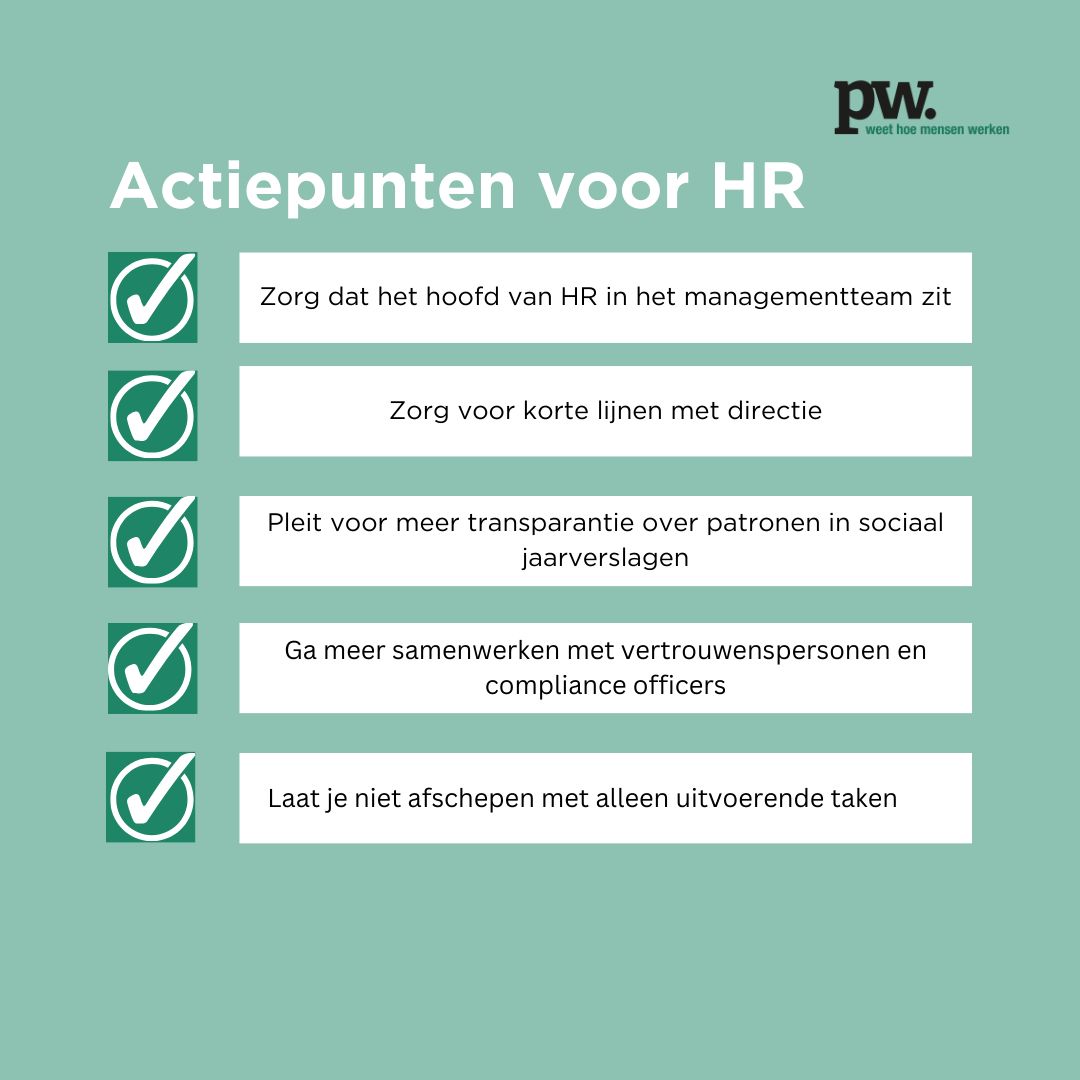
    In the case of a report of crossing boundaries behavior, HR must dare to hold up a mirror.” – Interview with PW.

    In the case of a report of crossing boundaries behavior, HR must dare to hold up a mirror.” – Interview with PW.

    You can read the interview with PW via this link, where Esther and Femke Laagland (Commission Van Rijn) share their sharp insights following the publication of the report on crossing boundaries behavior at public broadcasters. Esther’s words resonate powerfully in the realm of HR, where she holds up a mirror to management regarding unwanted behavior. Keep reading to discover why HR is crucial in addressing crossing boundaries behavior, not only at broadcasters but also in any other organization.

    Experts on unwanted behavior: ‘Management greatly needs HR’s mirror’ Interview by: Jolan Bouwes

    Click here for the interview.

    A snippet from the interview:
    “Esther Mollema finds a seat at the management table self-evident. ‘If not, you know that the leadership doesn’t take you seriously. It shouldn’t be the case that you’re only allowed to make contracts. Management actually needs the mirror of HR urgently. It should provide counterbalance to power. Research shows that power distorts the brain in such a way that it becomes less empathetic.'”