The Pleasant Self-Image of the Netherlands: Tolerance with Blind Spots

The Pleasant Self-Image of the Netherlands: Tolerance with Blind Spots

Trouw afbeelding Uitverkoren

Image: Trouw 

This article contains my personal reflection on Uitverkoren by Saskia Pieterse and Janneke Stegeman. The book offers an in-depth analysis of the themes I discuss here, and I encourage everyone to read it for themselves. This will help you ground yourself in the background of the perspectives I share. By purchasing and reading the book, you support this important research. You can find Uitverkoren here.

The Dutch like to see themselves as tolerant, progressive, and democratic. This pleasant self-image has deep historical roots, particularly in Calvinism, which has shaped the Netherlands for centuries. But beneath this apparent openness lies a degree of self-satisfaction. Dutch tolerance is often selective, moral superiority is deeply ingrained, and women play a strikingly invisible role in this narrative.

Moral Superiority: Calvinists as the Chosen Ones

Calvinism taught that God had already determined before birth who would be saved and who would not. True believers would naturally lead a pious and successful life. This gave Calvinists not only a sense of spiritual superiority but also a moral carte blanche: if they did something, it could by definition not be wrong. This reasoning, for example, justified the slave trade and the violent domination of the colonies.

This belief still resonates in the modern Dutch self-image. The Netherlands enjoys presenting itself as an enlightened and progressive guiding nation in human rights, but this is not always accompanied by critical self-reflection. The country positions itself as a moral leader in the international community while struggling to acknowledge its own blind spots. A striking example of this is its liberal tax policies: the Netherlands promotes itself as a prosperous and fair trading nation while simultaneously playing a key role in international tax avoidance. This illustrates how the sense of moral superiority persists, without always taking responsibility for the less flattering sides of this self-image.

Diversiteit Nederland Geschiedenis Esther Mollema


The Illusion of Tolerance

Tolerance is a core value in the Dutch self-image, but this tolerance is often pragmatic rather than truly inclusive. Historically, tolerance was applied in a way that did not challenge the status quo. Catholics, Jews, and other minorities were tolerated, as long as they followed the rules and remained relatively invisible.

This pattern persists today. Diversity and inclusion are celebrated, but only as long as they fit within existing structures and norms. Discussions on racism and discrimination are often dismissed as an “imported American issue,” as if the Netherlands were somehow immune to these problems. The outrage over international criticism of Zwarte Piet or the colonial past reveals how deeply rooted the belief is that the Netherlands is already “good enough.”

When it comes to Islam, the Dutch attitude is also ambivalent. On the one hand, freedom of religion is praised; on the other hand, Islamic traditions and practices are frequently dismissed as “backward” or “not fitting Dutch culture.” The acceptance of Muslims often remains superficial, as long as they conform to a secular norm. The ban on face-covering clothing (burqa ban) was introduced under the guise of neutrality and security but in practice mainly affects Muslim women, revealing how tolerance has its limits.

Dutch tolerance also has boundaries when it comes to race and ethnicity. Structural inequalities in the labor market, ethnic profiling by the police, and the disadvantaged position of people with a migration background are often downplayed or denied. This lack of acknowledgment prevents critical self-reflection.

Vrouw diversiteit geschiedenis Esther Mollema


The Invisible Woman in the Dutch Self-Image

A striking aspect of the Dutch self-image is the invisible role of women. Calvinism long upheld the idea of the man as the head of the family and society, while the woman had a serving role—because, according to religious doctrine, this was God’s will. This pattern remains visible in Dutch society today. Women were prohibited from working after marriage well into the 20th century and have historically held a subordinate position in politics and business.

Despite its progressive reputation, the Netherlands lags behind in gender equality in the workforce and leadership positions. Part-time work among women is extremely high, the gender pay gap persists, and women are underrepresented in influential roles. Feminism is often dismissed with the argument that women “choose” to be less ambitious or take on caregiving roles, without recognizing the deeply ingrained societal structures that influence these choices.

What makes this problem for women even worse is the lack of discussion about it. Because gender equality is assumed to be a given, there is little room for critical reflection on how societal expectations shape women’s decisions. As a result, many women do not even realize that their choices are not entirely free but are strongly influenced by a system that imposes specific roles and expectations.

The Legacy of Calvinism Today

The Calvinist principles of sobriety, hard work, and anti-hierarchy still form the backbone of Dutch culture. A strong work ethic is upheld, boasting is frowned upon, and authority is often viewed with skepticism. But this culture also has a dark side: a tendency to moralize, a blind spot for inequality, and a deeply rooted belief in its own moral superiority.

This is what makes the Netherlands unique, but also what sometimes holds the country back. The pleasant self-image can become an obstacle to real progress—if uncomfortable aspects of the national identity remain ignored, true tolerance cannot be fully realized.

Everyone Visible: The Impact of Fair Task Distribution

Everyone Visible: The Impact of Fair Task Distribution

Balans Esther Mollema


A strong team consists of people with diverse talents and a fair division of tasks. Research, analysis, attention to detail, making calls, presenting—every task contributes to the final result. However, visible tasks often receive the most recognition, making some team members appear as key drivers while others go unnoticed.

This article, part of the #InclusieDoen series, explores how visibility and unconscious biases influence recognition and provides concrete strategies for a fairer task distribution.

The Impact of Visibility

In organizations, visibility is often crucial for new opportunities and promotions. Our brains naturally associate new projects and career advancements with familiar faces and their skills, overlooking colleagues who operate more in the background. Despite efforts to create objective selection systems, task distribution remains an overlooked factor. Those consistently assigned invisible tasks miss out on opportunities, leading to career inequalities and wasted potential.

Visibility Is No Coincidence

We tend to gravitate toward tasks that suit us, and personality tests reinforce this by categorizing us as analytical or social types. But these labels also justify why some people are in the spotlight more often—suggesting that this is simply how things are.

Extroverts receive more recognition, while introverts, modest colleagues, and team-oriented thinkers—who often do a significant portion of the work—are less likely to be seen as the “face” of a project. As a result, more impact and decisiveness are attributed to visible individuals, while others remain unnoticed and undervalued.

Those who are less visible are often judged based on limited information: being young, female, skipping after-work drinks, or asking fewer questions in meetings. The latter two, in particular, can be misinterpreted as a lack of engagement. This turns modesty into a disadvantage.

Visibility isn’t just about performance—it’s about perception. A true high-performance organization leverages all talents and ensures that career growth isn’t only for those who stand out the most. You don’t just want extroverted talent to advance, but also the quiet forces that strengthen and enrich your organization. A fair task distribution ensures that everyone can grow and contribute to team success.

The Consequences of an Unfair Task Distribution

Research shows that the division of visible and invisible tasks isn’t just linked to personality type—it disproportionately disadvantages women. A study by Rachel M. Korn, Asma Ghani, and Joan C. Williams from the University of California, published in the Harvard Business Review, highlights both a skewed distribution and a difference in perception: 85% of white men consider the task distribution in their team fair. This drops to 50% among white women and 43% among Black women.

The divide between two types of work has major consequences:

  1. Career-boosting work – High-status tasks like presenting to senior management, representing the company externally, and leading high-profile projects.
  2. Non-promotable support work – Invisible, routine tasks such as scheduling meetings, administrative work, tidying up shared spaces, and emotional labor (e.g., mediating conflicts).

Women take on 20% more non-promotable tasks than men, making them less visible and less likely to be seen as top talent. This keeps them under the radar, while colleagues who take on more visible tasks are perceived as rising stars. This demonstrates that task distribution isn’t just about efficiency—it directly impacts career trajectories. Simply working hard isn’t enough for career growth if the work remains invisible.

These imbalances accumulate over time and determine who advances and who doesn’t. A simulation study by Korn, Ghani, & Williams showed that a 5% promotion bias can, over time, lead to an organization where only 2% of top leaders are women. Task distribution has a far greater impact on career progression than we often realize.

Solutions: #InclusieDoen

The good news? Research from the University of California confirms that conscious task distribution works. Unequal patterns can be corrected, and leadership opportunities can be distributed more fairly—without taking opportunities away from others. A fairer distribution of chances strengthens the entire team and ensures that talent is utilized more effectively.

Our #InclusieDoen interventions focus on three levels: leaders, teams, and individuals.

Leaders play a crucial role in task distribution and, therefore, in their team members’ visibility. If you want a high-performance team, ensuring knowledge and talent are evenly distributed is essential. As a gatekeeper, you hold the key to a more equitable system.

Teams can actively work toward fairer task distribution by regularly evaluating who takes on which tasks, assigning them consciously, and holding each other accountable. A useful tool is a visibility matrix, which tracks names and responsibilities to identify patterns and make adjustments.

Individuals can break unconscious patterns by stepping outside their comfort zones. For some, this means actively increasing their visibility; for others, it means making space for quieter colleagues.

Task distribution shapes careers—be aware of this and contribute to a fairer system where everyone has the chance to grow, making teams stronger and more successful.


Real Connection at Work? Focus on What You Share

Real Connection at Work? Focus on What You Share

Verbinden EM

The first 60 minutes you spend with someone are crucial. Whether it’s one long first meeting or 60 brief chats in the elevator, those initial impressions shape how you perceive and collaborate with each other. This applies to a new colleague but also to someone you’ve worked with before but don’t yet know well.

In this article, we explore a key insight: when meeting someone, it’s smarter to look for common ground rather than differences. This reduces unconscious biases and increases the chances of finding a connection with any colleague. And let’s be honest—who wouldn’t want that?


Connecting from Day One: Here’s How

There are many ways to get to know someone. When a new colleague joins or you start working together on a project for the first time, take the time to truly connect. A simple “Great to have you on the team! Want to grab a coffee?” or “Nice to work together (again), fancy a short walk?” can go a long way.

Sometimes, introductions happen spontaneously—in the elevator, by the coffee machine, or on the way to a meeting. Even a brief chat in those moments is valuable.

How Our Brain Works

After meeting someone, your brain doesn’t necessarily remember the content of the conversation, but it does remember how much you have in common. The more similarities, the more positively your brain assesses the collaboration.

If you’re on the same wavelength in terms of humor or happen to binge-watch the same series, your brain automatically feels more comfortable with that colleague.

This also influences whether someone falls into your inner group or outer group. People in your inner group unconsciously get the benefit of the doubt—their work seems slightly better, and you take their ideas more seriously. Colleagues in your outer group don’t have this advantage and often experience subtle biases.

This happens because the limited information you have about them—such as their age or accent—becomes the defining factor in how your brain perceives them. This can lead to subtle forms of exclusion, such as being overlooked for important tasks (“They’re really too young for that”) or being interrupted more often in meetings.

The Power of Connection

We subconsciously select those who seem similar to us, making collaboration feel easier. At the same time, everyone craves connection, especially in the workplace.

Meeting someone new is an intense experience for your brain. It’s already sensitive to signals of acceptance or rejection but becomes hyper-aware in such moments. This is even more intense when joining a new team or organization—your brain is on high alert.

Yet, if we’re not careful, introductions often fall into superficial conversations that emphasize stereotypes or differences. Think of remarks like, “That’s how we always do it at home” or “Your generation sees things differently.” These statements can create distance instead of connection. Your brain remembers the lack of common ground, making collaboration more difficult.

Loneliness in the Workplace

This missed opportunity for connection has serious consequences. Gallup research shows that one in five employees worldwide feels lonely. According to Harvard Business Review, this is partly due to misconceptions—like the belief that reducing hybrid work automatically increases connection.

In reality, working in teams can cause more loneliness if expectations are not met. Without conscious attention to team bonding and personal interaction, connection fails to develop, leading people to withdraw—from work events, colleagues, and eventually their tasks. This process, known as quiet quitting, can trigger a negative cycle that’s hard to break.

Make Time for Common Ground

How do you break this negative cycle? Start with those first conversations and invest time in finding common ground. Hacking your brain a little can be quite simple: by asking the right questions and focusing on similarities, you reduce the influence of biases on your collaboration.

Bias is human, but you can work around it by making a conscious effort to connect. Even if the person in front of you is clearly from a different age group, ethnicity, gender, or background—challenge yourself to look beyond stereotypes. This conscious effort not only helps break down unconscious biases but also lays the foundation for strong collaboration from the start.

Practical Tips

How do you find common ground? Sometimes it’s obvious, sometimes you have to dig a little deeper. Maybe you support different football clubs but share a passion for the sport. Or your hobbies differ, but you both enjoy spending time outdoors.

If appropriate, express your intention to connect. Shared history, hometown, family life, hobbies, passions, values, music or film preferences, or work styles—all these can create bonds. Ask questions and discover where you overlap!

Even if you’ve worked together for a while, you can reconnect. Try organizing a team bingo where everyone shares three unexpected facts about themselves. Esther often sees colleagues walk in nervously but leave feeling more connected (“I never knew you were afraid of spiders too!”). It’s a playful way to discover commonalities and strengthen bonds.

The quality of those first conversations can plant the seed for a great working relationship. So, actively seek out common ground instead of focusing on differences. That way, you give every colleague—and yourself—the chance to truly connect.

Receiving Feedback: From Challenge to Growth

Receiving Feedback: From Challenge to Growth

Photo: Trunk Archive

Photo: Trunk Archive

Imagine this: you are an athlete. Every day is about becoming a little bit better. You train, eat healthy, and optimize your routines, while you and your team closely track your progress. It makes sense—because their insights and tips help you reach your full potential. As an athlete, you don’t just learn to excel in your sport; you also become skilled at receiving and using feedback.

Now think of yourself the same way: someone who also wants to reach their full potential. If the athlete metaphor doesn’t quite fit you, think of an emerging artist or performer striving to become the best version of themselves. This perspective helps you understand that you can still grow tremendously by embracing insights from others. But it does require something from you: you must start viewing feedback as a tool for growth rather than a threat.

Why feedback sometimes throws us off

Receiving feedback isn’t always easy. Our brain links our self-worth to our performance, which means feedback can often feel like a personal attack—sometimes even before we consciously register it. On top of that, your brain constantly checks your position within a group. Feedback given in a group setting or by someone higher up in the hierarchy can hit hard because it feels like a threat to your sense of safety and belonging.

As a result, you might not be fully open to feedback, or your brain might shut it out altogether: downplaying, ignoring, or twisting the feedback to protect yourself. Sound familiar? Like not really remembering what was said after a performance review? It’s a natural coping mechanism, but one that can seriously block your growth. If we want to truly learn and address our blind spots, we need to find ways to bypass this reflex.

What feedback has to do with inclusion

If you want to become a true expert in receiving feedback—just like an athlete—you need to learn to embrace different perspectives. Feedback is not just a chance for personal growth, but also an opportunity to build a stronger, more inclusive team. By consciously seeking feedback from people with diverse backgrounds and areas of expertise, you strengthen not only yourself but also trust and collaboration within your team. Feedback then becomes a powerful tool to move forward together.

Asking for feedback remains crucial at every stage of your career—especially as a leader. By inviting your team’s input, you send an important signal to their brains: they belong, and you value their contribution. Even when you’re at the top of the ladder, you still have blind spots—in your knowledge and in how you see yourself.

Photo: Geoff Lowe

Photo: Geoff Lowe

The Importance of Psychological Safety in Your Team

Do you feel resistance when it comes to involving colleagues in your learning process? If so, it might be a sign that the psychological safety in your team could use some improvement. In a truly safe environment, everyone works to bring out the best in each other, and receiving feedback should feel like a valuable gift. Do you avoid asking for feedback because you believe your colleagues can’t provide constructive input? That’s a shame—you deserve better! Bring this up during team evaluations and set a good example yourself by openly sharing both tips for improvement and positive feedback with your team.

Start Your Growth Project Today

Turn asking for feedback into a habit by seizing every opportunity to do so. It might take some effort at first, but over time it will become a natural part of your routine. Start today by asking yourself: What do I want to improve this month or this quarter?

Even if you make it to the Olympic Games, there is always room for growth. Research from Harvard Business Review shows that top performers—especially female top performers—often receive less valuable feedback because managers tend to focus more on underperforming colleagues. That’s why it’s important to actively seek out targeted and useful feedback.

Once you’ve got that covered, make sure to involve the right people from the start of your project. They don’t always have to be managers; colleagues, team members, or others whose work you admire can also offer valuable insights. One important tip: if they are too similar to you, they might not help you spot your blind spots. So choose people with a fresh perspective or a different approach.

Who actually needs to be motivated – the younger generation or the managers themselves?

Who actually needs to be motivated – the younger generation or the managers themselves?

Generaties Esther Emmalotte

Esther and her daughter Emmalotte

I often hear it from many of my clients: managers complaining about the younger generation in the workplace. Just recently, a manager told me: ‘You should be glad if those Gen Z employees even show up for work!’ The frustration is palpable. Gen Z is often labeled as unmotivated, unwilling to work, and overly demanding. But is that really true? Or does the problem perhaps lie closer to home – with the managers themselves?

The Leadership Mirror
What many of these complaining managers overlook is that research into good leadership and organizational management has long revealed what motivates employees, both young and old. What Gen Z wants isn’t unique or unreasonable. In fact, they are the very elements that inspire and engage every employee:

Opportunities for Growth
Young employees want to develop their skills and challenge themselves. They seek a place where they don’t just complete tasks but can truly grow. This, by the way, isn’t exclusive to Gen Z – who would want a career without development?

Clarity and Efficiency
They want clear expectations, effective coordination, and a well-functioning organization. And let’s be honest, who wants to waste time on redundant work or dull, unnecessary tasks? This isn’t a ‘young people thing’; it’s a human need for meaningful work.

Personal Attention and Feedback
Gen Z asks for personal attention from their leaders and actionable feedback that helps them improve. This may sometimes look like ‘demanding behavior,’ but it’s actually a basic principle of good leadership. Employees thrive when they feel heard and know how to get better.

Are Young Employees Truly Unmotivated?
Still, many managers see the departure of young employees as confirmation of their judgment: ‘See? They’re just not motivated.’ But perhaps those same managers should ask themselves if they’re providing the kind of leadership that younger generations – and, in fact, all employees – need. After all, an employee leaving often says more about the manager than about the person who’s walking out the door.


Heart hands Emmalotte Esther

Take another look at the hands of Esther and Emmalotte: Esther portrays ‘love’ in the way her generation does, and Emmalotte in the way hers does. Both express love in the way they know best.


Good leadership is timeless.

Let’s be honest: it’s easy to point fingers at a new generation. But leadership sometimes requires a look in the mirror. Ask yourself: am I giving my team what they need to grow and stay engaged? Am I creating a workplace where talent is seen, heard, and nurtured? Or am I stuck in outdated ways of working that no longer fit today’s world?

The demands of Gen Z aren’t a passing trend. They are universal needs that, when addressed, make every organization stronger. So maybe it’s not the younger generation that needs to change, but the managers themselves.

De power of eye contact

De power of eye contact

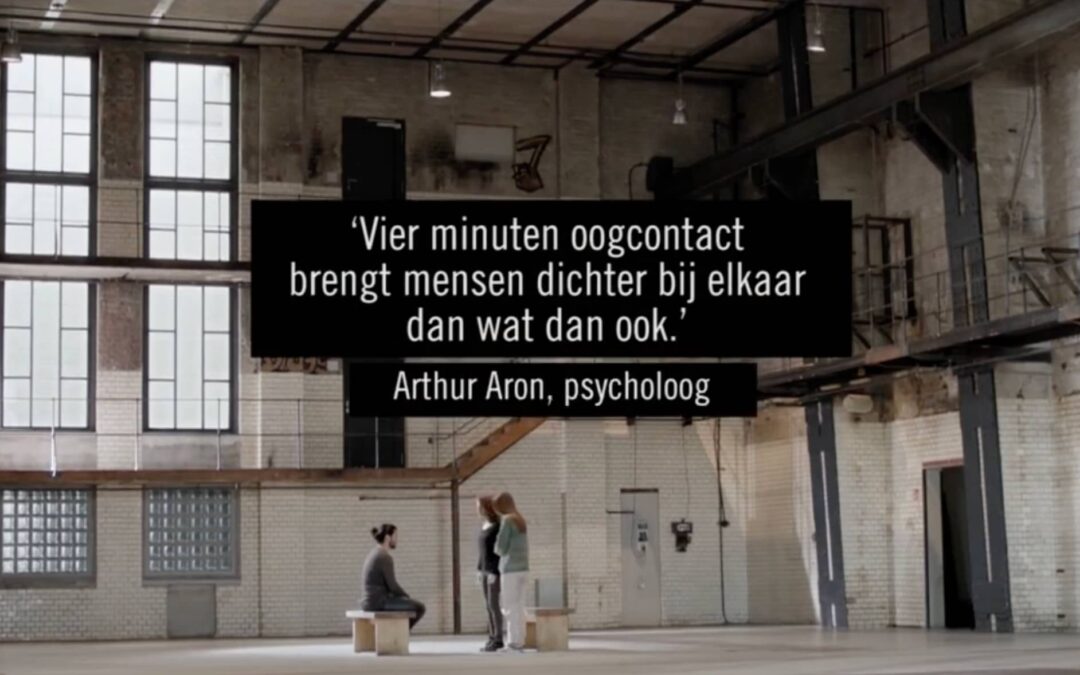
Look Beyond Borders - Arthur Aaron EM

Click on the image to watch the video.

A beautiful example of how eye contact creates connection and vulnerability can be seen in this video from Amnesty International. It demonstrates the power of truly seeing and being seen, and how this forms the foundation of connection.

A conversation is a wonderful way to meet each other’s thoughts. You share information, come up with ideas together, and forge social bonds. But do you know what truly enhances a good conversation? Eye contact.

Eye contact is the most basic way to make someone feel seen. It fosters a sense of inclusion and strengthens relationships. With your gaze, you communicate interest in what the other person is saying, showing respect for the person behind the words. Eye contact also improves communication. Your facial expressions—like surprise or shock—are often the first reaction to what someone says. Eye contact also helps to determine when it’s your turn to speak.

Your brain is highly attuned to whether someone looks at you and draws conclusions from it. While eye contact seems natural, it’s not always easy to give everyone equal attention. Our brains have unconscious preferences for who we do or don’t look at, often depending on whether someone is part of our “in-group” or not.

Unintentionally looking at certain people less often can have significant consequences. It makes them feel unseen, which can severely impact their sense of recognition within the group. Everyone needs a certain level of acknowledgment to feel comfortable enough to contribute to a team. Vulnerable brains are often those of people who are new to a group or slightly different from the norm. Want to avoid this? Then consciously work on making it a habit to look at everyone properly.

Interestingly, unconscious biases also play a role from another perspective. People who feel secure in their position within a group, such as leaders or those who belong to the norm, pay close attention to eye contact. If you don’t look at them, it may be interpreted as a sign of insecurity or weakness. The habit of intentionally looking at someone helps not only the other person but also yourself: it shows you take the other person seriously and that you have confidence in yourself.

Another major source of disruption is the dopamine bomb in your pocket: your phone. Our concentration during conversations and meetings is constantly tested by apps and notifications designed to be almost irresistible, even when you’re sitting across from someone.

In addition to entertainment, your phone now also brings responsibilities. Platforms like Slack and WhatsApp groups create a constant expectation of availability. This perpetual accessibility hinders genuine connection with the person in front of you. Yet research shows that being fully present and making eye contact leads to stronger relationships.

So, make it a habit to be truly present during conversations. Put your phone away and turn off unimportant notifications. Make sure to look at your boss, but don’t forget those who could use a little encouragement. By looking at them, you say: “I see you (too).”

Here’s an interesting tip about connection: eye contact is the first way we, as babies, bond with our parents. Since we can’t communicate in other ways yet, their gaze tells us: “I’m here for you.” Here’s the fun part: because most people are right-handed, they carry their baby in their left arm. This causes their right eye to naturally align with the baby’s left eye. This specific connection stimulates the release of oxytocin, a hormone that builds trust and connection. Try it yourself while you work on this new habit!

Remember, making eye contact a habit is a work in progress. I personally find eye contact quite intense at times, so I’ve taught myself to look at someone’s eye color instead of directly “into their eyes.” Research also shows that while eye contact is important to make someone feel seen, averting your gaze can actually help you form new, independent thoughts. In a good conversation, eye contact, much like the act of talking itself, naturally flows back and forth between the participants.

So: put your phone away, look the other person in the eye, and be fully present. This way, you not only build stronger relationships but also ensure that everyone feels seen. That’s the power of a simple gesture like eye contact.